The strategically vital Strait of Hormuz has witnessed a massive disruption in maritime traffic following the escalation of conflict involving Iran, the United States, and Israel. Since late February, cargo movement through this కీల global chokepoint has slowed to a near standstill, raising concerns about global energy supply chains and economic stability.
95% Drop in Shipping Traffic
From March 1 to 1600 GMT on March 23, only 144 commodity carrier crossings were recorded through the strait, according to maritime analytics firm Kpler. This marks a staggering 95% decline compared to normal peacetime activity.
Out of these, 91 crossings involved oil and gas tankers, with more than half carrying cargo. Most vessels were heading eastward, primarily toward Asian markets. Shipping intelligence platform Lloyd’s List confirmed that traffic remains “severely disrupted,” reflecting the seriousness of the situation.
Limited Movement and Selected Ship Passages
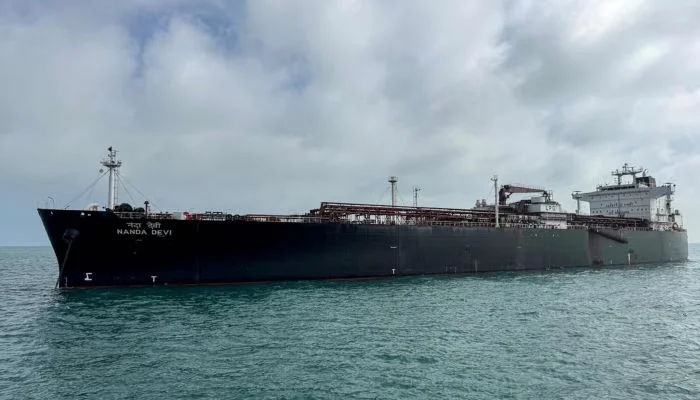
Despite the disruption, a few vessels have managed to pass through. Among the latest were two Indian-flagged LPG tankers and a China-bound chemical carrier. The Panama-flagged Bright Gold is expected to deliver around 40,000 tonnes of methanol to China by mid-April.
Additionally, a Chinese-owned container ship, Newvoyager, reportedly transited the strait after making a payment to Iranian authorities, although the exact details remain unclear.
Emergence of a Controlled Northern Route
Recent ship movements suggest the use of a Tehran-approved northern corridor near Larak Island, close to Iran’s coastline. Reports indicate that over 20 vessels have used this route, many of them Greek-owned, along with Indian, Pakistani, and Syrian ships.
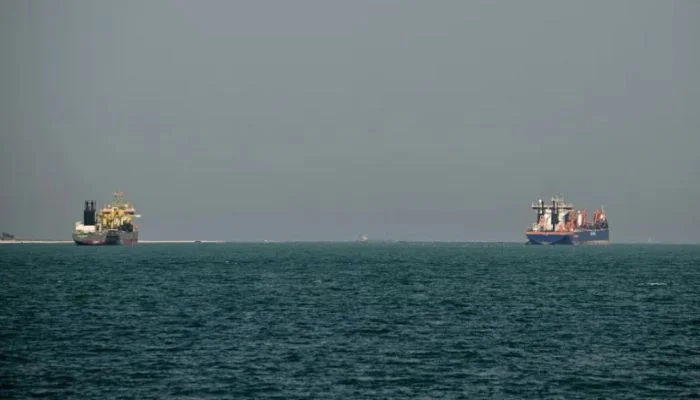
Transit approvals appear to be handled individually by Iranian authorities, while some countries—such as India—are reportedly negotiating broader arrangements for safe passage. In at least one case, a vessel allegedly paid $2 million to ensure secure transit.
Dominance of Iranian and Sanctioned Vessels
A significant proportion of ships currently passing through the strait are either Iranian-owned or flagged, followed by Greek and Chinese vessels. Notably, over 40% of these ships are under sanctions imposed by the US, EU, or UK.
Among oil and gas tankers, nearly 59% fall under such restrictions. Analysts note that westbound traffic is now dominated by “shadow fleet” vessels—ships often used to bypass sanctions and operate under opaque ownership structures.
Oil Prices Surge Amid Rising Tensions in the Strait of Hormuz
Oil Flows Shift Toward Asia
Most of the oil transported through the strait is now heading toward Asia, particularly China. According to JPMorgan analysts, around 98% of observable oil traffic in early March originated from Iran, averaging approximately 1.3 million barrels per day.
Meanwhile, liquefied natural gas (LNG) shipments originally destined for Europe are being rerouted to Asia. Since early March, at least 11 LNG tankers have changed course, reflecting both supply constraints and rising prices in Asian markets.
A Critical Global Chokepoint Under Pressure
Under normal conditions, nearly one-fifth of the world’s oil and LNG supply passes through the Strait of Hormuz. The current disruption underscores how geopolitical tensions can quickly impact global trade and energy security.
As the conflict continues, uncertainty remains over whether maritime traffic will normalize—or face further restrictions in the days ahead.