Pakistan has expressed hope that the United States and Iran will engage “constructively” as high-level peace talks begin in Islamabad, following a Pakistan-brokered two-week ceasefire aimed at de-escalating tensions in the Middle East.
The negotiations come at a critical moment, with both sides arriving in the Pakistani capital amid continued regional instability and unresolved disputes.
US Delegation Led by Vice President JD Vance
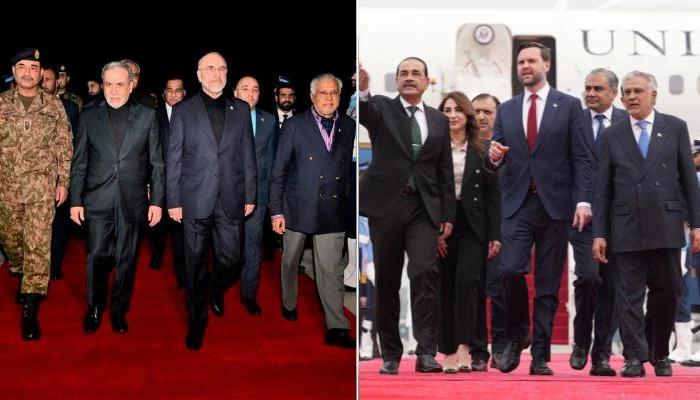
A senior US delegation arrived in Islamabad on Saturday, led by Vice President JD Vance. The team also includes Special Envoy Steve Witkoff and former presidential advisor Jared Kushner.
Upon arrival, the delegation was received by Pakistan’s top leadership, including Deputy Prime Minister and Foreign Minister Ishaq Dar, Chief of Defence Forces and Army Chief Field Marshal Asim Munir, and Interior Minister Mohsin Naqvi.
Pakistan’s Diplomatic Position
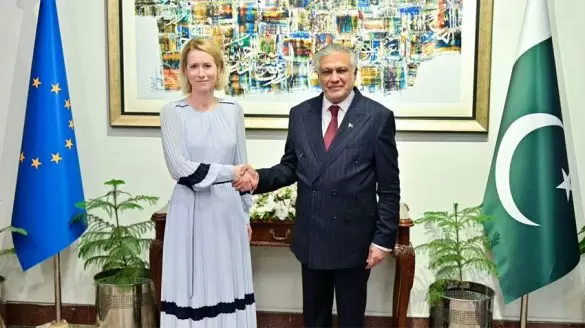
Welcoming the US delegation, Ishaq Dar praised Washington’s engagement in regional peace efforts and expressed optimism that both sides would participate meaningfully in the Islamabad talks. Pakistan reiterated its commitment to facilitating dialogue for a long-term and stable settlement of the conflict.
Prime Minister Shehbaz Sharif has described the talks as a “make-or-break” opportunity to transform the temporary ceasefire into a lasting peace agreement.
Iranian Delegation and Conditions
A high-level Iranian delegation also arrived in Islamabad ahead of the talks, led by Parliament Speaker Mohammad Baqer Ghalibaf, along with Foreign Minister Abbas Araghchi.
Iranian officials were received by Pakistan’s leadership, which again emphasized the importance of constructive engagement. However, Tehran has warned that progress depends on Washington fulfilling certain conditions, including easing restrictions on Iranian assets and ensuring a ceasefire in Lebanon.
Tensions and Key Disagreements
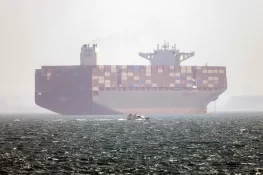
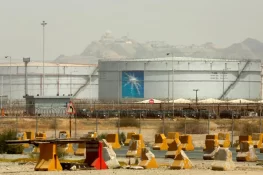
The talks are taking place against the backdrop of continued tensions following the conflict that escalated on February 28 after US-Israeli strikes on Iranian leadership and infrastructure. The violence led to widespread regional instability, including attacks on shipping routes in the Strait of Hormuz and retaliatory strikes across the region.
A ceasefire was announced on April 8, with Pakistan playing a central mediating role. However, major disagreements remain unresolved.
- The United States has proposed a 15-point framework focusing on Iran’s nuclear and missile program, sanctions relief, and reopening of the Strait of Hormuz.
- Iran has countered with a 10-point proposal demanding greater control over the waterway, transit fees, and full sanctions removal.
Security and US Position
US Vice President JD Vance has expressed cautious optimism about the outcome but warned that any attempt to derail the process would trigger a firm response from Washington.
Security Tightened in Islamabad Ahead of High-Level US-Iran Peace Talks
Pakistan’s Role and Global Response
Pakistan’s diplomatic efforts have been widely acknowledged by the international community, which views Islamabad as a key facilitator in reducing tensions between Washington and Tehran.
Officials say Pakistan’s neutral positioning and regional ties have allowed it to play a unique role in bringing both sides to the negotiating table at a highly sensitive moment.
With both US and Iranian delegations now in Islamabad, the talks represent a rare and high-stakes diplomatic opening. While significant differences remain, Pakistan is hoping its mediation can help convert the fragile ceasefire into a lasting peace framework for the Middle East.