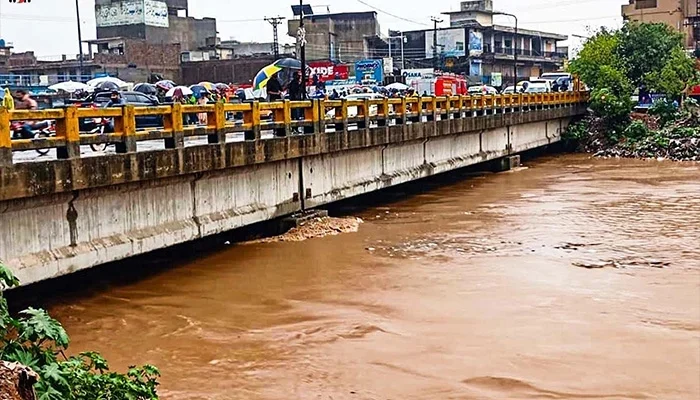
RAWALPINDI: Heavy rain lashed Islamabad and Rawalpindi, triggering concern over possible urban flooding as the water level in Nullah Lai rose sharply during the day.
However, the situation began improving after the rain stopped in the twin cities, with water levels in Nullah Lai falling significantly from the day’s peak.
According to the flood control room, the water level at Katarian fell to around 17 feet after rising to more than 22 feet earlier. The level at Gawalmandi was also reported at around 17 feet.
The latest readings indicated a rapid decline after the water channel reached its highest level of the day.
Rescue 1122 Issues Safety Warning
As the water level rose earlier, Rescue 1122 made announcements in areas surrounding Nullah Lai, advising residents to avoid unnecessary travel and remain alert.
Emergency officials particularly warned people living near the storm-water channel to take precautions because rapidly changing water levels can create dangerous conditions.
Residents were also advised to keep children away from storm-water drains, open waterways and electricity poles during periods of heavy rain.
Authorities have continued monitoring communities located along Nullah Lai because further rainfall could cause water levels to rise again.
Heavy Rain Recorded Across Twin Cities
Rain has been continuing intermittently across Islamabad and Rawalpindi since Monday night, with several areas receiving significant rainfall.
According to the latest figures, Saidpur recorded 66mm, while Bokra received 65mm and Pirwadhai 63mm.
Other areas also received substantial rainfall, with Golra recording 52mm, while Shamsabad and Chaklala received 50mm and 47mm, respectively.
The widespread rainfall increased the pressure on the drainage network, particularly in low-lying parts of Rawalpindi where heavy downpours can quickly result in water accumulation.
WASA Deploys Teams and Heavy Machinery
The Water and Sanitation Agency (WASA) has deployed teams along Nullah Lai and in vulnerable low-lying areas to monitor the situation and respond to emergencies.
WASA Managing Director Azizullah Khan said heavy machinery had also been positioned in areas including Sadiqabad, Dhok Khaba, Pirwadhai, Arya Mohalla and Bohar Bazaar.
The deployment follows preparations initiated after intermittent rain began on Monday night.
Met Office Forecasts Extended Spell of Rain and Thundershowers Across Upper, Central Pakistan
Machinery had previously been stationed at Liaquat Bagh, Committee Chowk Underpass, Murree Road, Dhok Khaba, Circular Road and Sadiqabad to deal with possible water accumulation.
Azizullah personally supervised drainage operations and said the agency was monitoring the situation closely.
Authorities Urge Citizens Not to Block Drains
WASA officials also stressed the importance of keeping the drainage system clear during the monsoon season.
Azizullah urged residents not to throw garbage into drains and sewers, warning that accumulated waste can obstruct the flow of rainwater and increase the risk of urban flooding.
Citizens were also advised not to remove sewer covers, as uncovered drains can pose serious safety risks during heavy rainfall, particularly when water visibility is low.
Residents were encouraged to contact the WASA helpline in case of an emergency or drainage-related problem.
More Rain Forecast Until August 21
The Pakistan Meteorological Department (PMD) has forecast further rain, wind and thunderstorms across Islamabad and upper Punjab until August 21, with occasional breaks in rainfall.
The weather department has warned that heavy rain could trigger urban flooding in low-lying areas of Islamabad and Rawalpindi.
Authorities have therefore been advised to remain vigilant and maintain emergency arrangements, particularly around Nullah Lai and other vulnerable drainage points.
Although water levels declined after the latest spell of rain, officials are continuing to monitor the situation because additional heavy rainfall could quickly increase water levels again.
For residents, authorities have urged caution, particularly during periods of intense rain, and advised avoiding unnecessary movement near drains, waterways and other flood-prone locations.