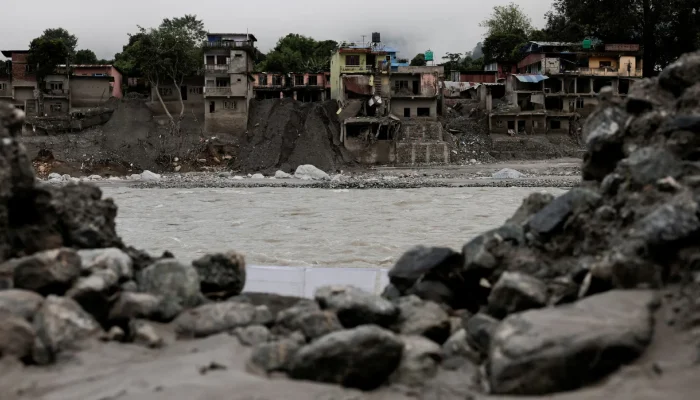
Heavy rain and powerful storms have triggered floods and landslides across parts of India and Nepal, killing at least 56 people in India and 14 in Nepal, while authorities warned that further flash floods remained possible.
In India, the death toll rose to 56 after around 60 hours of heavy rain and storms. Another 46 people were injured, while more than 1,000 houses were damaged, according to authorities.
Heavy rain causes widespread flooding in India
Northern India’s Uttar Pradesh recorded 66.5 millimetres of rain between September 25 and the morning of September 27, far above the normal 7.6 millimetres for the same period, state relief commissioner Hrishikesh Bhaskar Yashod said on Sunday.
Rescue teams are working in waterlogged areas while authorities distribute relief supplies. Officials have also been directed to assess damage to crops and arrange compensation for affected communities.
The Central Water Commission said 30 river-monitoring stations across seven states were showing a “severe situation”.
Several major rivers, including the Ganga, Gandak, Kosi, Bagmati and Narmada, had risen above danger levels, raising concerns about further flooding in vulnerable areas.
Nepal warns of more flash floods
Nepal reported 14 deaths and 11 people missing since Thursday, while authorities warned that flash floods could affect 49 of the country’s 77 districts.
More than half of the districts were facing high flood or flash-flood risks as water levels in major rivers and tributaries continued to rise.
Nepal Flood Death Toll Rises to 750 as Fifth Day of Rescue Efforts Begins
Shanti Mahat, a spokesperson for the National Disaster Risk Reduction and Management Authority, urged people in several areas to remain alert. Rasuwa and Nuwakot, which were badly affected by deadly floods last month, were not currently classified as high-risk areas.
Last month’s floods killed more than 1,450 people and left thousands missing, according to authorities.
Power and communications disrupted
Flooding and landslides have caused significant damage to infrastructure in Nepal. Power supplies were completely disrupted in Manang, Mustang, Myagdi and Baglung, while officials worked to restore electricity.
Flooding along the Rahuganga River damaged the structure and transmission towers of a 40-megawatt hydropower project, Water Resources and Energy Minister Biraj Bhakta Shrestha said.
Telecommunications were also disrupted in parts of the country after floods and landslides damaged optical fibres and power infrastructure.
In a separate incident, 10 local workers were reported missing after an avalanche buried the base camp of the 7,126-metre Himlung Himal in northern Manang district.
The workers had been preparing tents for foreign climbers, who were not at the site when the avalanche struck.