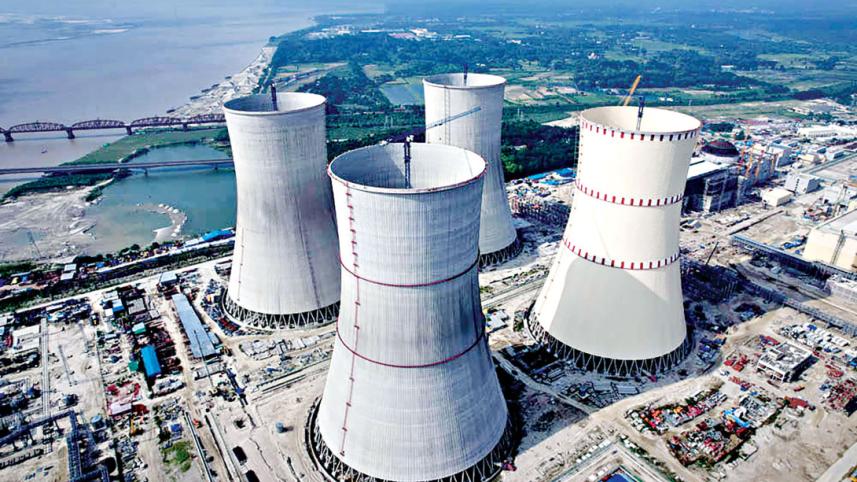
Bangladesh is preparing to bring its first nuclear power plant online, with the long-delayed Rooppur project expected to provide much-needed relief from chronic electricity shortages while raising concerns among some residents living near the facility.
The 2.4-gigawatt Rooppur Nuclear Power Plant, built at a cost of around $13 billion, has transformed the rural area surrounding the facility in Pabna district, about 150 kilometres west of Dhaka.
Once both reactors become operational, the plant is expected to generate more than 10% of Bangladesh’s electricity demand, providing an important addition to the country’s energy system amid continuing fuel and power supply challenges.
First reactor expected to start this year
Md Zahedul Hasan, managing director of state-owned Nuclear Power Plant Company Bangladesh, said the first reactor is scheduled to begin operations by the end of the year.
The second reactor is expected to become operational within a year of the first, he said while speaking at the plant site on the banks of the Padma River.
Bangladesh’s power sector currently depends heavily on fossil fuels, particularly natural gas, with coal, oil and renewable energy sources accounting for much of the remaining generation.
The Rooppur project is being developed with Russia’s state nuclear corporation Rosatom and represents the culmination of decades of efforts to introduce nuclear power to Bangladesh.
Russian workers transform local economy
The construction project has also created an unusual Russian community in rural Bangladesh.
Thousands of Russian workers have spent years building the facility and installing equipment. Residential complexes, restaurants and shops have emerged around the project to serve the growing workforce.
Some businesses display signs in Bangla, English and Russian, while restaurants serve Russian dishes such as borscht alongside local food.
Russian installation technician Alexander Vladimirovich Skvortsov moved to Rooppur with his family in 2024 after choosing the Bangladesh project over an opportunity in Turkey.
He said the scale of construction at Rooppur changed his life and gave him a different perspective on the project and his work.
The development has also provided new opportunities for local residents. Md Emon Khan, 28, returned to his hometown after leaving a garment factory job in Dhaka and now sells fruit and vegetables to workers at the plant.
He said he had learned some Russian while interacting with the workers, who in turn had picked up some Bangla.
Safety concerns remain
Plant officials say stringent safety measures have been incorporated into the facility, including lessons learned from previous nuclear accidents.
However, some residents remain concerned about living close to the plant.
Md Yunus Ali, 80, lives about a 15-minute walk from the facility and said opposition to establishing a nuclear plant in the densely populated area had existed for decades.
He recalled being frightened by the sound of a recent compressor test, saying the noise woke sleeping children in the area.
While Ali said he was not personally worried about his own safety, he said his primary concern was for his children and grandchildren.
Others have a more positive outlook. Fifteen-year-old Mohammad Nafiz, who lives nearby, said he hoped local young people would eventually find employment at the plant after completing engineering studies.
Decades of delays before Rooppur project
Bangladesh’s ambition to develop a nuclear power plant at Rooppur dates back to the 1960s.
After independence, successive governments explored possible partnerships with countries including Saudi Arabia, France, China and South Korea, but none of the efforts resulted in a completed agreement.
Bangladesh eventually signed an agreement with Moscow in 2015, with Russia providing a loan covering around 90% of the project’s original cost. Construction began in 2017.
The project subsequently faced delays caused by the Covid-19 pandemic and sanctions imposed on Russia following its invasion of Ukraine, which complicated equipment deliveries and financial transactions.
The project has also faced corruption allegations involving former prime minister Sheikh Hasina and members of her family. They have denied the allegations.
For many Bangladeshis, however, the central issue is whether Rooppur can deliver a stable electricity supply.
Farmer Belly Begum, 55, said frequent power outages make it difficult to irrigate her land.
She said she hoped the plant would begin operating soon and provide residents with uninterrupted electricity, allowing communities living near Rooppur to benefit directly from the country’s first nuclear power project.