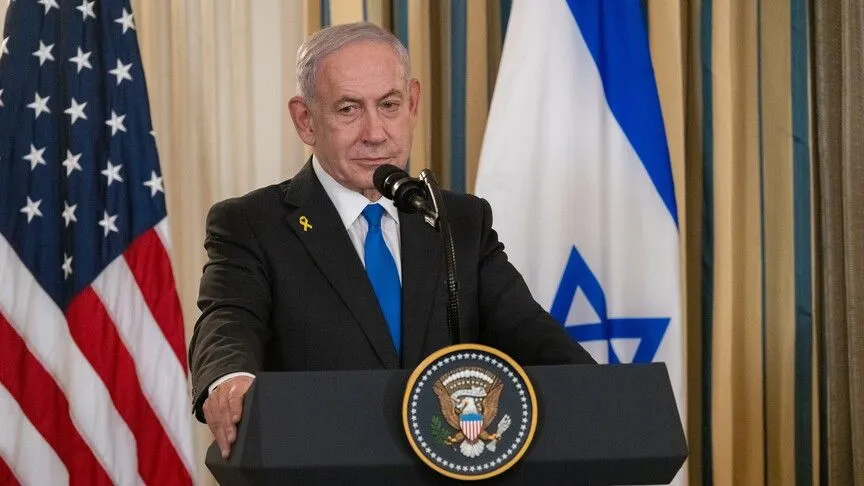
Israeli Prime Minister Benjamin Netanyahu has discussed the possibility of resuming military attacks on Iran with Gadi Eisenkot, who has been tasked with forming Israel’s next government, according to Israeli media reports. The meeting comes amid growing disagreements over the timing of potential military action and concerns that Netanyahu could launch a new offensive during the country’s political transition.
Netanyahu Briefs Eisenkot on Iran Security Situation
According to Israel’s Channel 12, Netanyahu met Eisenkot on Thursday, November 12, to share intelligence about Iran and explain the reasons behind his interest in potentially renewing military operations.
A source familiar with the discussions reportedly suggested that the intelligence presented during the meeting could change Eisenkot’s assessment of Netanyahu’s intentions.
However, Channel 12 also reported that Eisenkot was unaware that Mossad Director Roman Gofman was visiting Washington to discuss Iran-related security matters with American officials.
The broadcaster did not establish whether Eisenkot had deliberately been kept uninformed about the visit.
The meeting followed growing tensions between the two leaders over the possibility of military action against Iran before a new Israeli government takes office.
Eisenkot Warns Against Military Action During Government Transition
Eisenkot, whose political bloc secured the support needed to receive the mandate to form Israel’s next government, has warned Netanyahu against undertaking unnecessary military operations during the transition period.
He has expressed concern that major security decisions could have serious consequences for Israel and its political system if taken without sufficient justification and consultation.
Netanyahu remains caretaker prime minister following the October 27 elections, despite his political bloc losing its parliamentary majority.
Israeli President Isaac Herzog subsequently tasked Eisenkot with forming the next government.
The political situation has raised questions about whether the outgoing administration should make major military decisions that could lead to another regional confrontation.
Israeli Military Leadership Questions Timing of New Iran Offensive
Israel’s public broadcaster KAN reported that military Chief of Staff Eyal Zamir supports maintaining the option of military action against Iran but believes the current circumstances are not suitable for launching another operation.
According to the broadcaster, Zamir favours coordination with the United States and believes any military action should take place under appropriate conditions and at a carefully selected time.
KAN cited an unnamed security source as saying that the Israeli military does not currently see an immediate Iranian threat requiring another attack.
The source also reportedly warned against entering a prolonged war of attrition and ruled out a resumption of hostilities in the coming weeks.
Previous reports had suggested disagreements between Netanyahu and Zamir over the possibility of renewed military operations. However, Netanyahu’s office had denied reports of a dispute between the prime minister and the military leadership.
Israeli Opposition Leaders Say Netanyahu Cannot Remain in Power After US Midterm Elections
Mossad Chief Holds Iran Talks in Washington
Meanwhile, Mossad Director Roman Gofman travelled to Washington for discussions concerning Iran with senior American officials.
According to reports published by Haaretz and other Israeli media outlets, Gofman met CIA Director John Ratcliffe and was expected to hold further discussions with US envoy Steve Witkoff.
The talks reportedly focused on Iran’s nuclear programme, its development of long-range missiles and Israeli concerns about Tehran’s military capabilities.
Channel 13 reported that Gofman was also expected to present intelligence supporting Israel’s claims that Iran had violated its agreements with Washington.
Neither American nor Israeli authorities publicly confirmed the full details of the reported discussions.
The diplomatic activity comes amid Israeli concerns that Washington and Tehran could reach an agreement that reduces pressure on Iran without adequately addressing its nuclear programme and missile development.
Possibility of Renewed Israel-Iran Conflict
The latest developments have renewed questions about the possibility of another military confrontation between Israel and Iran.
Netanyahu’s reported efforts to discuss renewed attacks have coincided with reservations among sections of Israel’s military leadership and political opposition.
While Israeli authorities have reportedly increased preparations for a possible operation, the available reports do not establish that a final decision to resume attacks has been made.
The timing of any potential military action could also depend on coordination with Washington, developments in negotiations with Tehran and the formation of Israel’s next government.
Sources: The Express Tribune, Anadolu Agency, Channel 12, KAN and Haaretz. Additional context from The Times of Israel.