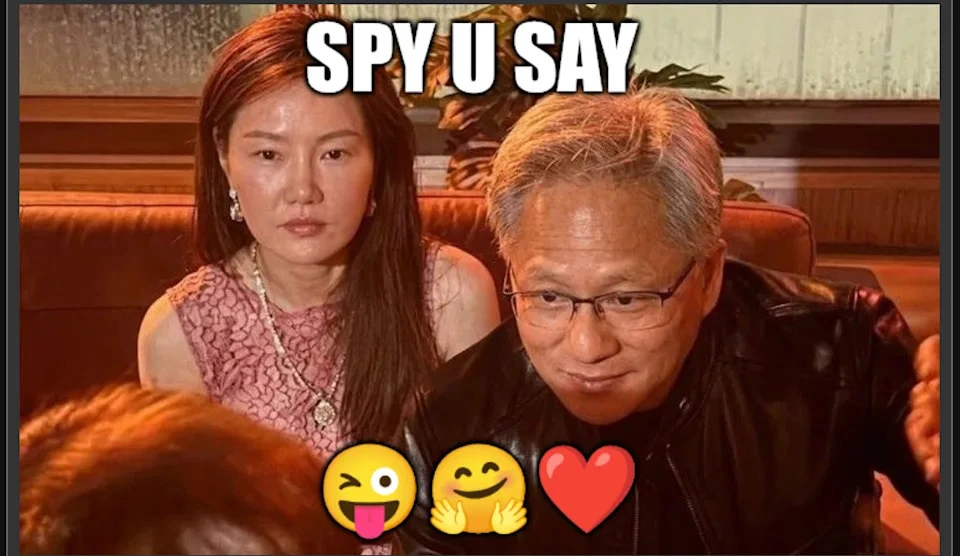
The controversy surrounding former Nvidia CEO Jensen Huang has triggered a wave of internet memes and AI-generated videos, but the online reaction has also raised concerns about racial stereotypes, discrimination and the treatment of Asian communities. While many social media users are mocking the billionaire over his reported relationships and sudden departure from the technology giant, critics argue that some jokes rely on harmful stereotypes about Asian men and women.
How the Jensen Huang Controversy Began
The controversy gained momentum following reports linking Huang to Alice Huang, a Chinese businesswoman and former executive at Singapore-based data centre company Megaspeed.
According to a report by The New York Times published on October 29, US intelligence officials had concluded that Alice Huang was allegedly working as a Chinese intelligence asset and passing information to Beijing. Megaspeed had also come under scrutiny over suspicions that it was helping Chinese customers obtain advanced Nvidia artificial intelligence chips despite US export restrictions.
The reports described a close relationship between Alice Huang and Jensen Huang. The two are not related, despite sharing the same surname.
On November 8, Jensen Huang reportedly told Nvidia employees that he had been unfaithful to his wife but did not identify the person involved.
Subsequent media reports raised allegations of additional relationships, including one involving a senior Nvidia employee who reportedly worked under him.
Huang resigned as Nvidia’s chief executive on November 12 after 33 years at the company. Chief Financial Officer Colette Kress was appointed interim CEO while the board began considering a permanent replacement.
However, the espionage allegations against Alice Huang remain unproven. China has rejected the claims, while US officials have said that no final determination has been made about whether she was a Chinese intelligence asset.
Nvidia has also said it has no reason to believe that national security or company secrets were compromised.
AI-Generated Memes Turn the Billionaire Into an Internet Sensation
The scandal has fuelled an extraordinary wave of online humour, with users creating realistic AI-generated videos featuring Jensen Huang in fictional situations.
Some videos show him dancing to popular Bollywood romantic songs, while others recreate famous viral moments and internet trends.
The irony has attracted particular attention because Nvidia produces many of the advanced chips powering artificial intelligence systems used to generate such content.
For years, Huang has been one of the most influential figures in the technology industry, leading a company whose processors have become central to the global AI boom.
His public comments about artificial intelligence and its potential impact on employment have also attracted criticism, particularly from workers concerned about automation and job security.
Consequently, some commentators view the memes as a form of public ridicule directed at a powerful technology executive whose company has benefited enormously from the AI revolution.
Why Some Memes Have Raised Concerns About Racism
However, the controversy has also exposed a more troubling side of the online reaction.
In an opinion article published by The Express Tribune, journalist and media scholar Zeeshan Ahmad argues that some jokes surrounding the scandal draw on longstanding stereotypes about Asian identities.
The article highlights headlines and wordplay involving Huang’s surname, arguing that turning a common Asian name into an espionage-related joke can reinforce associations between Asian identity, divided loyalties and suspicion.
The criticism also extends to the portrayal of Alice Huang.
Nvidia Halts Shipments of US-Approved AI Chips to China
References to her as a supposed Chinese seductress or a ‘honeypot’ have revived stereotypes about Asian women being manipulative figures involved in espionage.
Such portrayals, the commentary argues, reduce an individual with a professional background to a character in a familiar racial narrative.
The article also points to longstanding stereotypes about East Asian men in Western popular culture, where they have frequently been portrayed as socially awkward, overly intellectual or lacking romantic appeal.
According to the argument, some jokes about Jensen Huang draw on these older portrayals rather than focusing exclusively on the allegations surrounding his personal conduct.
Online Reaction Also Targets Huang’s Wife
Another aspect of the controversy has involved Jensen Huang’s wife, Lori Huang, whom he married in 1985 after meeting her while studying at Oregon State University.
Her appearance has become a subject of online discussion, with some social media users comparing photographs of her with Alice Huang.
The Express Tribune commentary criticises this reaction, arguing that it unfairly judges a woman based on her appearance and implies that a spouse’s looks could somehow justify infidelity.
It also highlights how women connected to public figures can become targets of online scrutiny despite having no direct involvement in the controversy.
The Debate Goes Beyond One Billionaire
The controversy has also renewed discussions about the influence of powerful technology companies and the way ordinary people’s personal information and images are used online.
For years, concerns have grown over the use of photographs, personal data and digital content to train artificial intelligence systems, often without meaningful consent from the people involved.
Women have particularly faced problems involving non-consensual deepfake images, while ordinary individuals have experienced reputational damage from viral content created using their photographs.
Against this background, some people see the memes targeting Huang as an example of a powerful technology executive experiencing the same digital culture that has affected countless others.
However, the commentary argues that criticism of wealthy executives should not become an excuse for normalising racial discrimination or harmful stereotypes.
The central question, therefore, is not whether Jensen Huang deserves criticism over his admitted infidelity or the controversy surrounding his leadership. It is whether the public is mocking his conduct, his wealth and his influence, or relying on outdated assumptions about Asian men, Asian women and their loyalties.
The distinction matters because jokes targeting one powerful individual can reinforce prejudices against entire communities.
Source: The Express Tribune, opinion article by Zeeshan Ahmad, with additional background from Reuters.