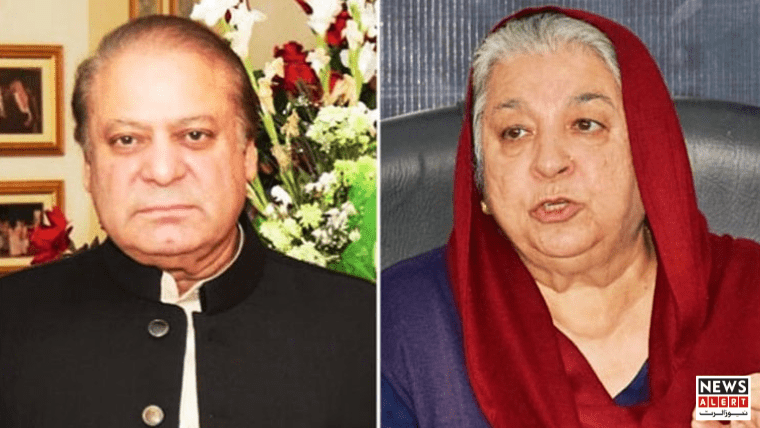
Pakistan’s election tribunal has confirmed former prime minister Nawaz Sharif’s victory from Lahore’s National Assembly constituency NA-130, dismissing a legal challenge filed by Dr Yasmin Rashid. The ruling removes the final obstacle to Sharif’s return to parliament and reinforces the Pakistan Muslim League-Nawaz (PML-N)’s dominance in the provincial capital.
Judge Rana Zahid Mahmood of the election tribunal announced the verdict after hearing detailed arguments from both sides. The court upheld the official notification that declared Nawaz Sharif the winner of the February 2024 general elections.
Court Dismisses Allegations of Irregularities
Dr Yasmin Rashid challenged the election results soon after the polls, claiming that authorities failed to ensure transparency during voting and counting. She argued that irregularities influenced the outcome in NA-130 and asked the tribunal to nullify the result.
However, the tribunal rejected these claims. After reviewing the record, the judge ruled that Dr Rashid failed to support her allegations with solid evidence. The court concluded that the petition did not meet the legal threshold required to challenge an election outcome.
During the hearings, Barrister Asadullah Cheema represented Nawaz Sharif. He told the court that election officials conducted the polls according to Pakistan’s constitution and election laws. He also stressed that the petitioner could not prove manipulation, misconduct, or procedural violations.
The tribunal agreed with this position and ruled that allegations alone could not overturn a democratic mandate.
Large Vote Margin Strengthens Verdict
The significant vote margin played a key role in the tribunal’s decision. In the February 2024 elections, Nawaz Sharif secured 171,024 votes from NA-130. Dr Yasmin Rashid, who contested as an independent candidate, received 115,043 votes.
This difference of more than 55,000 votes provided further weight to Sharif’s claim. Election authorities had already certified the result after completing all required procedures. The tribunal’s ruling has now given the outcome full legal finality.
NA-130 holds major political importance in Lahore. The constituency has historically favored the PML-N, especially during periods when Nawaz Sharif actively leads the party.
Background of the 2024 General Elections
Pakistan held general elections in February 2024 amid political uncertainty, economic pressure, and legal disputes involving major political figures. The elections followed months of political maneuvering and intense competition between mainstream parties.
Election tribunals serve as a crucial part of Pakistan’s democratic framework. They examine disputes related to election conduct, vote counting, and candidate eligibility. Although losing candidates frequently file petitions, courts dismiss most cases due to weak evidence or procedural flaws.
According to past election data, only a small fraction of petitions succeed nationwide. Legal experts say courts require clear and convincing proof before interfering with voters’ decisions.
Political Impact in Lahore and Beyond
Political analysts say the tribunal’s decision further strengthens the PML-N’s grip on Lahore. The city remains a vital political and electoral center, and success here often shapes broader trends in Punjab.
Observers also expect the ruling to influence other pending election petitions. Courts often rely on earlier decisions when assessing similar challenges. As a result, this verdict may discourage petitions that lack strong documentation.
For Nawaz Sharif, the ruling marks another milestone in his political comeback. After years of legal battles and time abroad, he returned to Pakistan in late 2023. His victory from NA-130 carried symbolic weight for party workers and supporters.
Final Closure for NA-130 Contest
With the tribunal’s dismissal of the petition, the NA-130 result now stands beyond dispute. Nawaz Sharif will continue to represent the constituency in the National Assembly without further legal challenges.
While election disputes continue in other parts of the country, this ruling brings closure to one of Lahore’s most closely watched contests. The decision underscores the authority of election tribunals and highlights the importance of evidence-based challenges in Pakistan’s democratic process.