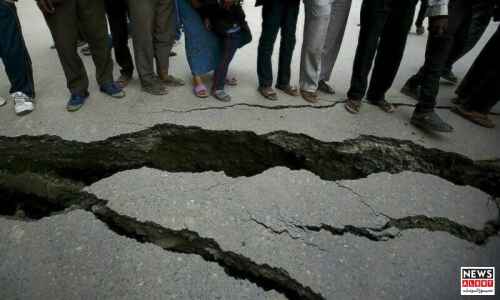
A mild earthquake struck the town of Chaman in Pakistan’s southwestern Balochistan province, causing brief panic among residents but no reported damage or injuries. People across the town felt the tremors clearly, prompting many to rush outdoors as a precaution.
Pakistan’s seismic monitoring centre reported that the earthquake measured 3.3 on the Richter scale. The epicentre lay about seven kilometres northwest of Chaman, while the quake originated at a depth of 14 kilometres. Because of its moderate depth and low magnitude, the tremor caused no structural harm.
Also Read: Powerful 6.2-Magnitude Earthquake Devastates Afghanistan, Killing at Least 250
Residents Rush Outdoors After Sudden Tremors
The shaking began without warning, startling residents in homes and shops. Many people stepped outside immediately, reciting prayers as fear spread through neighbourhoods. For several minutes, streets and open spaces filled with families seeking safety.
Despite the alarm, the situation remained calm. Local officials confirmed that the earthquake caused no loss of life or property. Emergency services monitored the situation closely and stayed prepared for any follow-up developments.
Chaman lies near the Pakistan-Afghanistan border, a region familiar with seismic activity. Even small earthquakes often generate anxiety due to past experiences and limited infrastructure in some areas.
Authorities Urge Caution and Preparedness
Following the tremors, security agencies and disaster management officials issued safety advice for residents. They urged people to remain alert and prepare for possible aftershocks, which sometimes follow initial tremors.
Officials encouraged citizens to review basic earthquake safety steps. These include identifying safe areas inside homes, avoiding weak structures, and staying away from damaged buildings. Authorities also advised residents to rely on official information rather than rumours.
Although the earthquake remained minor, officials stressed that preparedness plays a key role in reducing risk. Earthquakes can strike suddenly, especially in regions with active fault lines like Balochistan.
Why Balochistan Faces Frequent Earthquakes
Balochistan sits near the boundary where the Indian and Eurasian tectonic plates meet. This geological setting causes regular seismic movement across the province.
Pakistan has faced devastating earthquakes in the past. In 2005, a powerful 7.6-magnitude earthquake in Kashmir killed more than 70,000 people and displaced millions. Since then, authorities have worked to improve monitoring and response systems.
Experts explain that shallow earthquakes, even with lower magnitudes, often feel stronger at the surface. Local soil conditions and building quality also influence how people experience tremors.
As a result, disaster management agencies continue to promote earthquake-resistant construction and public awareness campaigns across vulnerable regions.
Stronger Earthquake Hits Indonesia
In a separate incident, a much stronger earthquake measuring 6.2 struck Indonesia, according to international monitoring agencies. Indonesia ranks among the most earthquake-prone countries due to its position along the Pacific Ring of Fire.
Initial reports provided limited details about damage or casualties. Indonesian authorities usually assess the risk of tsunamis after strong earthquakes, depending on depth and location. At the time of reporting, officials had not confirmed any tsunami warning.
Indonesia experiences thousands of earthquakes every year. While most remain harmless, stronger tremors can cause severe damage, especially in densely populated areas.
A Reminder of Ongoing Seismic Risk
Although the earthquakes in Pakistan and Indonesia occurred independently, both events highlight the constant seismic threat across Asia. Countries located near tectonic plate boundaries must remain prepared at all times.
Disaster experts stress that public awareness, early warning systems, and clear communication save lives. Simple actions, such as knowing evacuation routes and safe shelter points, can significantly reduce harm.
Life in Chaman has largely returned to normal. However, residents remain cautious, aware that seismic activity forms part of daily reality in the region. Authorities continue to monitor the situation and urge the public to stay calm, informed, and ready.