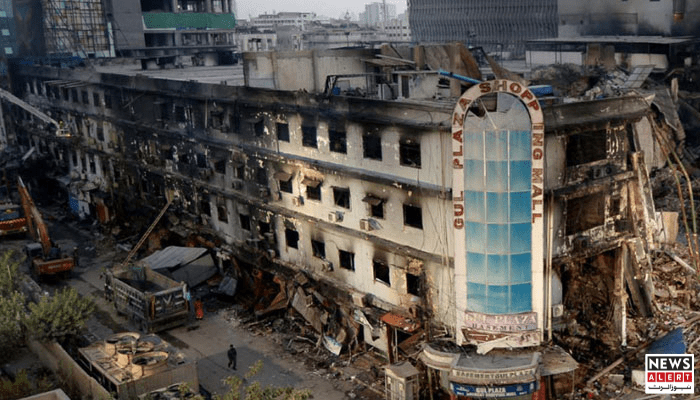
A final investigation report into the deadly Gul Plaza fire in Karachi has concluded that 79 people lost their lives, with most fatalities occurring on the mezzanine floor, according to official sources familiar with the findings.
The report has been prepared by a high-level committee comprising the Karachi Commissioner and the Additional Inspector General of Police. It is expected to be formally presented to Sindh Chief Minister Murad Ali Shah in the coming days.
The Gul Plaza fire was one of Karachi’s deadliest building disasters in recent years. It has again raised serious questions about fire safety, building regulations, and emergency response systems in Pakistan’s largest city.
Cause of the Fire: Accident at a Flower Shop
According to the investigation, the fire originated at a flower shop on the ground floor of Gul Plaza. The report states that a child accidentally started the fire, which quickly escalated due to combustible materials inside the shop.
Crucially, investigators found that the blaze spread rapidly through air-conditioning ducts, allowing flames and smoke to move swiftly to upper levels. This design flaw played a major role in trapping people inside the building.
Experts say such duct systems, if not fireproofed, can act like chimneys. They accelerate the spread of fire and toxic smoke within minutes.
Majority of Victims on the Mezzanine Floor
The report confirms that most of the 79 victims were on the mezzanine floor, a space often used for offices and storage in commercial buildings.
Sources say heavy smoke accumulation, blocked exits, and poor ventilation made escape nearly impossible for those inside. Many victims reportedly lost consciousness due to smoke inhalation before help could reach them.
Globally, smoke inhalation accounts for nearly 70 percent of fire-related deaths, according to international fire safety studies. The Gul Plaza incident appears to follow this grim pattern.
Timeline Reveals Delays in Emergency Response
The investigation also provides a detailed timeline of the fire and rescue response.
-
10:15 pm – Fire breaks out at Gul Plaza
-
10:26 pm – Fire Brigade receives the first emergency call
-
10:30 pm – Deputy Commissioner South arrives at the site
-
10:37 pm – First fire tender reaches the building
-
10:53 pm – Rescue 1122 teams arrive
Although authorities responded within minutes of notification, the report suggests that the fire had already intensified by the time emergency teams arrived. Narrow access points and congestion reportedly hampered rescue efforts.
Karachi, a city of over 20 million people, has long struggled with inadequate fire services. According to official data, the city has fewer fire engines than recommended by international safety standards.
Witness Accounts and Rescue Details Included
Sources say the report includes testimonies from survivors, eyewitnesses, and rescue officials. It documents the difficulties faced during evacuation, including panic, power outages, and a lack of emergency signage.
The report also highlights the absence of effective fire alarms and sprinkler systems, which are mandatory under many building safety codes but often ignored in practice.
Opposition Rejects Findings, Demands Judicial Inquiry
Meanwhile, the investigation has drawn sharp criticism from the opposition.
Sindh Assembly Opposition Leader Ali Khurshidi expressed dissatisfaction with the inquiry. He renewed his demand for a judicial commission to investigate the tragedy.
He argued that the inquiry lacks credibility because, in his words, the same officials who should be held accountable are conducting the investigation.
How can the Karachi commissioner investigate the Gul Plaza tragedy? Khurshidi asked. Who will accept such an inquiry?
He further said that if the ruling Pakistan Peoples Party believes the opposition is politicising the tragedy, it should allow a judicial inquiry. That would end all political debate, he added.
A Broader Question of Accountability
The Gul Plaza fire has once again exposed systemic weaknesses in urban governance, emergency preparedness, and building oversight in Karachi.
While the final report sheds light on how the fire started and spread, families of the victims continue to seek answers. For many, the key question remains whether accountability will follow — or whether the tragedy will fade without meaningful reform.
As the provincial government reviews the report, pressure is mounting for transparent action to prevent such disasters in the future.