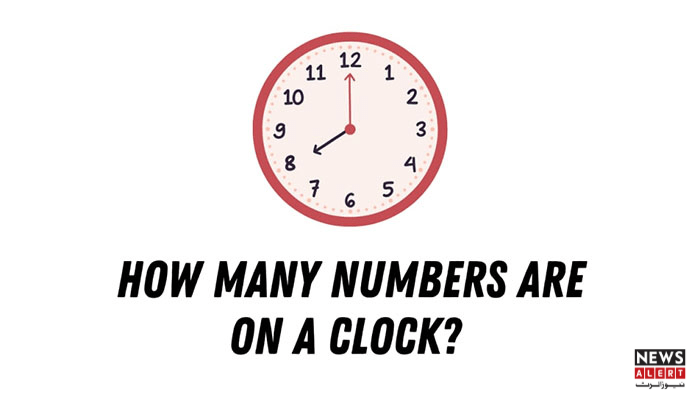
If you enjoy stretching your mind with puzzles, here’s a classic one to ponder: how many numbers are there on a clock, or more specifically, on a wall clock? At first glance, it seems like an obvious question, but the answer is not as straightforward as it appears.
The Charm of Puzzles
Puzzles like this have fascinated people for centuries. The best puzzles are those that make you pause and think rather than simply recall information. Unlike regular mathematical problems, which often rely on clear formulas and step-by-step solutions, puzzles require you to take a different perspective.
This distinction is why many people find solving puzzles enjoyable—they challenge conventional thinking and encourage creative reasoning. And this clock question is no exception.
The Classic Clock Question
So, let’s return to the puzzle: How many numbers are on a clock? Many would instinctively answer 12, pointing to the standard 12-hour wall clock. But if you look closer, there’s more to it.
The puzzle hints that simple counting is not enough; you might need to apply some basic arithmetic or lateral thinking.
Breaking Down the Numbers
Consider a typical wall clock. It shows the hours from 1 to 12. At first glance, these seem like twelve distinct numbers: 1, 2, 3, 4, 5, 6, 7, 8, 9, 10, 11, and 12.
However, if we count the digits instead of the whole numbers, a different picture emerges.
-
1 has one digit: 1
-
2 has one digit: 2
-
3 has one digit: 3
-
4 has one digit: 4
-
5 has one digit: 5
-
6 has one digit: 6
-
7 has one digit: 7
-
8 has one digit: 8
-
9 has one digit: 9
-
10 has two digits: 1 and 0
-
11 has two digits: 1 and 1
-
12 has two digits: 1 and 2
If you consider each unique digit that appears on the clock, you end up with 10 distinct digits: 0, 1, 2, 3, 4, 5, 6, 7, 8, and 9. In this sense, the numbers on a clock could be interpreted as these 10 digits rather than the twelve hour markers.
Thinking Differently
This puzzle demonstrates the importance of perspective. While the common answer is 12, a more thoughtful approach reveals another layer: the digits themselves. It challenges the assumption that numbers are always counted as a whole, reminding us that even familiar objects can hold hidden complexities.
Interestingly, this type of question aligns with a broader trend in recreational math and brain teasers. Experts note that puzzles encouraging “lateral thinking” can improve problem-solving skills, boost creativity, and even enhance cognitive flexibility.
Why It Matters
While seemingly trivial, questions like these show the power of curiosity. They encourage us to slow down, examine assumptions, and explore different angles. In a world focused on efficiency and quick answers, taking a moment to think critically—just as with a simple clock—can be surprisingly rewarding.
So, the next time you glance at a clock, remember: it might show 12 hours, but hidden in plain sight are 10 distinct digits that make up those hours. It’s a reminder that even the simplest things can spark curiosity and creative thinking.