Iran’s Islamic Revolutionary Guard Corps (IRGC) has stopped a US-flagged commercial vessel in the Strait of Hormuz, according to Iranian and American officials. The incident briefly raised tensions in a waterway that carries a significant share of the world’s oil supplies.
Both sides later confirmed that the ship was released and left the area. However, the encounter included warnings, alleged harassment, and the involvement of military aircraft and drones. As a result, the episode has drawn fresh attention to the fragile security situation in the Gulf.
What Happened in the Strait of Hormuz
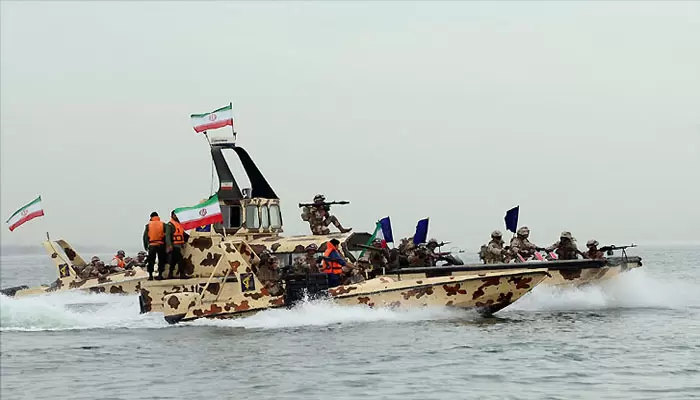
According to Iranian authorities, IRGC naval boats intercepted a ship flying the American flag after it entered Iranian territorial waters without permission. Officials said the vessel ignored initial warnings and only turned back after direct contact by Iranian patrol boats.
Iranian media reported that once the ship received clear instructions, it exited the area. No damage or injuries were reported. Tehran maintained that its forces acted in line with maritime laws to protect national waters.
Meanwhile, the Strait of Hormuz remains a narrow and heavily monitored passage. In some areas, it is only about 33 kilometers wide. As a result, navigation errors or misunderstandings can escalate quickly.
US Military Confirms Interception and Harassment
The US Central Command, known as CENTCOM, confirmed that Iranian forces stopped the vessel. In a statement, CENTCOM said IRGC boats approached the US-flagged ship and harassed its crew.
According to a CENTCOM spokesperson, Iranian fast-attack boats and at least one Iranian drone closed in on the vessel. The spokesperson added that Iranian forces threatened to seize the ship during the encounter.
US officials described the action as unsafe and unprofessional. They said such behaviour risks miscalculation in a region already under strain.
Drone Shot Down by US Fighter Jet
CENTCOM further stated that the situation escalated when an Iranian drone entered the area. A US Navy F-35C fighter jet, operating from the aircraft carrier USS Abraham Lincoln, shot down the drone.
The drone was identified by the US military as a Shahed-139 model. Iran has used similar drones for surveillance and military operations in the region.
US officials said the drone posed a potential threat to the ship and nearby forces. Iran has not publicly commented on the drone’s destruction.
Why the Strait of Hormuz Matters
The Strait of Hormuz is one of the most strategically important waterways in the world. According to the US Energy Information Administration, around 20 percent of global oil consumption passes through the strait each day.
This includes crude oil and liquefied natural gas exports from Saudi Arabia, Iraq, Kuwait, the United Arab Emirates, and Qatar. Any disruption can affect global energy prices within hours.
Because of this, even brief encounters between military forces attract international attention.
A Pattern of Maritime Tensions
This is not the first time Iran and the United States have clashed in the Strait of Hormuz. Over the past decade, there have been several incidents involving ship seizures, close naval encounters, and drone shootdowns.
Tensions have remained high since the US withdrew from the Iran nuclear deal in 2018. Sanctions, regional conflicts, and military deployments have further complicated relations.
Despite this, both sides often stress that they do not seek direct conflict. Still, experts warn that repeated incidents increase the risk of escalation.
What Happens Next
For now, the intercepted vessel has continued its journey. However, the incident is likely to be raised in diplomatic and military discussions.
Observers say clearer communication and stricter navigation protocols are essential. Without them, similar confrontations may occur again.
As global shipping continues through the Strait of Hormuz, the world will be watching closely. Even small incidents here can carry global consequences.