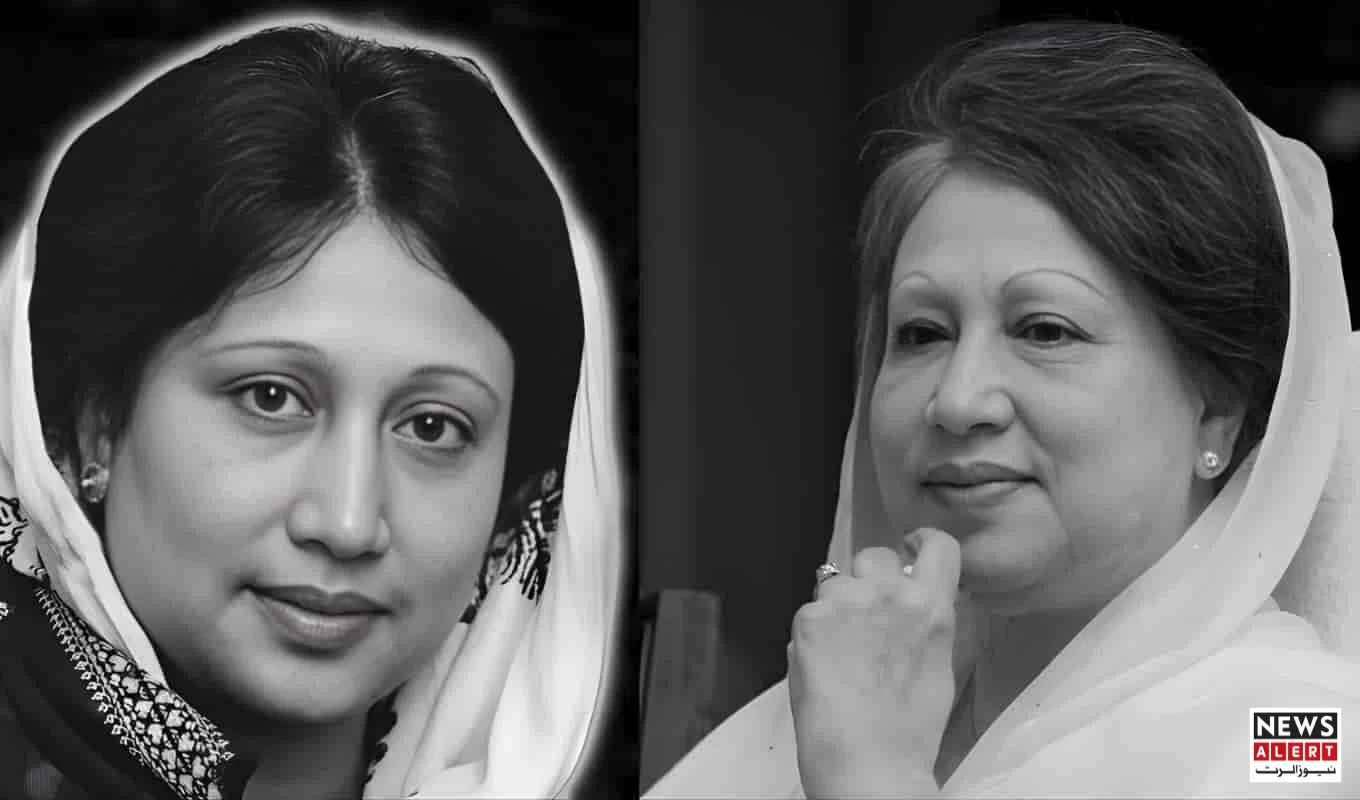
Khaleda Zia, the former Prime Minister of Bangladesh and one of the country’s most influential political figures, has died at the age of 80. She passed away early Tuesday morning in the capital, Dhaka, after battling multiple health problems for several years, according to local media reports.
Also Read: Former Bangladeshi Prime Minister Khaleda Zia in Critical Condition, Moved to ICU
With her death, Bangladesh has lost a leader who dominated national politics for decades. Moreover, her passing signals the end of a prolonged era shaped by intense rivalry, public mobilisation, and political confrontation.
Declining health and final hours
For a long time, Khaleda Zia had struggled with several serious medical conditions, including chronic liver disease. As her health worsened, doctors admitted her to a hospital in Dhaka, where she remained under constant medical supervision.
However, her condition took a critical turn in recent days. On Monday, doctors described her health as extremely serious. Consequently, medical teams placed her on life support and continued regular dialysis to stabilise her condition.
Dr Ziaul Haque, a member of the medical board, explained that dialysis played a crucial role in sustaining her life. According to him, her condition declined sharply whenever doctors paused the procedure.
At the same time, her advanced age complicated treatment. In addition, the presence of multiple illnesses made it impossible to address all conditions together. Despite continuous medical efforts, her health kept deteriorating.
Eventually, Khaleda Zia died at around 6:00 am local time. Shortly afterwards, hospital authorities officially confirmed her death.
Two terms at the helm of government
Throughout her career, Khaleda Zia stood among Bangladesh’s most prominent political leaders. She served as Prime Minister twice, first from 1991 to 1996 and later from 2001 to 2006.
Notably, she became Bangladesh’s first female Prime Minister at a time when women rarely reached top political offices in South Asia. Furthermore, she earned recognition as the second woman Prime Minister in the Muslim world, following Pakistan’s Benazir Bhutto.
During her time in office, Bangladesh went through a critical phase of democratic consolidation. Meanwhile, the country faced recurring political unrest and economic pressures. Today, Bangladesh has a population of more than 170 million, reflecting the scale of governance challenges she once managed.
From personal tragedy to political leadership
Khaleda Zia entered politics after the assassination of her husband, Ziaur Rahman, in 1981. Ziaur Rahman had previously served as army chief and later as President of Bangladesh.
After his death, she gradually rose through the ranks of the Bangladesh Nationalist Party (BNP). Over time, she assumed party leadership and transformed the BNP into a dominant political force.
As a result, the party organised mass rallies and led sustained opposition movements. Nevertheless, her leadership style drew both strong loyalty and sharp criticism across society.
Enduring rivalry with Sheikh Hasina
Perhaps most significantly, Khaleda Zia’s long rivalry with Sheikh Hasina Wajed defined Bangladeshi politics for decades. Sheikh Hasina leads the Awami League, the country’s other major political party.
Because of this rivalry, political cooperation remained rare. As a consequence, parliament often stalled, while street protests and nationwide strikes became frequent.
According to the article, Sheikh Hasina stepped down from government last year. Consequently, the political landscape shifted after years of dominance by the two rival leaders.
Corruption cases and legal troubles
Alongside political success, Khaleda Zia’s career also involved legal controversy. Authorities charged her in several corruption cases, which sparked intense national debate.
In 2018, a court sentenced her to five years in prison. As a result, she withdrew from active political life.
While her supporters described the cases as politically motivated, her critics argued that accountability remained essential for democracy. Thus, her legal battles continued to divide public opinion.
Family, exile, and elections ahead
Meanwhile, Khaleda Zia’s elder son, Tarique Rahman, serves as the acting chairman of the BNP. Just days ago, he returned to Bangladesh after ending a 17-year exile.
Previously, Tarique Rahman left the country in 2008 after serving 18 months in prison. Later, he moved to the United Kingdom for medical treatment and other reasons.
Now, his return comes at a crucial moment. As Bangladesh prepares for key national elections, many observers believe his role could reshape opposition politics.
A complex political legacy
In the end, Khaleda Zia leaves behind a complex and deeply contested legacy. On one hand, supporters remember her as a determined leader who resisted political dominance. On the other hand, critics associate her rule with instability and division.
Nevertheless, her influence on Bangladesh’s political history remains undeniable. As the country looks ahead, it now does so without one of its most commanding and controversial figures.