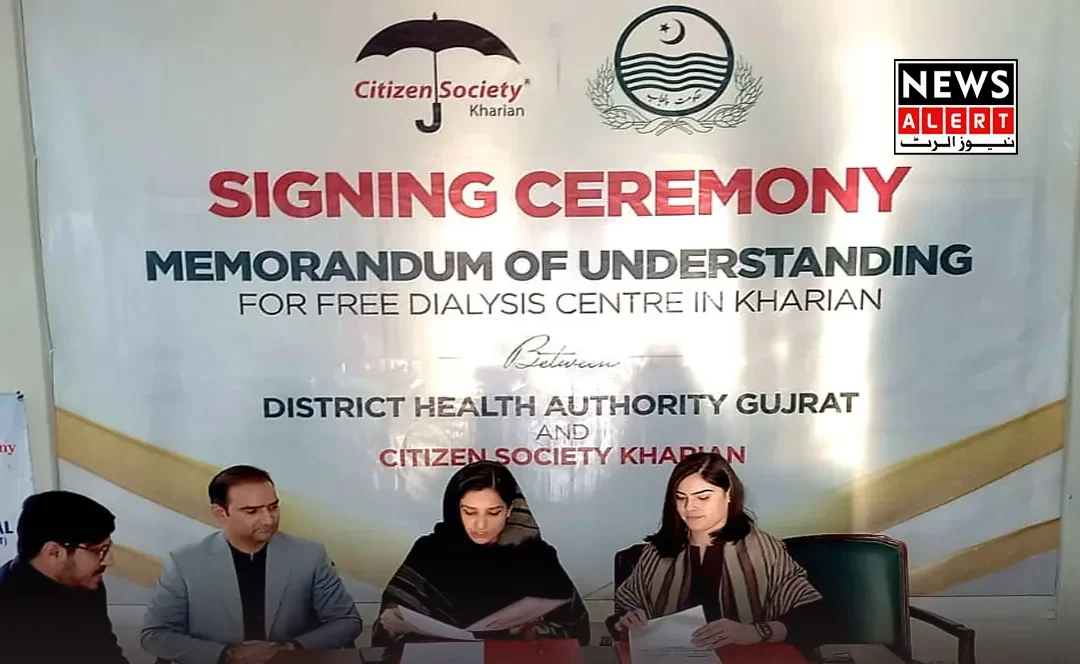
District Administration and Local Welfare Group Formalise Plan
Authorities in Pakistan’s Punjab province have signed a memorandum of understanding (MoU) to establish a free dialysis center at the Tehsil Headquarters (THQ) Hospital in Kharian. The agreement marks an important step toward improving access to kidney-care services for low-income patients in the region, where dialysis remains expensive and often difficult to obtain.
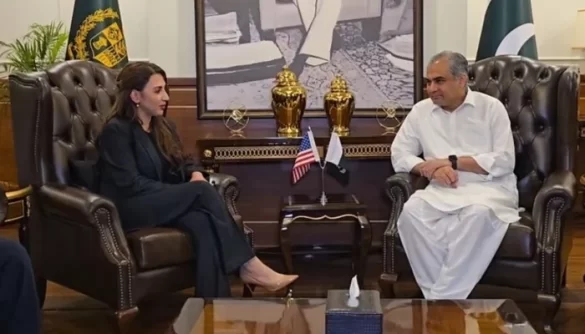
The MoU was signed by Deputy Commissioner and Administrator of the District Health Authority (DHA) Gujrat, Noor-ul-Ain, and Ms. Aroosa, a representative of the Citizen Welfare Society Kharian. The ceremony took place at THQ Hospital Kharian in the presence of senior government and health officials.
Details of the Public–Private Partnership
Under the agreement, the District Health Authority Gujrat will provide the essential hospital infrastructure for the new unit. This includes clinical space, staffing, support services, and the cost of utilities. In contrast, the Citizen Welfare Society will supply five dialysis machines and cover their operational expenses.
This cost-sharing model reflects a broader trend in Pakistan’s healthcare sector, where government bodies and civil-society organisations often collaborate to bridge gaps in public services. Dialysis is a high-cost treatment that many families struggle to afford; therefore, such partnerships can play a crucial role in improving access.
Growing Need for Dialysis Services in Pakistan
Chronic kidney disease (CKD) is a major and growing public-health concern in Pakistan. Studies from national health institutions indicate that up to 20 million Pakistanis may suffer from some stage of kidney dysfunction. Factors such as diabetes, hypertension, poor water quality, and limited early screening further increase the risk.
For many patients with end-stage kidney disease, dialysis becomes the only life-sustaining option unless a transplant is available. However, the treatment requires multiple sessions each week, and the cost can quickly become overwhelming. In private clinics, a single dialysis session can cost between PKR 3,000 and PKR 6,000, making long-term care unaffordable for thousands of families.
Against this backdrop, the establishment of a free dialysis centre in Kharian is significant. It is expected to reduce the financial burden on patients and improve survival rates by encouraging uninterrupted treatment.
Officials Praise the Initiative
Several senior officials attended the signing ceremony, including Additional Deputy Commissioner for Finance and Planning, Zulfiqar Ahmed, and Chief Executive Officer Health, Dr. Atta-ul-Muneem. Their presence underscored the provincial administration’s commitment to advancing public healthcare.
Speaking informally at the event, officials highlighted that public–private cooperation can accelerate service delivery, particularly in semi-urban areas like Kharian. They noted that the initiative aligns with Punjab’s broader efforts to upgrade secondary-level hospitals and ensure more equitable access to essential treatments.
Planned Impact and Next Steps
Once operational, the dialysis center is expected to serve patients not only from Kharian but also from surrounding towns and rural communities. This is particularly important because rural patients often must travel long distances to reach Gujrat or other major cities for treatment.
Additionally, the availability of hospital-based dialysis facilities can help reduce complications. Patients will have access to trained medical staff, better monitoring, and emergency care when needed.
Authorities have not yet announced a completion date for the facility. However, both partners indicated their intention to move quickly so the service can begin helping patients as soon as possible.
A Step Toward More Accessible Healthcare
The creation of a free dialysis center at THQ Hospital Kharian represents an encouraging development for the local healthcare system. It reflects not only the rising demand for renal-care services but also the value of collaborative models that bring together public resources and community-driven support.
As kidney disease continues to affect millions across Pakistan, such initiatives may offer a template for expanding essential treatments to underserved communities — and ensuring that life-saving care is no longer out of reach.