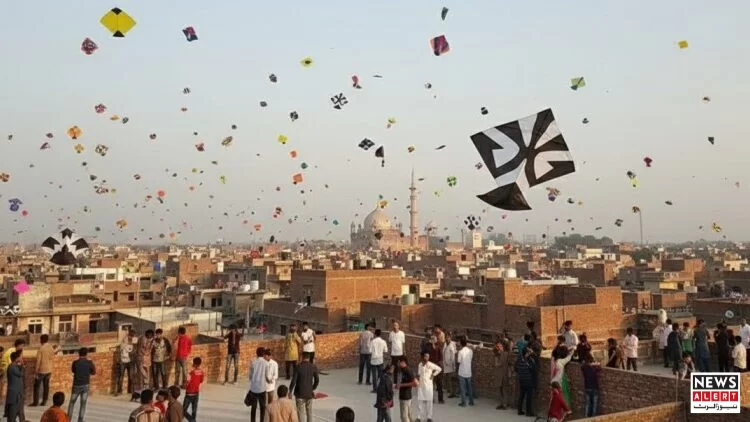
Lahore’s district administration has officially approved Basant 2026, the city’s renowned spring kite festival. According to a notification from the Deputy Commissioner of Lahore, the festival will run from February 6 to 8, and kite flying will follow strict safety regulations.
Also Read: Kite Flying Returns to Punjab After 25 Years: Government Approves Basant Festival
The announcement marks an important step after years of uncertainty. Previously, authorities had banned Basant due to safety concerns and accidents related to kite flying. Therefore, this year’s approval comes with careful conditions.
Restricted Dates and Official Permissions
The notification specifies that Lahore will host Basant for only three days. Officials stressed that kite flying must follow strict safety measures to protect citizens.
Furthermore, people can prepare, transport, and store kite-flying equipment from December 30, 2025, to February 8, 2026. This timeline allows manufacturers, traders, and kite enthusiasts to get ready safely.
All kites and strings must undergo online registration. Meanwhile, businesses involved in kite manufacturing and sales must register via the e-Biz application starting December 9. Registered sellers must display certificates prominently in their shops.
Safety and Record-Keeping Measures
Authorities require sellers and kite associations to maintain complete records of stocks, sales, and deliveries. In addition, Kite Flying Associations will coordinate closely with Deputy Commissioners to ensure compliance.
Citizens may sell kite-flying equipment between February 1 and 8, creating a short, controlled commercial window.
Also, all motorcycles operating during Basant must install protective wires to prevent accidents caused by kite strings.
Also Read: Punjab Introduces New Registration System to Ensure a Safer Basant Festival
Size Limits for Kites and Accessories
Officials set maximum dimensions for kites and spinning tops:
-
Kites: Width 35 inches, Length 30 inches
-
Spinning tops (guday): Width 40 inches, Length 34 inches
Consequently, kites and tops exceeding these limits are strictly banned. Authorities hope this rule will prevent dangerous designs that could cause injuries.
Prohibited Materials and Zero-Tolerance Policy
The administration banned chemical strings and metallic spools. Kite strings must be cotton, with glass coatings (manja) limited to 30–35 twists.
Moreover, authorities allow sales only of pana strings. In contrast, bloody manja, sharp manja, nylon, and plastic strings remain completely prohibited. Officials emphasize a zero-tolerance policy to ensure public safety.
Authorities Emphasize Safety
Deputy Commissioner Syed Musa Raza said protecting human life is the administration’s top priority. He also urged parents to prevent children from using banned strings.
Furthermore, he reassured citizens that those following the rules will receive full protection. However, authorities will take strict action against violators. These measures aim to balance tradition with safety.
Context and Historical Background
Basant is a traditional spring festival celebrated across Punjab with colorful kites, music, and family gatherings. Despite its cultural importance, authorities previously banned Basant in Lahore after accidents from dangerous strings (manja) caused injuries and deaths.
In recent years, officials have worked to revive Basant safely by regulating string types, imposing size limits, and enforcing vendor registration. The 2026 approval reflects a careful effort to bring the festival back under controlled conditions.
Finally, this three-day celebration allows Lahore residents to enjoy vibrant skies while following rules designed to minimize risk and protect lives.