Air Pollution Forces Indian Cricketers to Wear Masks During Matches

Rising air pollution in India prompts players to take protective measures ahead of the T20 World Cup.

Stay Connected, Stay Informed - Follow News Alert on WhatsApp for Real-time Updates!

Players Mask Up Amid Dangerous Air Quality

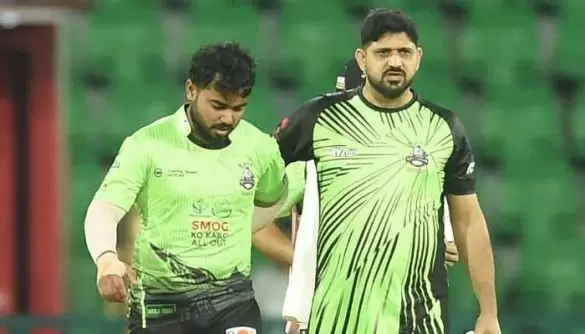
Air pollution in India has reached alarming levels, forcing professional cricketers to wear masks while playing. Recent reports highlight the growing concern as athletes in domestic tournaments took unprecedented steps to protect their health on the field.

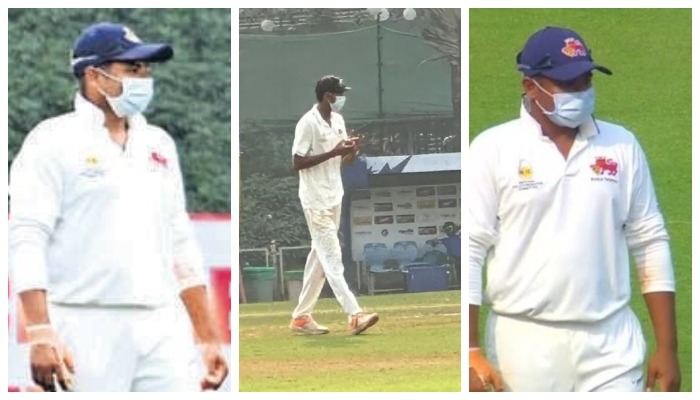
In a Ranji Trophy match between Mumbai and Delhi, players from both teams were seen wearing masks throughout the game. The match, held at Mumbai’s Bandra-Kurla Complex, showcased the severity of air pollution in urban areas, even during outdoor sporting events.

Construction and Urban Smog Worsen Air Quality

According to Indian media, ongoing construction near the cricket ground contributed to the heightened pollution levels. Dust, particulate matter, and vehicular emissions have combined to create a hazardous environment for athletes and spectators alike.

Mumbai-based batsmen such as Sarfaraz Khan, Mashir Khan, and Himanshu Singh reportedly wore masks during the match to minimize inhalation of polluted air. Their decision reflects growing health concerns among sports professionals, particularly during high-intensity matches that demand heavy breathing.

Alarming Air Quality Index in Mumbai

The situation is exacerbated by Mumbai’s deteriorating air quality. The city’s Air Quality Index (AQI) recently reached 160, a level considered “unhealthy” according to international standards. At this level, sensitive groups, including children, the elderly, and people with respiratory issues, are advised to reduce prolonged outdoor exertion.

For context, an AQI of 0–50 is considered good, 51–100 moderate, 101–150 unhealthy for sensitive groups, and 151–200 unhealthy. Mumbai’s current readings place it well into the unhealthy category, raising concerns ahead of major sporting events.

Implications for the T20 World Cup

The timing of this pollution surge is particularly worrying for cricket fans and officials, as Mumbai is scheduled to host several T20 World Cup matches, including semi-finals. Players, coaches, and organizers are now grappling with how to manage health risks while maintaining the competitive schedule.

Environmental experts have emphasized that urban centers like Mumbai face recurring spikes in air pollution due to traffic congestion, construction projects, and seasonal factors such as crop burning in northern India. These issues are increasingly affecting outdoor activities, including professional sports.

Growing Awareness in Indian Sports

This incident has brought attention to the broader issue of air quality in Indian cities. While mask-wearing is common in some countries during pollution peaks, seeing professional athletes adopt such measures during competitive matches is a rare and stark indicator of the health crisis.

Experts suggest that organizers should monitor AQI closely and consider rescheduling or relocating matches if pollution reaches hazardous levels. Meanwhile, players may continue using masks or other protective equipment to safeguard their respiratory health.

The Mumbai match has sparked debate among fans, health professionals, and sports authorities alike. Many argue that air pollution should become a central factor in planning sporting events, particularly in densely populated and industrialized cities.

Conclusion

The sight of cricketers wearing masks during high-profile domestic matches underscores India’s growing air pollution problem. With international tournaments like the T20 World Cup approaching, ensuring player safety while maintaining the game’s integrity has become a pressing challenge.

As cities like Mumbai continue to grapple with rising pollution, sports authorities may need to adapt to new norms—balancing public health concerns with the nation’s passion for cricket.


Leave a Comment

Related Posts

AHMEDABAD: Defending T20 World Cup champions India need “two big performances” to reach the semi-finals after Sunday’s huge defeat to South Africa, said their assistant coach. India came into the T20 World Cup as hot favourites on home soil but were thrashed by 76 runs in the Super Eights as 80,000 fans at the massive Narendra Modi stadium were stunned into silence. In their first chase of the tournament, India’s batting came up woefully short in the face of some disciplined South Africa bowling. India collapsed to 111 all out in 18.5 overs in response to South Africa’s 187-7 as their 12-match win streak in the T20 World Cup came to a crashing end. The magnitude of the defeat has left India with a desperate net run-rate of -3.8 and likely needing to win their last two Super Eight matches convincingly to make it to the semi-finals. Anything less and India will need to rely on a combination of other results going their way. “Very disappointed in the performance,” said Ryan ten Doeschate. “When you set out to win a World Cup, don’t expect someone to come and deliver it to you halfway through,” the assistant coach added. “We’ve messed up on a grand scale and now the onus is on this group of guys to turn it around and put in two solid performances.” India are grouped with South Africa, the West Indies and Zimbabwe in Super Eights, with the top two advancing to the semi-finals. The West Indies face Zimbabwe on Monday night in Mumbai in their Super Eights opener. India next face giant-killers Zimbabwe, who have already beaten Australia and Sri Lanka, on Thursday in Chennai. South Africa play the West Indies the same day in Ahmedabad, where Aiden Markram’s side could put one foot firmly in the semi-finals with another win. ‘Cloak came off’ “Obviously, with the way the group goes, you need at least four points to get through now, and it’s going to need two big performances and a big bounce back from everyone,” said Ten Doeschate. Indias captain Suryakumar Yadav reacts after being hit by the ball during the 2026 ICC Mens T20 Cricket World Cup Super Eights match between India and South Africa at the Narendra Modi Stadium in Ahmedabad on February 22, 2026. — AFP India’s captain Suryakumar Yadav reacts after being hit by the ball during the 2026 ICC Men’s T20 Cricket World Cup Super Eights match between India and South Africa at the Narendra Modi Stadium in Ahmedabad on February 22, 2026. — AFP India’s fragile batting was exposed against an in-form bowling attack led by left-arm quick Marco Jansen, who returned figures of 4-22 from 3.5 overs. Keshav Maharaj took 3-24 with his left-arm spin. India´s media tore into the team on Monday morning. “The night the cloak came off,” blazed a headline in the Indian Express newspaper. “Sloppy India reach point of no return,” said the Hindustan Times. India’s ultra-aggressive left-handed opening pair have failed to fire, leaving a shaky middle order to pick up the pieces. Ishan Kishan was out without scoring to Markram on Sunday, while the world’s top- ranked T20 batter Abhishek Sharma fell to Jansen for 15, his only runs of the tournament so far after three ducks. “It’s certainly not panic stations,” said Ten Doeschate, who hinted there could be discussions about India’s batting line-up. “If those guys (Ahbishek and Ishan) bat for six overs, the score is going to be 70-plus,” said Ten Doeschate. “So can we get them to temper the way they’re playing and be a little bit smarter? “Or do we just let them go on the way they are? “Or do we bring in a right-hander at the top and make a change somewhere in the middle?” Captain Suryakumar Yadav agreed India need to use their brains in the first six-over power play when only two fielders are allowed on the boundary. “Chasing 180-185, you can’t win the game in the power play, but you might lose it,” he said after his side stumbled to 31-3 after six overs, which became 43-4 a few balls later and then 51-5. “We lost too many wickets in the power play.” The 2024 champions also have the weight of history against them. No team has ever retained the T20 World Cup and no side have ever won the trophy on home soil.

AHMEDABAD: Defending T20 World Cup champions India need “two big performances” to reach the semi-finals after Sunday’s huge defeat to South Africa, said their assistant coach. India came into the T20 World Cup as hot favourites on home soil but were thrashed by 76 runs in the Super Eights as 80,000 fans at the massive Narendra Modi stadium were stunned into silence. In their first chase of the tournament, India’s batting came up woefully short in the face of some disciplined South Africa bowling. India collapsed to 111 all out in 18.5 overs in response to South Africa’s 187-7 as their 12-match win streak in the T20 World Cup came to a crashing end. The magnitude of the defeat has left India with a desperate net run-rate of -3.8 and likely needing to win their last two Super Eight matches convincingly to make it to the semi-finals. Anything less and India will need to rely on a combination of other results going their way. “Very disappointed in the performance,” said Ryan ten Doeschate. “When you set out to win a World Cup, don’t expect someone to come and deliver it to you halfway through,” the assistant coach added. “We’ve messed up on a grand scale and now the onus is on this group of guys to turn it around and put in two solid performances.” India are grouped with South Africa, the West Indies and Zimbabwe in Super Eights, with the top two advancing to the semi-finals. The West Indies face Zimbabwe on Monday night in Mumbai in their Super Eights opener. India next face giant-killers Zimbabwe, who have already beaten Australia and Sri Lanka, on Thursday in Chennai. South Africa play the West Indies the same day in Ahmedabad, where Aiden Markram’s side could put one foot firmly in the semi-finals with another win. ‘Cloak came off’ “Obviously, with the way the group goes, you need at least four points to get through now, and it’s going to need two big performances and a big bounce back from everyone,” said Ten Doeschate. Indias captain Suryakumar Yadav reacts after being hit by the ball during the 2026 ICC Mens T20 Cricket World Cup Super Eights match between India and South Africa at the Narendra Modi Stadium in Ahmedabad on February 22, 2026. — AFP India’s captain Suryakumar Yadav reacts after being hit by the ball during the 2026 ICC Men’s T20 Cricket World Cup Super Eights match between India and South Africa at the Narendra Modi Stadium in Ahmedabad on February 22, 2026. — AFP India’s fragile batting was exposed against an in-form bowling attack led by left-arm quick Marco Jansen, who returned figures of 4-22 from 3.5 overs. Keshav Maharaj took 3-24 with his left-arm spin. India´s media tore into the team on Monday morning. “The night the cloak came off,” blazed a headline in the Indian Express newspaper. “Sloppy India reach point of no return,” said the Hindustan Times. India’s ultra-aggressive left-handed opening pair have failed to fire, leaving a shaky middle order to pick up the pieces. Ishan Kishan was out without scoring to Markram on Sunday, while the world’s top- ranked T20 batter Abhishek Sharma fell to Jansen for 15, his only runs of the tournament so far after three ducks. “It’s certainly not panic stations,” said Ten Doeschate, who hinted there could be discussions about India’s batting line-up. “If those guys (Ahbishek and Ishan) bat for six overs, the score is going to be 70-plus,” said Ten Doeschate. “So can we get them to temper the way they’re playing and be a little bit smarter? “Or do we just let them go on the way they are? “Or do we bring in a right-hander at the top and make a change somewhere in the middle?” Captain Suryakumar Yadav agreed India need to use their brains in the first six-over power play when only two fielders are allowed on the boundary. “Chasing 180-185, you can’t win the game in the power play, but you might lose it,” he said after his side stumbled to 31-3 after six overs, which became 43-4 a few balls later and then 51-5. “We lost too many wickets in the power play.” The 2024 champions also have the weight of history against them. No team has ever retained the T20 World Cup and no side have ever won the trophy on home soil.

This material may not be published, broadcast, rewritten, redistributed or derived from.
Unless otherwise stated, all content is copyrighted © 2025 News Alert.