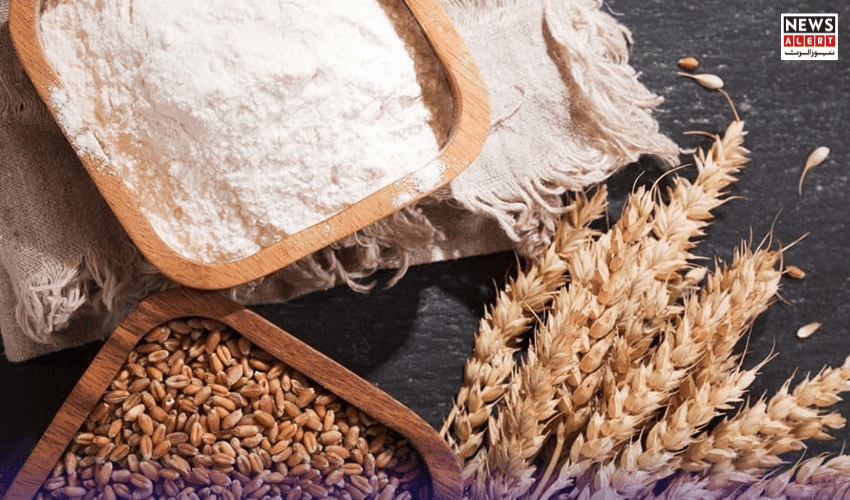
Flour prices have increased across several Pakistani cities, adding to the financial strain on millions of households. The sharpest impact has been reported in Hyderabad and Peshawar, where consumers have faced steep price hikes within days. The surge has reignited debate between flour millers and government officials over wheat supply, pricing controls, and market stability.
Also Read: Wheat Prices Surge, Driving Flour Costs Higher Across Pakistan
Sharp Increase in Hyderabad and Peshawar
In Hyderabad, the price of flour has risen by Rs10 to Rs20 per kilogram. As a result, a 20-kilogram bag now costs between Rs2,400 and Rs2,600. Only weeks ago, the same bag was available at significantly lower rates.
Local flour mill owners say the increase is directly linked to higher wheat prices. According to them, the cost of a 100-kilogram sack of wheat has jumped by Rs1,300 to Rs1,500. This rise has made it difficult to maintain previous flour prices.
Similarly, consumers in Peshawar have also been hit. Over the past week, the price of a 20-kilogram flour bag has increased by up to Rs200. Shopkeepers report frequent price changes, leaving buyers uncertain and frustrated.
Wheat Supply Issues in Punjab
According to sources within the Flour Mills Association, the situation in Punjab is especially worrying. They claim that the federal and provincial governments have not released sufficient official wheat stocks into the market. As a result, flour shortages persist across the province.
The association says conditions in southern and central Punjab have reached a critical level. While limited supplies of government wheat are reaching Lahore, many other cities face shortages. In several areas, even a 10-kilogram flour bag is not available in the open market.
Flour mill owners argue that selling flour at controlled prices is impossible when wheat itself is expensive. Consequently, many mills have reduced or completely halted wheat grinding. This move has further tightened supply chains.
Warning of Further Price Hikes
Asim Raza, a group leader of the Flour Mills Association, warned that prices could rise further. He said mills are only releasing flour equivalent to the amount of wheat provided by the food department.
He added that rising wheat prices and continued shortages leave little room for stability. Unless supply improves, consumers should expect additional increases in the coming weeks.
Pakistan relies heavily on wheat as a staple food. Flour is used daily in most households, making even small price changes deeply felt. Any disruption in supply quickly affects food security, especially for low-income families.
Government Rejects Shortage Claims
However, the Punjab Food Department has rejected claims of a wheat shortage. A department spokesperson said the province currently holds around 800,000 metric tons of wheat. Therefore, according to officials, there is no supply crisis.
The spokesperson insisted that flour prices remain under control. He said a 10-kilogram flour bag is officially available at Rs905, while a 20-kilogram bag costs Rs1,810. He also stressed that the provincial government will not allow unjustified price increases.
Officials blame market speculation and hoarding for the price volatility. They say strict monitoring is underway to ensure compliance with official rates.
Consumers Caught in the Middle
Despite official assurances, consumers continue to face higher prices in local markets. Many shoppers say government rates are rarely available at retail shops. Long queues and limited stock at subsidized outlets further worsen the situation.
Economists note that food inflation remains a major challenge nationwide. Rising input costs, transport expenses, and market uncertainty have combined to push prices upward. Wheat and flour remain particularly sensitive commodities.
For now, the gap between official claims and market realities continues to grow. Until supply chains stabilise and trust improves, households are likely to remain under pressure. The coming weeks will be crucial in determining whether prices ease or climb further.