Strengthening Ties Through Dialogue
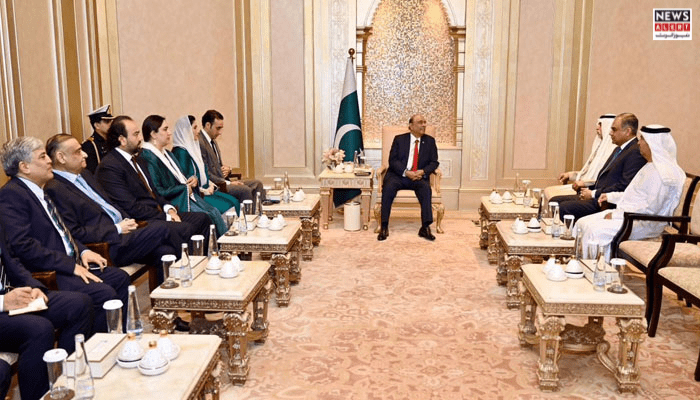
Pakistani President Asif Ali Zardari met UAE Minister of Tolerance and Coexistence Sheikh Nahyan bin Mubarak Al Nahyan.
They emphasized the importance of dialogue, inclusion, and peaceful coexistence between nations.
President Zardari reaffirmed Pakistan’s commitment to tolerance and mutual respect. He praised UAE President Sheikh Mohammed bin Zayed Al Nahyan for his visionary leadership. The President highlighted Sheikh Mohammed’s efforts to promote interfaith dialogue and social harmony.
UAE’s Vision of Tolerance and Human Brotherhood
President Zardari acknowledged the UAE’s national vision of tolerance and human fraternity. He noted the country’s success in building an inclusive society where over 200 nationalities coexist peacefully.
He described this achievement as an inspiring model of social cohesion. The UAE demonstrates how diverse communities can thrive through respect and shared values.
The UAE has become a global example of multiculturalism. Its policies encourage cultural exchange, interfaith dialogue, and tolerance education. These initiatives reinforce the country’s commitment to peaceful coexistence.
Key Participants
Several high-profile figures attended the meeting. They included First Lady Asifa Bhutto Zardari, PPP Chairman Bilawal Bhutto Zardari, Federal Minister for Interior Syed Mohsin Naqvi, and Pakistan’s Ambassador to the UAE. Their presence highlighted the importance of strengthening diplomatic and cultural ties.
Shared Commitment to Peace and Cooperation
The meeting reflected both countries’ focus on regional stability and mutual understanding. Pakistan and the UAE have maintained strong economic, cultural, and political relations for decades.
The two nations cooperate in trade, energy, education, and investment. Meetings like this reinforce their shared vision for a peaceful, inclusive future. Experts note that promoting dialogue and tolerance is crucial in today’s interconnected world.
Looking Ahead
President Zardari and Sheikh Nahyan emphasized that peace, dialogue, and inclusion must guide bilateral relations.
The leaders highlighted successful models of social harmony. They expressed hope that their collaboration will inspire other countries to embrace respect, tolerance, and cooperation.