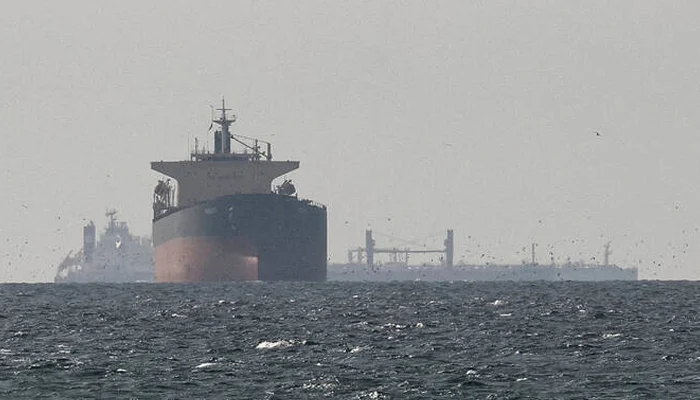
A Pakistani-flagged tanker, Karachi, has become the latest vessel to navigate the Strait of Hormuz closely along the Iranian coastline, highlighting the growing likelihood that Tehran’s approval may now be required for safe passage through the world’s most critical oil chokepoint, Bloomberg reported on Tuesday.
The move comes amid the ongoing US-Israeli war with Iran, now in its third week, which has claimed at least 2,000 lives. The Strait of Hormuz — through which roughly 20% of global oil and liquefied natural gas passes — remains largely restricted. US allies have declined President Donald Trump’s request for assistance in reopening the waterway, causing energy prices to spike and raising fears of global inflation.
Vessel Movements and Tracking Data
According to Bloomberg’s vessel-tracking data, the Karachi passed through the narrow gap between Iran’s Larak and Qeshm islands with open signals on Sunday, continuing along the coast into the Gulf of Oman. Two bulk carriers followed the same route on Monday morning, also openly signaling their transit, while other vessels have reportedly switched off transponders for security reasons.
Additional traffic included two India-flagged liquefied petroleum gas tankers early Saturday and a Gambia-flagged cargo ship exiting the strait on Tuesday. Bloomberg noted that sporadic signals near Larak make it difficult to determine the full route due to electronic interference, which scrambles vessel data.
Strategic Implications
Harrison Prétat, deputy director at the Asia Maritime Transparency Initiative, suggested that Iran may be establishing a controlled transit system. “Tehran could attack vessels or lay mines on the traditional route while keeping a free channel for approved ships,” he told Bloomberg. The use of this Iran-approved route appears to indicate that some political coordination or explicit permission from Tehran is now necessary for transit.
Oil Prices Surge Amid Rising Tensions in the Strait of Hormuz
Since US and Israeli strikes began, Iran has targeted multiple vessels in and around the Strait, effectively restricting traffic and leaving some ships stranded in the Persian Gulf. Analysts at JPMorgan Chase & Co., including Natasha Kaneva, noted that while the strait is not formally closed, passage increasingly depends on political agreements with Iran.
Market and Insurance Concerns
While these transits provide limited reassurance to oil traders, the proximity to Iranian waters continues to raise concerns for insurers and banks financing commodity shipments. High-risk zone classifications and compliance alerts remain in effect, and the number of ships using the route represents only a fraction of normal traffic volumes.
Harrison Prétat concluded, “These limited authorized passages fall far short of restoring typical shipping volumes or energy flows from the region,” signaling that the disruption to global energy trade could persist for the foreseeable future.