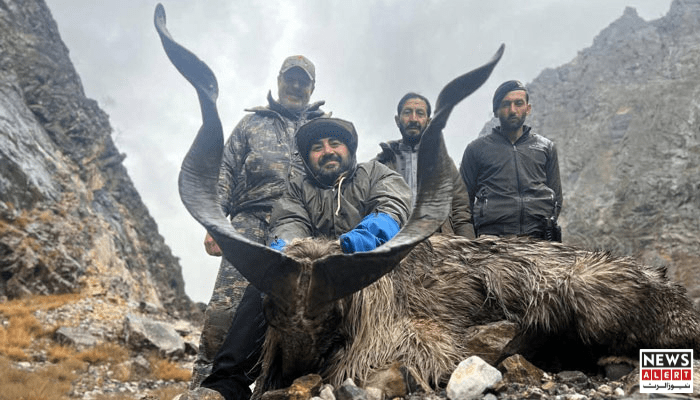
Chitral, Pakistan – A Russian national has legally hunted a rare Kashmir markhor in northern Pakistan’s Chitral district, paying $68,000 under a strictly regulated trophy hunting programme. Authorities say the hunt will directly support conservation efforts and improve living conditions for local communities in the remote mountain region.
The Khyber Pakhtunkhwa Wildlife Department confirmed that the hunt took place in Gehrait Gol, a high-altitude valley known for its steep slopes and rich biodiversity. Officials reported that the markhor’s horns measured 41 inches, a length that indicates both the animal’s age and its trophy value.
A Carefully Regulated Hunting Programme
The Wildlife Department said it carried out the hunt under Pakistan’s community-based trophy hunting programme, which operates under clear rules and annual quotas. Under this system, authorities allow only a limited number of hunts each season.
Importantly, officials select only older male animals that no longer play a key role in breeding. As a result, the programme aims to protect population growth while maintaining ecological balance.
Moreover, wildlife officials closely monitor each hunt. They oversee permits, animal selection, and compliance with conservation guidelines. Because of this strict oversight, authorities say the programme avoids damage to wildlife populations.
This system works because it combines law enforcement with community support, a senior official said.
Revenue Directed Toward Local Welfare
In addition to conservation, the programme focuses strongly on local development. According to officials, the majority of the $68,000 fee will go directly to nearby communities.
These funds will support several priority areas. For example, local leaders plan to invest in education projects, including school repairs and learning facilities. At the same time, communities aim to improve basic healthcare access in areas where medical services remain limited.
Furthermore, authorities expect part of the revenue to fund infrastructure improvements. These may include water supply systems and small access roads. Such projects often remain unaffordable without external funding.
Consequently, officials believe that sharing hunting income reduces economic pressure on families living near wildlife habitats.
Encouraging Conservation Through Local Ownership
Over time, the trophy hunting programme has changed how communities view wildlife. Previously, many residents saw animals like the markhor as competitors for grazing land. However, financial benefits have gradually altered that perception.
Now, local communities actively help protect wildlife. They report illegal hunting and discourage poachers. In return, they receive a direct share of conservation income.
As a result, officials say the programme has helped reduce poaching across parts of northern Pakistan. Moreover, it has increased awareness about wildlife protection among younger generations.
When people benefit, they protect, an official explained. That connection is essential.
The Ecological Value of the Kashmir Markhor
The Kashmir markhor holds special significance in Pakistan. It serves as the country’s national animal and ranks among the world’s largest wild goat species. The animal inhabits rugged mountain regions in Chitral, Gilgit-Baltistan, and Azad Kashmir.
Ecologically, the markhor plays a vital role. It helps control vegetation growth and supports the balance of fragile mountain ecosystems. However, illegal hunting and habitat loss once pushed the species toward serious decline.
In recent years, conservationists have reported population recovery in several areas. They credit this progress largely to regulated hunting and community involvement.
Ongoing Debate Over Trophy Hunting
Despite these claims, trophy hunting continues to spark debate. Animal rights groups strongly oppose the practice and question its ethics. They argue that killing rare animals for sport remains unacceptable.
On the other hand, government officials defend the programme as a practical solution. They note that remote mountain communities often lack sustainable income sources. Without financial incentives, authorities warn that illegal hunting could increase.
Therefore, Pakistan has adopted a model similar to those used in other conservation-focused countries. These models link wildlife protection directly to local economic benefits.
Monitoring the Future of Conservation
Looking ahead, the Wildlife Department plans to continue monitoring markhor populations and reviewing hunting quotas annually. Officials say they will adjust policies if population trends change.
Ultimately, the Chitral hunt highlights the complex balance between conservation and development. While debate continues, authorities insist that regulated trophy hunting remains a key tool for protecting wildlife and supporting communities in Pakistan’s mountainous north.