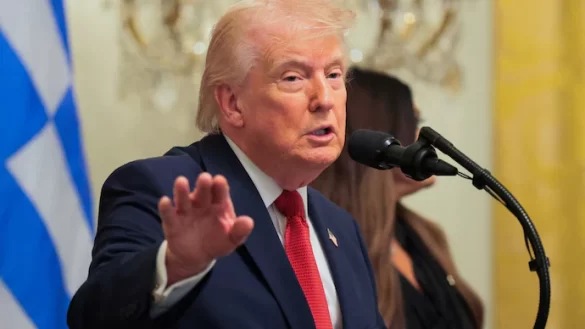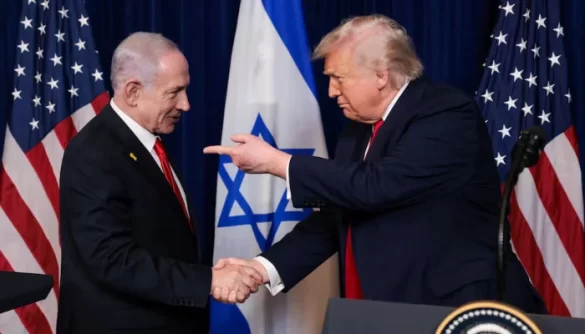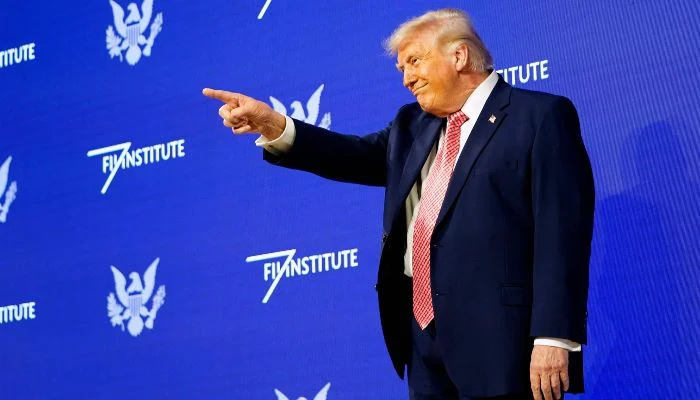
US President Donald Trump has insisted that Iran must reopen the strategic Strait of Hormuz to oil and commercial traffic as part of any potential peace deal. In a speech at an investment forum in Miami, he mistakenly referred to the waterway as the “Strait of Trump” before correcting himself, saying it was a “terrible mistake” but adding, “there’s no accidents with me.”
Trump reiterated claims that Iranian leadership, military forces, and nuclear facilities have suffered significant damage, and asserted that Tehran is “on the run.” He emphasized that while negotiations are underway to end the month-long conflict, the strait must be opened to shipping before any deal can proceed.
Importance of the Strait of Hormuz
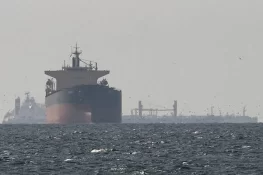
The Strait of Hormuz is one of the world’s most vital maritime passages, connecting the Persian Gulf to the Arabian Sea. Normally, about one-fifth of global oil and LNG shipments pass through this narrow waterway, making it crucial for global energy markets and trade.
Since the start of the US-Israeli military campaign against Iran in late February, shipping through the strait has largely ground to a halt. This disruption has contributed to soaring global energy prices and heightened economic uncertainty worldwide.
Strait of Hormuz Sees Dramatic Shipping Decline Amid Conflict
Mixed Signals and Ongoing Tensions
Despite Trump’s insistence, Iran has not fully accepted US conditions. Tehran has indicated that non-hostile vessels may pass safely, suggesting partial openness while maintaining control over strategic routes. At the same time, Gulf Arab states have urged the US to ensure that any peace agreement not only ends hostilities but also limits Iran’s future ability to threaten shipping lanes like Hormuz.
Trump: “They have to open up the Strait of Trump– I mean, Hormuz. Excuse me. Such a terrible mistake. The fake news will say, ‘He accidentally said–‘ No. There’s no accidents from me.” pic.twitter.com/3dTavHHuGM
— Aaron Rupar (@atrupar) March 27, 2026
Broader Conflict Context
The struggle over Hormuz is part of a broader war involving the US, Israel, and Iran. The conflict has claimed thousands of lives, disrupted global shipping, and driven energy prices higher. Trump has also hinted at extreme measures, including the possibility of taking control of Iran’s oil, while continuing to deploy US forces to the region.
Implications
Control of the Strait of Hormuz remains a key bargaining chip. Reopening it could ease global energy pressures, but Iranian resistance and regional tensions make negotiations uncertain. The waterway’s disruption continues to have far-reaching effects on international trade, energy markets, and geopolitical stability.