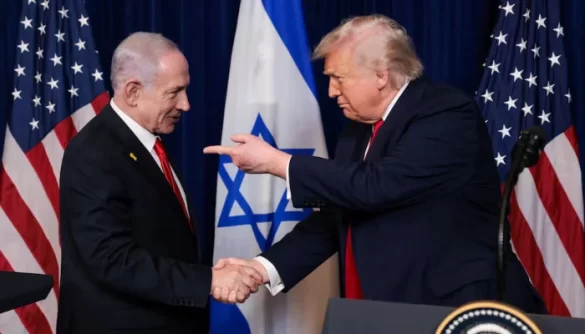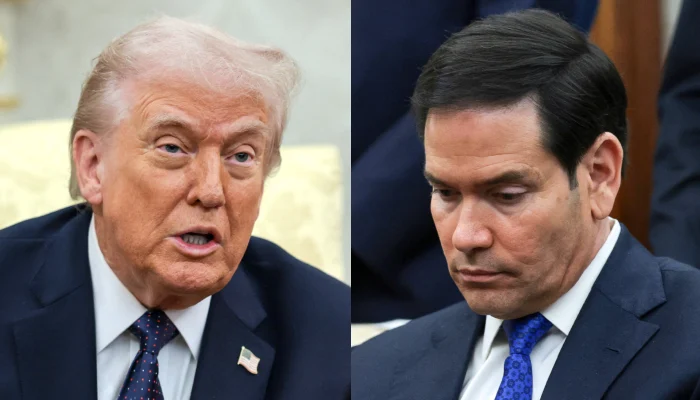
WASHINGTON: President Donald Trump said on Tuesday that he ordered US forces to join Israel’s attack on Iran because he believed Iran was about to strike first. His explanation contradicts a statement made a day earlier by Secretary of State Marco Rubio, who offered a different rationale for the start of the conflict.
Rubio’s Explanation
Secretary of State Marco Rubio told reporters on Monday that the US launched the attack due to fears that Iran would retaliate against planned Israeli actions.
“We knew that there was going to be an Israeli action; we knew that would precipitate an attack against American forces, and if we didn’t act preemptively, we would suffer higher casualties,” Rubio said.
So he’s flat out telling us that we’re in a war with Iran because Israel forced our hand. This is basically the worst possible thing he could have said. https://t.co/68cs255Zoj
— Matt Walsh (@MattWalshBlog) March 2, 2026
Trump’s Perspective
President Trump rejected the notion that Israel pushed the US into the conflict. Speaking in the Oval Office during a meeting with German Chancellor Friedrich Merz, he said:
“I might have forced their (Israel’s) hand. We were having negotiations with these lunatics, and in my opinion, they were going to attack first. If we didn’t act, they would have attacked first. I felt strongly about that.”
Trump presented the US strikes as a preventive measure against an imminent Iranian attack, although Iran called the assault unprovoked.
Conservative Criticism
Several prominent conservative commentators criticized the Iran attacks. Many interpreted Rubio’s comments as suggesting that Israel, not the Trump administration, was calling the shots.
Conservative podcaster Matt Walsh wrote that Rubio’s statement implied the US was in war with Iran because Israel forced America’s hand. Megyn Kelly added:
“Our government’s job is not to look out for Iran or Israel. It’s to look out for us. And this feels very much like Israel’s war.”
The criticism comes as Republicans fight to retain control of Congress in the upcoming midterm elections.
Major Saudi Refinery, Kurdish and Israeli Energy Fields Shut Amid Escalating Mideast Strikes
White House Damage Control
Amid the backlash, the White House conducted a press session with Trump three days after the airstrikes began. Trump cited concerns about a possible Iranian attack, though no evidence was presented publicly. Rubio emphasized:
“The bottom line is this: The president determined we were not going to get hit first. It’s that simple.”
Two senior officials explained that US envoys, Steve Witkoff and Jared Kushner, had pressed Iran to halt uranium enrichment during Geneva talks. Iran instead proposed higher enrichment at its Tehran Research Reactor, which US officials interpreted as delay tactics.
Launch of Military Action
Following these developments, Trump ordered US forces into action the next day, and airstrikes began on Saturday.
Key Takeaway: Conflicting statements from Trump and Rubio have raised questions about the US rationale for entering the Iran conflict, while conservative critics continue to debate whether the decision reflects American interests or Israeli influence.