Pakistan and China have once again highlighted the importance of regional peace and diplomatic engagement, emphasizing Islamabad’s active role in de-escalating tensions and facilitating dialogue amid a volatile Middle East crisis.
High-Level Diplomatic Engagement
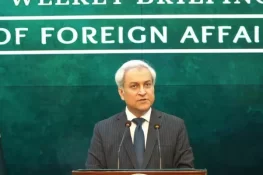
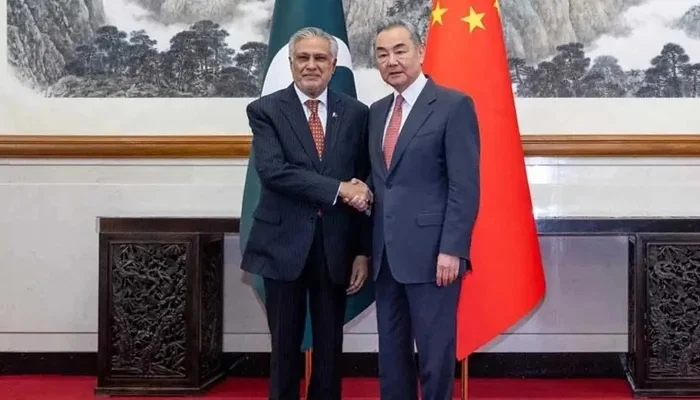
Deputy Prime Minister and Foreign Minister of Pakistan, Senator Mohammad Ishaq Dar, held a telephone conversation with China’s Foreign Minister, Wang Yi, who also serves as a Member of the Political Bureau of the Communist Party of China Central Committee.
During the discussion, both leaders exchanged views on the evolving regional situation, focusing on ongoing efforts to reduce hostilities and promote dialogue.
Pakistan’s Commitment to Peaceful Resolution
According to the Ministry of Foreign Affairs, Senator Dar reaffirmed Pakistan’s consistent stance that dialogue and diplomacy are the only viable means for resolving international disputes peacefully. He also highlighted Pakistan’s ongoing initiatives to de-escalate tensions in the region, including its facilitation of the next round of Iran-United States negotiations, which reflects Islamabad’s principled approach to conflict resolution.
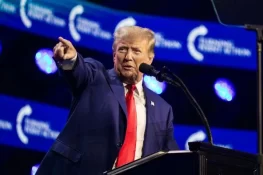
Pakistan May Host US-Iran Talks Amid Trump’s Shift in Stance
China Supports Pakistan’s Facilitation Role
Foreign Minister Wang Yi welcomed the initiation of Iran-US peace talks, emphasizing their critical importance for regional stability. He underlined the need for the international community to encourage both sides to return to the negotiating table. Wang Yi also expressed China’s deep appreciation for Pakistan’s constructive role in promoting de-escalation and affirmed Beijing’s full support for Islamabad’s facilitation efforts.
Strengthening Strategic Cooperation
The two leaders reaffirmed that Pakistan and China are strategic partners bound by mutual trust. They agreed to continue close collaboration to promote peace, stability, and prosperity in the region, including enhanced coordination in multilateral forums such as the United Nations.
Both ministers stressed the importance of supporting efforts for an immediate cessation of hostilities, the resumption of dialogue, protection of civilians, security of maritime routes, and adherence to the principles of the UN Charter.
🔊PR No.7️⃣6️⃣/2️⃣0️⃣2️⃣6️⃣
Pakistan and China Reaffirm Commitment to Regional Peace and Diplomatic Engagement pic.twitter.com/EHotZRpWHo
— Ministry of Foreign Affairs – Pakistan (@ForeignOfficePk) March 27, 2026
Regional Stability Beyond the Middle East
In addition to discussing the Middle East, the leaders also exchanged views on Afghanistan. They agreed to continue working together to advance peace, security, and stability in the wider region, reflecting a shared commitment to multilateral diplomacy and conflict resolution.
Pakistan’s active engagement, supported by China, positions it as a central player in facilitating dialogue and mitigating tensions in one of the world’s most sensitive geopolitical regions.