At least seven people have died and 33 others have been injured in weather-related incidents caused by strong winds, lightning, and heavy rainfall across several districts of Khyber Pakhtunkhwa (KP), according to the Provincial Disaster Management Authority (PDMA).
The fatalities were reported from the districts of Bannu, Shangla, and Mansehra. Officials said the deceased included two children, four men, and one woman, highlighting the widespread impact of the severe weather conditions.
House Collapses and Structural Damage Reported
Initial assessments indicate that most casualties occurred when walls and roofs of houses collapsed under the pressure of strong winds and heavy rain.
Such incidents are not uncommon in rural and semi-urban areas of KP, where many homes are constructed with mud or weak structural materials, making them particularly vulnerable during extreme weather events.
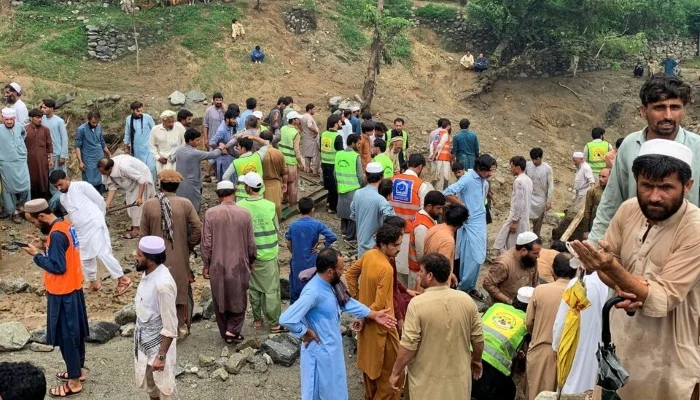
Rescue teams and local residents have been engaged in recovery and relief operations in affected areas, while injured individuals have been shifted to nearby hospitals for treatment.
Weather Forecast Warns of More Rain
The Pakistan Meteorological Department (PMD) has forecast further rainfall in upper parts of KP, as well as in Gilgit-Baltistan and Kashmir. The department said that while these northern regions may experience intermittent rain and thunderstorms, most other parts of the country are likely to remain hot and dry.
This shifting weather pattern is typical during the early summer monsoon transition period in Pakistan, when sudden downpours and thunderstorms can trigger localized flooding and structural damage.
PDMA Issues Alert for High-Risk Areas
In response to the ongoing weather situation, the PDMA has issued alerts for several districts including Swat, Upper Dir, Kohistan, and Buner.
Authorities have been instructed to remain on high alert, especially in areas prone to landslides, flash floods, and river swelling. The PDMA has also advised tourists and travellers to exercise caution and avoid unnecessary movement in vulnerable regions during heavy rainfall.
The public has been strictly warned to stay away from rivers, streams, and rain-fed waterways due to the risk of sudden water surges.
Risk of Flooding and Snowmelt Concerns
Officials have also cautioned that rising temperatures after June 15 may accelerate snowmelt in mountainous regions, potentially increasing the risk of flooding in downstream areas.
Emergency response systems have been activated, and district administrations have been directed to maintain continuous monitoring of weather developments and respond promptly to any emergencies.
Emergency Helpline and Safety Measures
The PDMA has urged citizens to follow safety advisories and report emergencies through its helpline 1700.
Authorities have emphasized that preventive measures and public awareness are critical in reducing casualties during such extreme weather events, which have become increasingly frequent in recent years.
Ongoing Pattern of Weather-Related Incidents
This is not an isolated incident, as similar storms earlier in the month also resulted in fatalities and injuries across the province. Officials say repeated occurrences highlight the need for stronger infrastructure, improved early warning systems, and better disaster preparedness at the local level.
As the monsoon season approaches, authorities are expected to remain on alert for further weather-related disruptions across northern Pakistan.