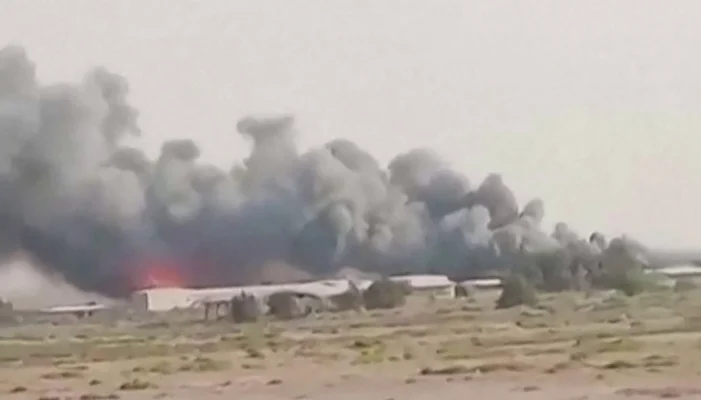
The conflict between Iran and the United States intensified on Sunday as both sides exchanged missile and drone strikes across the Gulf region. Iran claimed responsibility for attacks targeting US military facilities in several Gulf countries and warned that further “incidents” could occur in the Strait of Hormuz, one of the world’s most strategically important maritime routes.
The latest escalation has cast fresh uncertainty over the interim US-Iran agreement reached last month, which had aimed to reduce hostilities, reopen the Strait of Hormuz, and create space for further negotiations.
Iran Claims Strikes on US Facilities
Iran’s Islamic Revolutionary Guard Corps (IRGC) said it launched attacks on US-linked military installations in Bahrain, Kuwait, Oman, Qatar, Jordan, and the United Arab Emirates.
According to the IRGC, the strikes targeted military infrastructure, including radar systems, command-and-control facilities, aircraft support platforms, and other US military assets stationed across the region.
Regional governments reported varying impacts from the attacks. Jordan said its air defence systems intercepted four Iranian missiles, while Bahrain announced that it had intercepted several aerial threats. The United Arab Emirates also confirmed that its air defences engaged incoming missiles and drones.
Meanwhile, Oman summoned Iran’s ambassador to lodge a formal protest after reporting drone attacks in two regions. Kuwait said one worker was injured after an attack damaged an oil drilling platform.
US Launches New Military Operations
The US Central Command (CENTCOM) said American forces launched another wave of military operations against Iranian targets on Sunday evening.
According to CENTCOM, the strikes were intended to reduce Iran’s ability to attack commercial vessels and civilian shipping passing through the Strait of Hormuz.
A US military spokesperson said American aircraft intercepted an Iranian cruise missile and destroyed a one-way attack drone during the latest exchange.
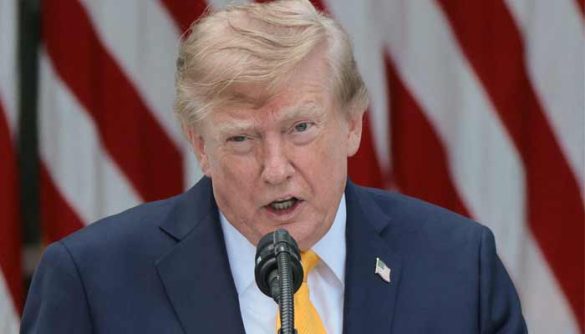
US President Donald Trump, speaking briefly to Reuters, commented on the ongoing military operations by saying, “We’re beating them up.”
Strait of Hormuz Remains at the Centre of the Crisis
The Strait of Hormuz continues to be the focal point of the confrontation.
Iran reiterated that it had again closed the strategic waterway, claiming it had stopped vessels travelling without its authorization. Iranian authorities said they had recently disabled another ship after previously firing warning shots at a vessel using what Tehran described as an unauthorized route.
US Launches Fresh Military Strikes on Iran After Attack on Commercial Ship
However, the United States rejected Iran’s claim that it controls the strait, insisting that international maritime traffic continues despite heightened security risks.
The US Navy-led Joint Maritime Information Centre said an expanded southern shipping route near Oman remains available for commercial traffic, although vessels have been advised to exercise extreme caution.
Regional Shipping Disrupted
The escalating conflict has affected maritime activity throughout the Gulf.
India reported that one of its nationals was missing following an attack on the container ship GFS Galaxy off the coast of Oman. Omani authorities said 23 crew members had been rescued.
Qatar instructed all vessels—including commercial boats, fishing vessels, and recreational watercraft—to suspend operations temporarily because of the deteriorating security situation.
Iran’s newly established Persian Gulf Strait Authority announced that transit through the Strait of Hormuz would remain suspended until stability returns, stating that permits for passage would only be issued once security conditions improve.
Rising Energy Prices Renew Inflation Fears
The renewed fighting has intensified concerns over global energy supplies.
Before the conflict escalated, the Strait of Hormuz handled roughly one-fifth of the world’s seaborne oil and liquefied natural gas (LNG) shipments. Any prolonged disruption to shipping through the waterway could significantly affect global energy markets.
Reflecting those concerns, Brent crude oil rose 4.3% to $79.31 per barrel, as investors reacted to fears of potential supply disruptions. Higher oil prices have also revived concerns about inflation in many economies.
Diplomatic Efforts Under Pressure
Iran’s Foreign Ministry accused the United States of carrying out what it described as “aggressive” attacks over the weekend. It also said negotiations held in Muscat, Oman, regarding the future management of the Strait of Hormuz failed to produce an agreement, alleging that US pressure influenced the talks.
Iran’s chief negotiator, Mohammad Bagher Ghalibaf, wrote on social media that “the era of one-sided deals is over,” reiterating Tehran’s demand that previous commitments be honoured.
Meanwhile, US officials have maintained that freedom of navigation through international waterways remains a priority, even as military operations continue.
Regional Tensions Continue to Rise
The latest exchange marks one of the broadest military confrontations in the Gulf since the conflict began, with attacks now affecting multiple countries hosting US military facilities.
As both sides continue military operations and diplomatic efforts remain stalled, governments and financial markets around the world are closely watching developments amid concerns that further escalation could threaten regional stability, disrupt global trade, and place additional pressure on international energy markets.