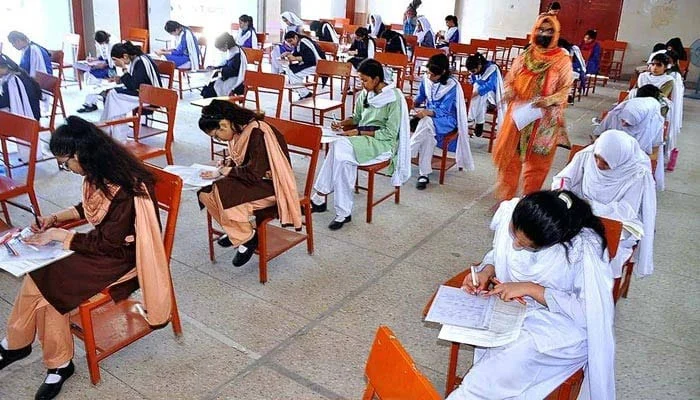
MURREE: Several examination boards across Pakistan have implemented a new grading policy that raises the minimum passing marks to 40%, the Inter Boards Coordination Commission (IBCC) forum was informed on Saturday.
The policy has been adopted by examination boards in Sindh, the Federal Board of Intermediate and Secondary Education (FBISE), AJK Board, KIU Board, Aga Khan Board and Ziauddin Board.
The development was announced at the conclusion of a two-day meeting of the IBCC Forum in Murree, where members approved a series of measures aimed at standardising examination practices and improving the credibility and recognition of Pakistani qualifications.
The forum also endorsed reforms designed to shift assessment away from rote memorisation towards conceptual understanding, while improving transparency in student records.
B-Form, CNIC numbers to be added to certificates
As part of efforts to make academic records easier to identify and verify, the forum agreed to include students’ B-Form or CNIC numbers on SSC and HSSC certificates.
The measure is intended to improve the reliability of academic records and make them easier to access and authenticate.
The forum also approved scholarships and overseas exposure opportunities for board toppers, giving high-performing students opportunities to broaden their academic and professional experience.
IBCC will further arrange winter and summer camps for high-achieving students, providing additional opportunities for learning, leadership development and exposure.
Punjab Education Minister Dismisses Rumours of Extended School Holidays
More madaris recommended for equivalence
The forum recommended 12 additional Deeni Madaris for equivalence of their qualifications with SSC and HSSC certificates.
With the latest recommendation, the total number of institutions covered under the equivalence framework will rise to 26.
The forum also agreed that students who qualify through foreign examination boards will be eligible for Science Group equivalence if they have passed at least two science subjects.
The decision is intended to provide greater flexibility for students pursuing different academic pathways.
Boards share best practices
The IBCC Forum reaffirmed its commitment to improving coordination among examination, technical, curriculum and textbook boards.
It also called for the development of a transparent, technology-enabled, student-friendly and internationally comparable assessment system.
BISE Kohat, BISE Quetta and FBISE presented their best practices, innovative initiatives and outcomes for consideration by other examination boards.
IBCC Forum National Coordinator Inayatullah Waseem stressed the need for active participation and collective ownership of examination reforms.
He said stronger coordination among boards and consistent implementation of agreed measures were essential to ensuring fairness, improving quality and restoring public confidence in the examination system.