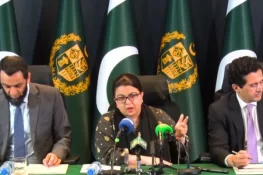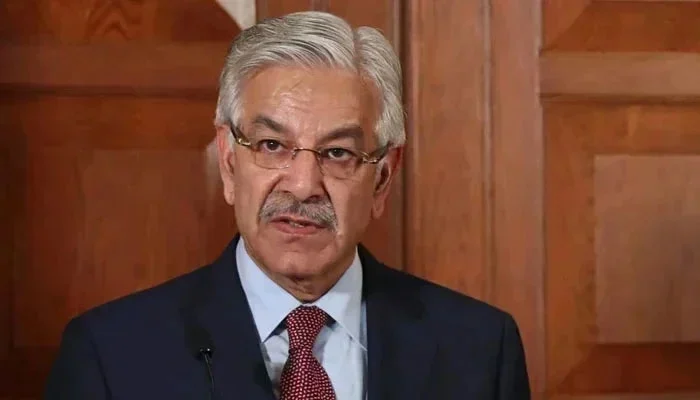
ISLAMABAD: Defence Minister Khawaja Asif on Wednesday said the situation had reached a point where the Makkah defence agreement should be implemented following an attempted drone attack near the holy city.
Speaking on Geo News programme Aaj Shahzeb Khanzada Kay Sath, Asif said Pakistan was bound by the agreement and would fulfil its obligations, while noting that details of the pact could not be discussed publicly.
“Makkah Agreement applies to us, and we will fulfil our duty,” he said.
The minister stressed that Pakistan’s commitment to protecting the holy sites did not depend solely on the agreement.
“If Makkah is attacked, there is no need for an agreement to protect it,” Asif said, describing the protection of the holy sites as a duty in itself.
Saudi Arabia reports Houthi drone interception
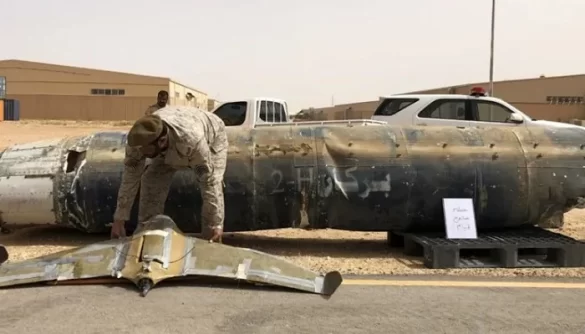
Asif’s remarks came after Saudi Arabia said its air defences intercepted and destroyed a Houthi drone south of Makkah before it entered prohibited airspace over the holy city.
The drone was intercepted on Tuesday evening and was described by a Saudi-led coalition spokesperson as the second reported Houthi attempt to target Makkah.
The Houthis have denied targeting the holy city. Houthi spokesman Yahya Saree said their operations targeted Saudi oil facilities and military bases located away from the sacred sites.
Prime Minister Shehbaz Sharif also reiterated Pakistan’s support for Saudi Arabia’s defence, saying Islamabad stood “shoulder to shoulder” with Riyadh.
He condemned what he described as a “dastardly and heinous attempted drone attack” against Makkah Al-Mukarramah and called on all parties to exercise maximum restraint.
Asif explains Makkah pact’s scope
Asif said the trilateral agreement provided for mutual defence if the territorial integrity or geographical boundaries of any of the three member states were violated.
He said there was “absolutely no ambiguity” regarding the agreement’s application but declined to discuss specific military or defence strategies.
The defence minister reiterated that Pakistan would fulfil its obligations under the agreement while keeping operational details confidential.
Houthi drone intercepted near Makkah as Saudi coalition warns holy sites are a red line
Pakistan conveys Saudi message to Iran
Responding to questions about Iran, Asif said Pakistan had conveyed Saudi Arabia’s message to Tehran amid concerns over Houthi attacks against the kingdom.
He said he did not believe Iran, as a state, would support the Houthis in a manner that would result in another regional front being opened.
“I don’t think Iran as a state will open another front,” he said, adding that Tehran was already involved in a regional conflict.
Asif distinguished between the Iranian state and non-state groups, saying such groups could act without formal approval from a government.
He described the possibility of Iran opening another front as minimal and said Pakistan would continue efforts to prevent the conflict from expanding.
Maritime routes pose economic concerns
Asif also highlighted disruptions affecting key maritime routes, including the Strait of Hormuz and Bab al-Mandab.
He said the disruption of these routes was affecting maritime trade and economies across the region, with significant implications for Pakistan.
The minister stressed the importance of keeping international maritime routes open, saying prolonged disruptions could have a substantial economic impact on Pakistan and other countries in the region.
He also said the emergence of the Pakistan-Saudi Arabia-Turkiye defence agreement reflected countries’ efforts to address their security needs.
While discussing the possibility of further regional security arrangements, Asif clarified that such comments represented his assessment rather than information about any specific ongoing development.