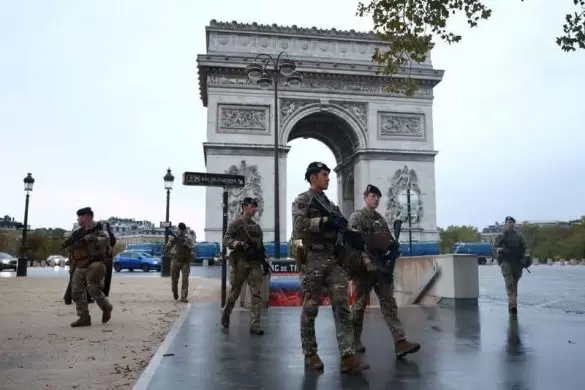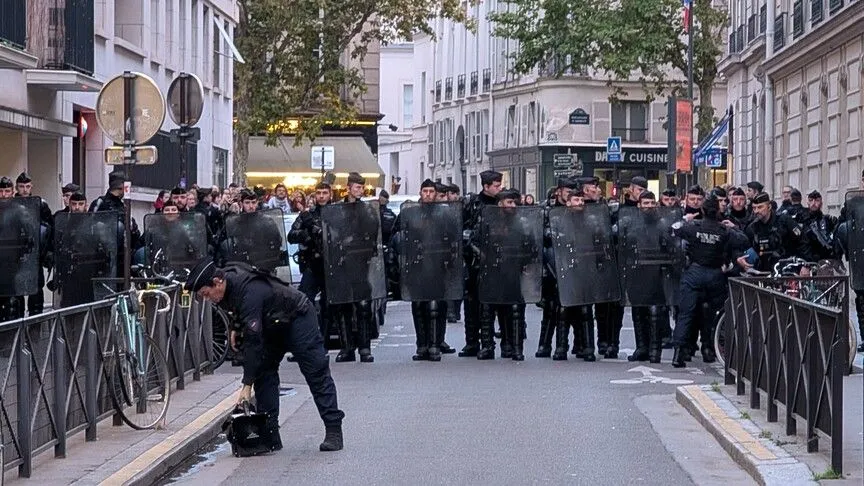
Police in Paris remained on high alert on Saturday amid concerns about renewed unrest following violent demonstrations the previous week. Authorities said they were closely monitoring the security situation as protesters prepared to take to the streets across France.
Speaking to French broadcaster BFMTV, Paris Police Prefecture spokesperson Helene Denechere warned that the risk of further violence remained a serious concern.
“The threat exists, it is being taken into consideration,” Denechere said, adding that the scale and intensity of the violence during demonstrations on October 17 had been underestimated.
She said authorities were now reassessing the situation and taking additional precautions to prevent a repeat of the previous weekend’s incidents.
Police also seized potentially dangerous objects, including fireworks mortars, during security checks across the Ile-de-France region ahead of the planned demonstrations.
Dispute Over Paris Protest Route
Security preparations were complicated by a disagreement between Paris police and trade unions over the route of Saturday’s demonstration.
On Friday, the Paris Police Prefecture banned a previously agreed route between Place de la Bastille and Place de la Nation. Authorities instead proposed an alternative route connecting Porte d’Italie and Porte de Vincennes via the Boulevards des Marechaux.
According to the police decree, the demonstration was authorised to take place between 1pm and 7pm local time.
However, an inter-union group representing trade unions and youth organisations in the Ile-de-France region rejected the alternative, describing the proposed change as “unacceptable” in a statement.
The disagreement added to tensions surrounding the demonstrations, with authorities seeking to manage public safety while organisers challenged restrictions on the planned march.
24 Metro Stations Closed for Security
Paris public transport operator RATP announced that 24 metro stations would remain closed from 9am on Saturday at the request of police, citing security concerns.
The closures were part of wider precautionary measures as authorities prepared for demonstrations in the French capital.
Protests were also authorised in eight other major French cities, including Lille, Strasbourg, Mulhouse, Grenoble, Marseille, Toulouse and Amiens.
In Marseille, law enforcement officers were deployed around the city’s Old Port ahead of the planned demonstration.
France Deploys 70,000 Police as Protests Raise Fears of Fresh Unrest
Cost-of-Living Anger Fuels Demonstrations
The latest protests followed large demonstrations held across France on October 17, when students, trade union members and Yellow Vests protesters mobilised over cost-of-living pressures, including high fuel prices.
Organisers and participants planned further demonstrations described as “Act II,” signalling a continuation of the protests.
Estimates cited in the report put participation in the previous week’s demonstrations at between 500,000 and 800,000 people nationwide. More than 2,500 arrests were reported, while some gatherings escalated into violence, with incidents of rioting and looting.
The unrest has intensified pressure on French authorities to maintain public order while responding to public frustration over economic conditions.
Authorities Prepare for Further Unrest
The heightened security measures reflect concerns that renewed demonstrations could lead to further clashes, property damage and disruption to public transport.
Police have increased surveillance, carried out security checks and imposed restrictions on the Paris march route. However, the scale of Saturday’s turnout and whether further violence would occur remained uncertain.
With demonstrations planned in several major cities, French authorities faced the challenge of balancing public safety with the right to peaceful protest.