The United States has intensified its campaign to restrict Iran’s oil revenue and military funding, with US Central Command (CENTCOM) chief Admiral Brad Cooper claiming that Tehran has been cut off from maritime imports and exports, apart from permitted humanitarian assistance.
In a video message on Friday, Cooper said the US campaign was focused on restricting Iranian oil exports, disrupting digital financing and weakening the ability of Iran’s security forces to pay their personnel.
He claimed that US forces had prevented Iran from exporting at least $25 billion worth of crude oil in recent months. He also said US interagency efforts had helped freeze nearly $350 million in cryptocurrency assets.
The claims came as shipping through the strategically important Strait of Hormuz remained severely disrupted. According to the UK Maritime Trade Operations agency (UKMTO), transits were still approximately 70% below pre-conflict levels, while attacks on commercial vessels continued.
US Claims Iran Has Been Cut Off From Maritime Trade
Cooper said Iran had lost access to maritime trade, with the exception of humanitarian assistance permitted by Washington.
“As a point of emphasis, with the exception of the humanitarian assistance we’ve allowed in, Iran has no exports and no imports by sea,” he said.
He argued that the restrictions were putting growing economic pressure on Tehran and limiting its ability to finance military operations.
Cooper also claimed that the freezing of nearly $350 million in cryptocurrency assets had further constrained Iran’s ability to fund regional armed groups or replace weapons and facilities damaged in US strikes.
According to the CENTCOM commander, Iran-aligned groups operating across the region had begun withholding payments to their fighters to redirect money to the Islamic Revolutionary Guard Corps (IRGC).
He added that the IRGC was also showing signs of financial strain.
“The Islamic regime is clearly feeling the economic pain, and the IRGC is increasingly showing signs of greater desperation as a result,” Cooper said.
The statements represent Washington’s assessment of the impact of its pressure campaign. The figures and claims about Iran’s financial position were not independently verified in the supplied report.
US Says Strait of Hormuz Remains Open
Despite the restrictions on Iranian maritime trade, Cooper maintained that commercial shipping continued through the Strait of Hormuz.
He accused Iran of attacking commercial vessels and said US forces were working with regional allies and shipping industry partners to strengthen maritime security.
“Let me be clear: the Strait of Hormuz is controlled by the United States and our regional partners, not Iran, and it remains open for business,” Cooper said.
He claimed that approximately 400 merchant ships had passed through the strait during the preceding seven days.
Cooper also said US forces had assisted Gulf partners in transporting more than 100 million barrels of crude oil through the waterway during the same period. He put the total volume shipped with US assistance in recent months at more than 1.3 billion barrels.
However, UK maritime monitoring data indicated that shipping activity remained substantially below pre-conflict levels, underscoring the continuing disruption to one of the world’s most important energy routes.
Hormuz Shipping Traffic Remains 70% Below Pre-Conflict Levels
UKMTO reported 125 outbound and 129 inbound transits through the Strait of Hormuz over the previous seven days.
The figures represented a decline from the 129 outbound and 146 inbound transits recorded during the preceding week.
The agency also reported 12 attacks on vessels during the week: 10 in the Strait of Hormuz, one in the Gulf and one in the Gulf of Oman.
Of the affected vessels, six continued their journeys or reached port, one was lost, two were disabled or unable to navigate, and the outcomes of three remained unconfirmed.
UKMTO warned that the actual number of attacks could be higher because many vessels targeted in incidents had declined to report them.
The agency said it had recorded 84 incidents in the Strait of Hormuz since the conflict began in late February.
The figures highlight the continuing risks facing commercial shipping despite US claims that the waterway remains open.
Ghalibaf Says US Must Be Penalised as Iran Keeps Strait of Hormuz Closed
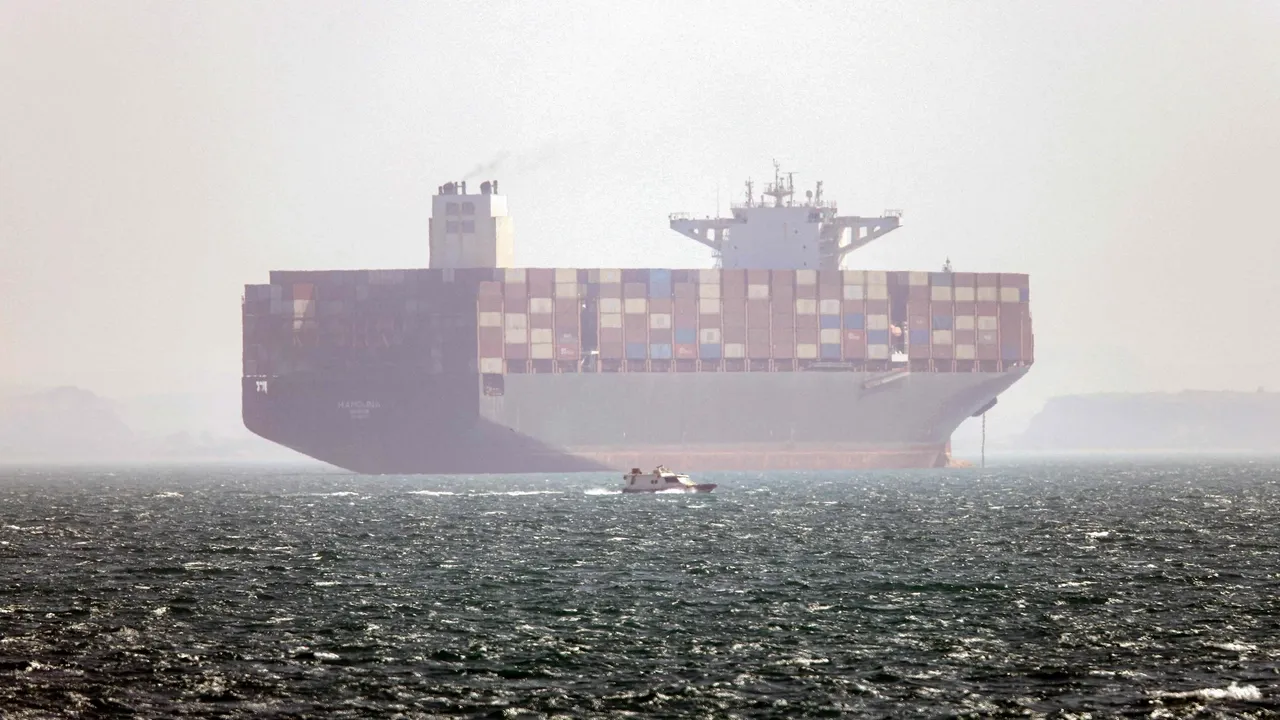
Container Ship Sinks After Projectile Strike
UKMTO said a container ship was struck by an unidentified projectile near Ras Shaykh Masud on October 13.
The vessel caught fire and sank the following day, according to the agency. All crew members were evacuated.
The incident added to concerns about the safety of commercial vessels operating near the Strait of Hormuz, where repeated attacks have disrupted maritime traffic and increased uncertainty for shipping companies.
The agency’s warning about underreported attacks also suggests that establishing the full scale of the disruption remains difficult.
The Strait of Hormuz is a critical passage for global energy and commodity shipments, making prolonged restrictions or security threats a concern for international markets.
Iran Claims Oil Supertanker Struck a Naval Mine
Meanwhile, the IRGC Navy said on Friday that an oil supertanker had struck a naval mine in the Strait of Hormuz, triggering a major explosion and fire.
According to a statement carried by the semi-official Tasnim News Agency, the vessel was carrying more than 2 million barrels of crude oil when it attempted to pass through the waterway.
The IRGC Navy described the tanker as a “rogue” vessel and alleged that it had switched off its navigation and radar systems. It further claimed that the ship had attempted to use US military support to transport goods through the strait.
The statement did not identify the tanker, its owner or its flag. It also provided no details about possible casualties or the extent of the damage.
The claims had not been independently verified in the supplied report.
Conflict Continues to Threaten Regional Shipping
The latest developments reflect continuing tensions between Washington and Tehran over maritime access, military pressure and the security of commercial shipping.
The conflict began with US and Israeli attacks against Iran on February 28, followed by a ceasefire in April. Clashes later resumed as negotiations stalled, although the two sides signed a framework agreement in June, according to the supplied report.
The Strait of Hormuz remains central to the dispute because of its importance to global energy supplies. Continued attacks and reduced shipping traffic have raised concerns about the movement of oil and other commodities.
While Washington says its campaign is restricting Iran’s revenue and maintaining access to the waterway, UKMTO’s figures point to persistent disruption and security risks for commercial vessels.