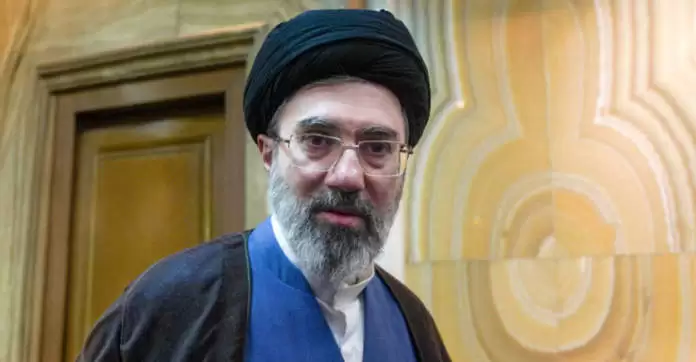
TEHRAN: Iran’s Supreme Leader Mojtaba Khamenei has ordered the country’s armed forces to respond immediately to any enemy threat without “geographic limits”, according to a statement published on his official Telegram account on Saturday.
Khamenei said Iran would determine the timing and conditions for ending any renewed military or alleged terrorist attacks by its enemies. He also ordered an update to the country’s military target list to include US and Israeli physical and non-physical assets within the reach of Iranian forces.
The statement comes amid heightened tensions between Tehran and Washington, with both sides issuing warnings as diplomatic efforts continue to prevent a wider regional conflict.
Fishing Boats Reportedly Attacked
Iran’s state broadcaster IRIB, citing an official in Hormozgan province, reported on Saturday that US forces had attacked two fishing boats near Qeshm Island.
According to the report, two fishermen were missing and another was injured. There was no immediate confirmation of the alleged attack from the United States.
The reported incident has added to concerns over maritime security in the region, where tensions have intensified around the strategically important Strait of Hormuz.
Iran Warns of Wider Conflict
Iranian army spokesperson Brigadier General Mohammad Akraminia warned that any renewed war involving the United States and Israel could spread across a much wider geographical area.
In a post on X on Saturday, Akraminia said the consequences would extend beyond the immediate conflict if US President Donald Trump launched another military operation in the region.
He also questioned Washington’s commitment to diplomacy, saying Iran’s army was continuously strengthening its combat readiness and closely monitoring US movements.
Akraminia warned that the end of any conflict would not be determined solely by Trump.
Iranian Delegation Arrives in Qatar
An Iranian delegation, including a deputy to Foreign Minister Abbas Araghchi, has arrived in Doha for discussions aimed at facilitating indirect negotiations with Washington, according to Qatari newspaper Al-Araby Al-Jadeed.
Citing an Iranian source, the newspaper reported that the visit followed intensive discussions between Iranian officials and a Qatari negotiating delegation in Tehran.
Those discussions reportedly produced progress in indirect negotiations and paved the way for the Iranian delegation to travel to Qatar.
The source stressed that negotiations with Washington were taking place indirectly through a mediator rather than through direct talks.
Sources familiar with Qatar- and Pakistan-led mediation efforts also told the newspaper that a US delegation was expected to join the diplomatic process in Doha, potentially opening the way for direct discussions between American and Iranian representatives.
Trump Weighs Military Options
A report by Axios said on Friday that Trump could become more inclined to approve a major military operation against Iran if Republicans perform poorly in the upcoming US midterm elections.
The report quoted a US official as suggesting that Trump might pursue a bold move if he felt politically weakened. The official reportedly said Iranian officials were being told that their best opportunity to reach an agreement was now.
However, a White House official rejected the suggestion that the election outcome would influence Trump’s decisions on Iran.
According to Axios, Qatari mediators spent more than 12 hours in Tehran on Friday while maintaining contact with the White House. A diplomatic source described the discussions as showing positive progress, with further talks expected in Doha.
Nuclear Dispute Stalls Talks
Negotiations have remained stalled over competing demands from Washington and Tehran.
According to the report, the United States wants Iran to make concessions on its nuclear programme as part of any renewed agreement. Tehran, meanwhile, is demanding that Washington lift its naval blockade, release frozen Iranian funds and allow oil sales.
Qatar is reportedly urging Iran to permit United Nations inspectors to access nuclear sites damaged in previous attacks in exchange for limited sanctions relief.
The report also highlighted divisions within the Trump administration. Defence Secretary Pete Hegseth and Secretary of State Marco Rubio were described as sceptical of a deal, while Vice President JD Vance and envoys Steve Witkoff and Jared Kushner were reported to favour resuming negotiations.
Araghchi Issues Fresh Warning
Iranian Foreign Minister Abbas Araghchi also issued a warning in response to German Chancellor Friedrich Merz’s remarks about the economic consequences of the conflict.
Araghchi said that “red lines” were a thing of the past and warned that Iran’s armed forces would deliver a devastating response to anyone who harmed the Iranian people.
He also dismissed concerns over the estimated €100 billion cost of the war to Europe, arguing that the economic impact was insignificant compared with the potential consequences of further military escalation.
According to Clash Report, Merz had linked the increase in costs over the preceding eight months to rising energy prices caused by the conflict and said Europe had an economic interest in ending the fighting as quickly as possible.
Araghchi accused the German chancellor of supporting US-Israeli attacks on Iran and suggested that Europe was being drawn into a conflict with serious economic consequences.
Iran’s Supreme Leader Says New Strait of Hormuz Policy Will Bring Stability
Tanker Hit in Strait of Hormuz
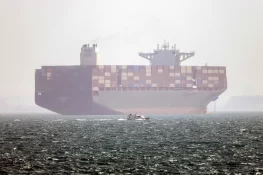
The United Kingdom Maritime Trade Operations agency reported that a crude oil tanker had been struck by an unidentified projectile while completing an outbound transit through the Strait of Hormuz.
The agency said it had received information about the incident from a verified source. It did not immediately identify the vessel, specify the precise location of the strike or provide details about the crew’s condition.
Authorities were investigating the incident, while the agency advised vessels operating in the area to exercise caution and report suspicious activity.
The reported strike adds to a series of maritime incidents in and around the waterway, a critical route for global energy shipments.
IRGC Reports Another Tanker Incident
Iran’s Islamic Revolutionary Guard Corps Navy said on Friday that a fourth oil tanker had struck a mine and caught fire while attempting to pass through what it described as an unauthorised route in the Strait of Hormuz.
According to the IRGC statement, the supertanker was carrying more than 2 million barrels of crude oil and had ignored repeated radio warnings against using the southern passage.
The navy claimed that the vessel struck a mine, triggering an explosion and a fire. It described the incident as the fourth tanker fire in the strait since early Friday.
The claims have not been independently verified in the supplied report.
Oman Evacuates Injured Crew Member
Oman announced that it had medically evacuated an injured crew member from an Indian boat that reportedly came under attack in the Strait of Hormuz.
The Royal Air Force of Oman carried out the evacuation in coordination with relevant authorities, according to the military’s Directorate of Moral Guidance.
The injured crew member was transferred from Khasab Hospital in the northern governorate of Musandam to Khawla Hospital in Muscat for specialised treatment.
The Royal Navy of Oman had earlier announced that it evacuated 25 crew members from a commercial vessel that caught fire after an attack approximately 1.6 nautical miles off the coast of Musandam.
Regional Tensions Remain High
The reported maritime incidents, military warnings and stalled negotiations underscore the risk of further escalation between Iran and the United States.
While diplomatic efforts in Qatar offer a possible route towards renewed negotiations, major disagreements over Iran’s nuclear programme, sanctions, maritime restrictions and security guarantees remain unresolved.
With both sides maintaining military readiness and issuing increasingly forceful warnings, the direction of the conflict will depend on whether mediation efforts can produce progress before further incidents trigger a wider confrontation.