US President Donald Trump has claimed that Qatar, Saudi Arabia, the United Arab Emirates (UAE), Bahrain, Kuwait and other regional countries favour maintaining the US naval blockade of Iran, as diplomatic efforts to end the eight-month conflict continue.
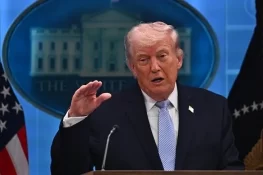
Trump made the remarks following a meeting with Qatar’s Prime Minister Sheikh Mohammed bin Abdulrahman Al-Thani at the White House on Monday. He also indicated that Washington would hold off on launching further military strikes against Iran for the time being, citing appeals from neighbouring countries.
Trump Says Gulf Countries Prefer Current Situation
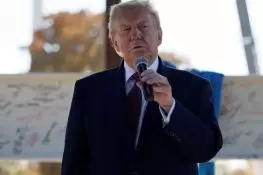
In a post on his social media platform Truth Social, Trump said several Gulf countries preferred maintaining the existing US naval blockade and continuing what he described as Operation Iron Gate.
He reiterated that preventing Iran from acquiring nuclear weapons remained a non-negotiable condition for the United States.
Trump also said American forces remained fully prepared for military action but suggested there might be no need to use their capabilities if diplomatic efforts continued to make progress.
He said he was delaying further strikes at the request of countries neighbouring Iran, including Qatar, Saudi Arabia, the UAE, Bahrain and Kuwait.
However, Trump’s characterisation of these countries’ positions was not independently confirmed in the available reports. In a separate interview with Reuters, he specifically said Qatar and Saudi Arabia preferred a peaceful resolution to the conflict.
Qatar Leads Diplomatic Efforts to End Iran War
The meeting with the Qatari prime minister came as diplomatic efforts to end the conflict intensified.
Sheikh Mohammed bin Abdulrahman Al-Thani, who also serves as Qatar’s foreign minister, has played an important mediation role throughout the conflict, maintaining communication between Washington and Tehran.
He visited Tehran last week before travelling to Washington for discussions with Trump and US Vice President JD Vance.
Following his meeting with the US president, the Qatari prime minister described the discussions as positive and expressed hope for an agreement that could restore peace to the region.
Despite these diplomatic contacts, officials on both sides have expressed doubts about the possibility of an immediate breakthrough.
Iran Rejects US Position and Defends Its Peace Proposal
Iran has maintained that any agreement to end the conflict must address its demands, including an end to the US naval blockade, sanctions relief and a halt to military operations.
Under Tehran’s proposed framework, the United States would lift its blockade of Iranian ports, ease certain sanctions and stop bombing operations. In return, Iran would end its own restrictions on shipping through the Strait of Hormuz.
Discussions concerning Iran’s nuclear programme and additional sanctions would take place at a later stage.
However, Washington has rejected the proposal. US Secretary of State Marco Rubio described Tehran’s conditions as unrealistic and unacceptable.
Iranian Foreign Ministry spokesperson Esmaeil Baghaei, meanwhile, defended the proposal, describing it as the most reasonable option currently available.
Iranian Supreme National Security Council Secretary Mohsen Rezaei also called on Washington to accept Tehran’s seven conditions and stop circulating reports about negotiations that Iran says are not taking place.
Iran Denies Reports of Meeting With JD Vance
Iranian Foreign Minister Abbas Araghchi has separately rejected media reports suggesting that Rezaei could meet US Vice President JD Vance in Doha as part of the diplomatic process.
According to Iran’s state news agency IRNA, Araghchi described the reports as baseless and said no such meeting had been planned.
He also argued that military action and additional economic sanctions would not resolve the conflict, stressing that diplomacy and respect for Iran’s demands were necessary to reach an agreement.
Rezaei similarly criticised reports about possible negotiations, urging Washington to acknowledge Iran’s position before expecting progress.
Military Tensions Continue Around the Strait of Hormuz
Despite diplomatic activity, military tensions remain high across the region.
Iranian state media reported that US forces had carried out overnight strikes on Qeshm Island. An Iranian provincial official said the attacks had not damaged vital infrastructure or essential services. The United States had not publicly commented on those reports at the time.
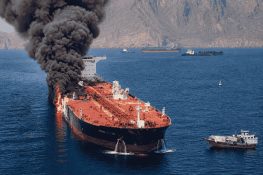
Maritime security has also become a major concern, with attacks on commercial vessels reported in the Gulf and the Strait of Hormuz.
Iranian state television reported that 11 tankers had been disabled over a 10-day period, while Tehran also said a tanker had struck a mine east of the strategic waterway.
The Strait of Hormuz is a critical international shipping route for global energy supplies, making any disruption a significant concern for oil markets and international trade.
Regional Leaders Warn Against Further Escalation
Regional leaders have continued calling for a diplomatic solution.
Turkish President Recep Tayyip Erdogan said he had conveyed to Trump that Ankara did not want another escalation in the region. He stressed that dialogue and diplomacy remained the preferred ways to resolve the crisis.
A senior UAE official, Anwar Gargash, also warned that achieving a comprehensive political settlement between Washington and Tehran would be difficult. He urged regional countries to prepare for an extended period of uncertainty.
Meanwhile, growing domestic political pressure in the United States has added to calls for an end to the conflict following Republican losses in the recent midterm elections.
Although Trump has expressed optimism about diplomatic progress and indicated that further major military operations are unlikely in the immediate future, disagreements over Iran’s conditions and the US naval blockade continue to stand in the way of a lasting agreement.
Source attribution: This report is based on reporting by Reuters, published by The Express Tribune on November 10, 2026.