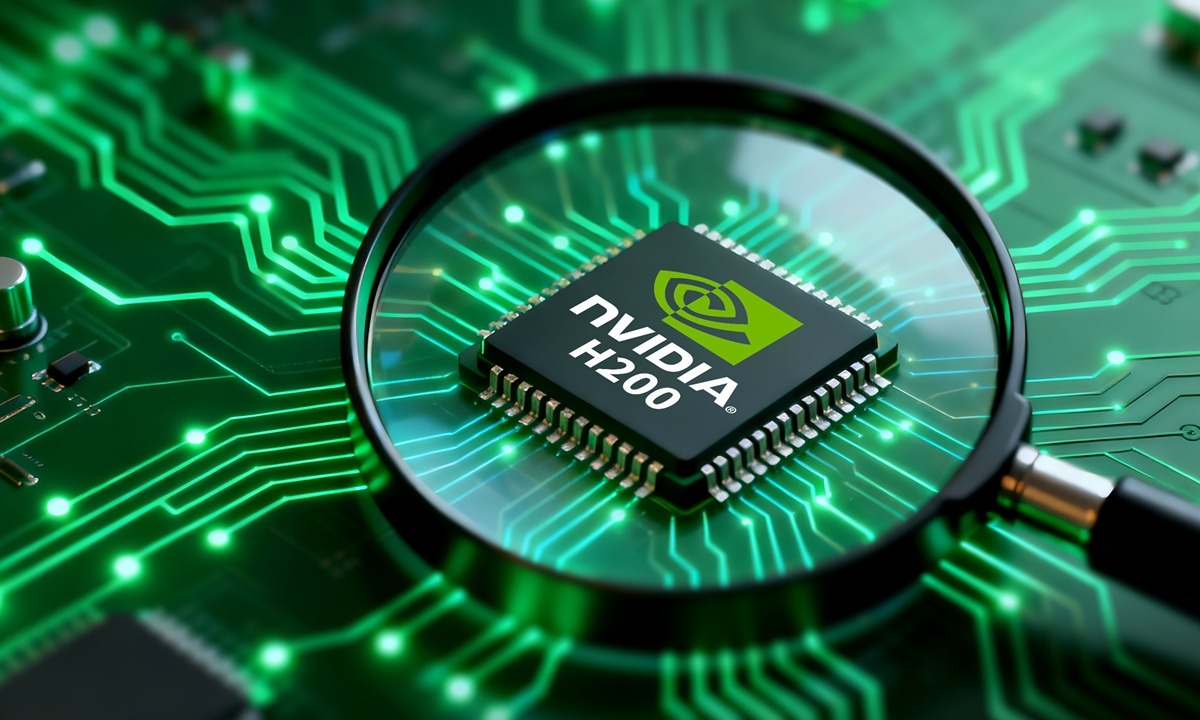
A Chinese university with close links to the country’s military has purchased two advanced Nvidia H200 artificial intelligence chips despite being on the United States’ export blacklist, according to procurement records reviewed by Reuters.
Northwestern Polytechnical University, based in the northwestern Chinese city of Xi’an, paid 874,700 yuan (approximately $123,000) for the two processors. The purchase was recorded on October 21 and made through a domestic supplier rather than directly from US-based chipmaker Nvidia.
The acquisition highlights potential gaps in Washington’s efforts to restrict China’s access to advanced semiconductor technology, particularly among institutions involved in defence-related research.
University Obtained Access Through Chinese Suppliers
The university is part of China’s “Seven Sons of National Defence”, a group of institutions known for their close connections to the country’s defence and military research sectors.
Its research activities include military aircraft, missiles and satellites. The US Commerce Department added Northwestern Polytechnical University to its Entity List in 2001 over alleged involvement in missile proliferation and military research. Restrictions were tightened in 2019, making licences for the export of controlled American technology to the institution subject to a policy of denial in most circumstances.
According to procurement documents, the university purchased the two H200 processors for its management school from Shaanxi Bosuan Network Technology.
It also secured access to advanced Nvidia computing power through five contracts with Chinese companies. These agreements covered rented computing capacity using H200, A100 and A800 processors.
Two contracts awarded by its cybersecurity school in January involved access to servers containing eight H200 chips each. The seven-month agreements, worth 441,700 yuan and 441,000 yuan, were intended for AI model fine-tuning and reinforcement-learning training.
The records, however, provided limited information about where the processors originated or where the rented servers were operating.
Other Chinese Institutions Also Acquired Restricted Chips
A Reuters review of 26 Chinese procurement and corporate records from this year found that several universities and research institutions had purchased US-restricted Nvidia processors or obtained access to computing services powered by them through domestic suppliers.
The findings included Shenzhen University, which purchased three H100 processors for 769,800 yuan in September. Wuhan University of Technology also acquired a server containing an H100 chip in June and purchased four A100 processors separately.
Beihang University, another member of the Seven Sons of National Defence group, bought four A800 processors in April.
China Rejects Nvidia Spy Narrative, Accuses US of Seeking Pretext for Tech Restrictions
Some of the institutions identified in the records have close connections to China’s defence industry and military research programmes.
US Export Controls Face Enforcement Challenges
The Trump administration introduced a policy in January allowing certain Nvidia H200 exports to China on a case-by-case basis, subject to security and compliance requirements. However, the policy did not remove the separate restrictions imposed on organisations included on the US Entity List.
The January rules also require safeguards to prevent blacklisted organisations and military end-users from remotely accessing chips exported under the new licensing arrangements.
The findings have renewed questions about how effectively the United States can monitor the movement and use of advanced processors once they enter supply chains involving third-party suppliers and computing services.
Both Democratic and Republican lawmakers have called for stronger oversight, including chip-tracking requirements and tighter monitoring of exports.
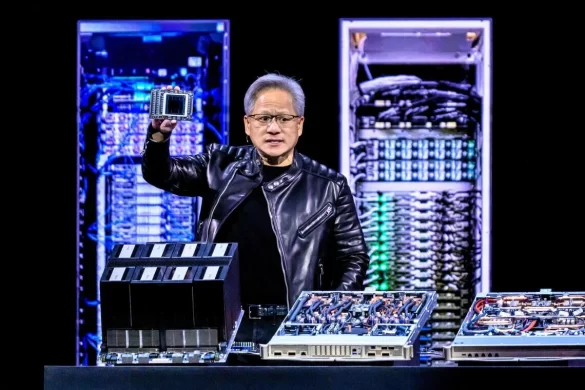
The issue also adds to scrutiny of Nvidia and its chief executive, Jensen Huang, over his advocacy for easing restrictions on chip sales to China. While Huang has argued that continued access to the Chinese market would help maintain American technological leadership, some US lawmakers warn that advanced AI processors could accelerate China’s military modernisation.
Source: The Express Tribune, Reuters.