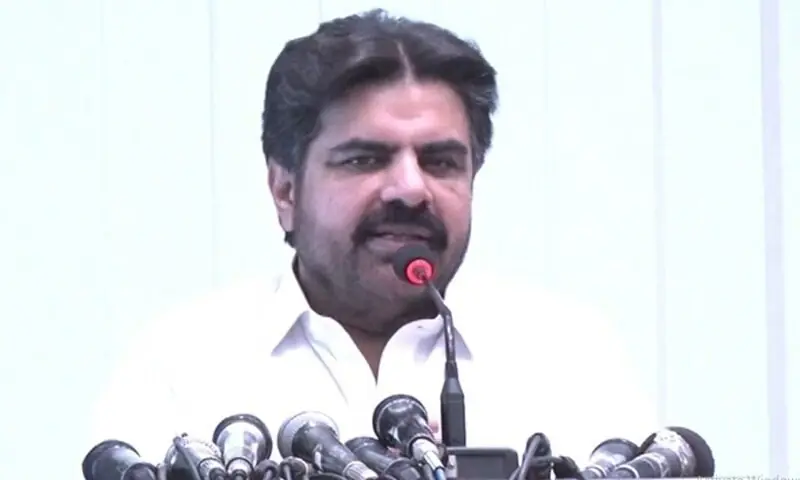
Sindh Local Government Minister Syed Nasir Hussain Shah has said that creating a new province by dividing Sindh would require a two-thirds majority in the Sindh Assembly, stressing that the province’s future must be determined by its people. He also dismissed speculation linking a recent meeting between President Asif Ali Zardari and Interior Minister Mohsin Naqvi to discussions about dividing Sindh.
Nasir Hussain Shah Explains Constitutional Requirements
Speaking about the renewed debate over creating additional provinces in Pakistan, Nasir Hussain Shah reiterated that any proposal to divide Sindh would have to fulfil the constitutional requirements.
He emphasised that the creation of a new province cannot be decided unilaterally and requires the consent of the elected representatives of the affected province.
Under Article 239(4) of Pakistan’s Constitution, a constitutional amendment that would alter the boundaries of a province cannot be presented to the president for assent unless it has been approved by the relevant provincial assembly with at least a two-thirds majority of its total membership.
The constitutional process also requires a two-thirds majority in both the National Assembly and the Senate.
Shah Rejects Speculation About Zardari and Mohsin Naqvi Meeting
The Sindh minister also dismissed speculation that a meeting between President Asif Ali Zardari and Interior Minister Mohsin Naqvi was connected to discussions about dividing Sindh.
The speculation emerged amid renewed political debate over the creation of new provinces and administrative units across Pakistan.
The Pakistan Peoples Party (PPP) has consistently opposed dividing Sindh, maintaining that the province’s territorial integrity must be protected.
Political Debate Over New Provinces Continues
The debate over creating additional provinces gained momentum after Interior Minister Mohsin Naqvi called for administrative restructuring, arguing that Pakistan’s existing governance system needed significant reforms.
The proposal received support from Muttahida Qaumi Movement-Pakistan (MQM-P), whose leaders have advocated creating additional administrative units to improve governance and bring public services closer to citizens.
However, the PPP has strongly opposed any proposal to divide Sindh.
MQM-P Announces Nationwide Campaign for New Provinces, Karachi March on November 29
On September 3, the Sindh Assembly unanimously passed a resolution rejecting proposals to divide the province or alter its territorial boundaries. The resolution declared that Sindh was a historic and constitutional entity whose territorial integrity must be preserved.
The disagreement has highlighted differences between the PPP and MQM-P over the future administrative structure of Sindh.
While supporters of new provinces argue that smaller administrative units could improve governance, opponents maintain that any territorial changes must respect provincial autonomy, constitutional requirements and the wishes of the people concerned.
The debate over administrative restructuring is expected to remain an important political issue as discussions continue among Pakistan’s political parties.
Source: The Express Tribune. Additional constitutional and political background has been incorporated from earlier reporting on the debate over new provinces in Pakistan.