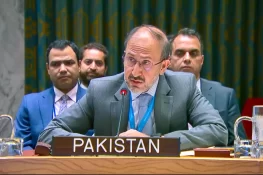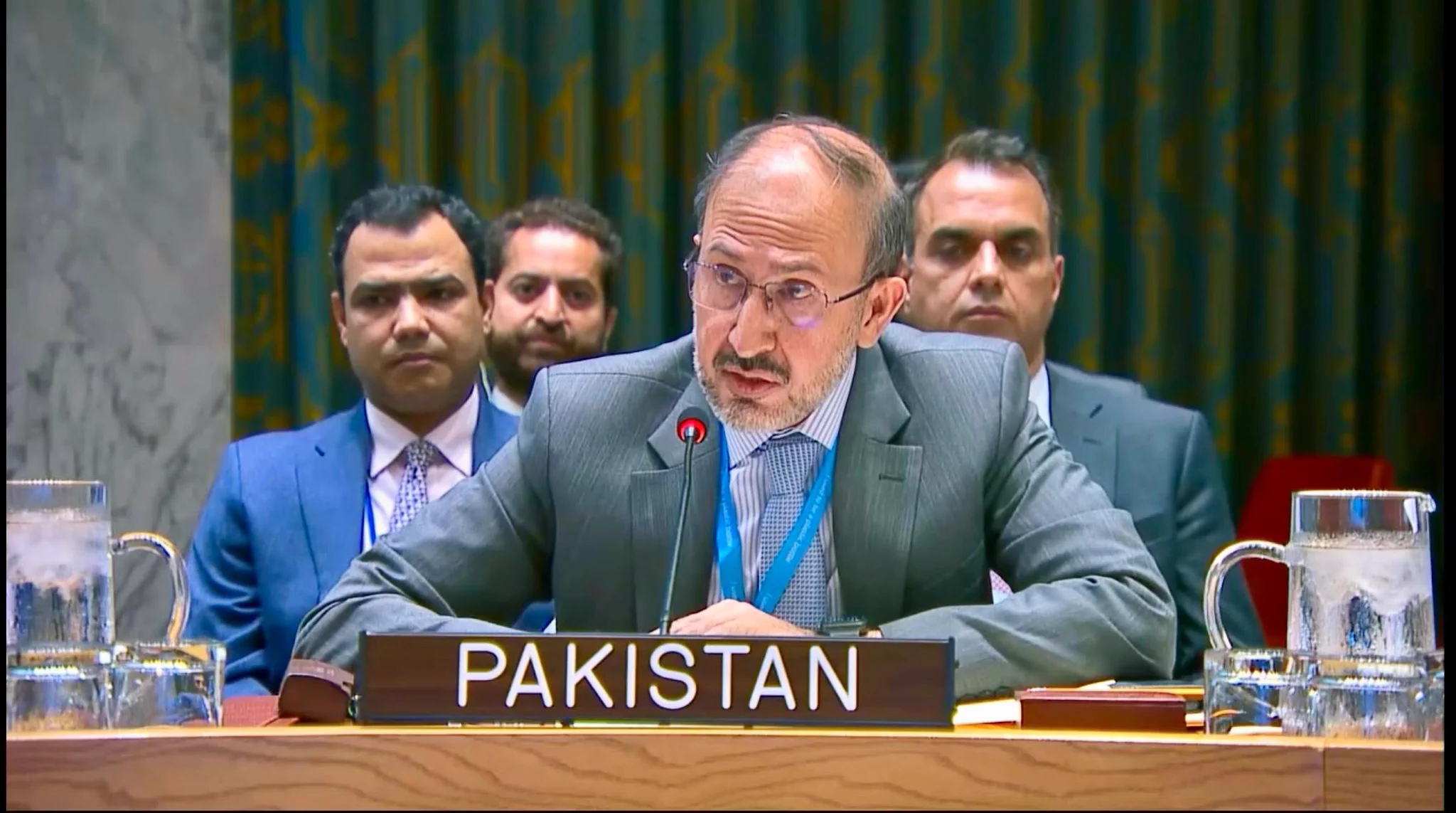
Pakistan has called for an immediate end to military attacks and provocations in the Gulf region, urging all parties to protect civilians, ensure maritime security and pursue diplomatic solutions to growing regional tensions. Addressing the United Nations Security Council, Pakistan’s Permanent Representative to the UN, Ambassador Syed Haider Shah, reaffirmed Islamabad’s solidarity with Gulf countries, particularly Saudi Arabia, and warned that disruptions to critical shipping routes could threaten global energy supplies and food security.
Pakistan Condemns Attacks on Saudi Arabia and Gulf Countries
Speaking at a UN Security Council meeting on Friday, November 13, Ambassador Syed Haider Shah expressed serious concern over escalating tensions and threats to maritime navigation in the Gulf.
He emphasised that Pakistan strongly supported the sovereignty, territorial integrity and security of all countries in the region.
Shah said Pakistan unequivocally condemned attacks against Gulf Cooperation Council (GCC) member states and stood in full solidarity with their governments and people.
He specifically condemned attacks and threats by Houthi forces against Saudi Arabia, including strikes targeting civilian infrastructure and vessels involved in lawful commercial trade with the kingdom.
“Pakistan condemns, in the strongest terms, the Houthi militia’s attacks and threats against the Kingdom of Saudi Arabia, including its civilian infrastructure and vessels engaged in lawful trade with the Kingdom,” he said.
The Pakistani envoy warned that attacks against airports, energy installations and other civilian facilities were unacceptable and posed serious risks to regional peace and stability.
Pakistan Warns of Threats to Strait of Hormuz and Bab al-Mandab
Ambassador Shah also highlighted the growing security challenges facing international shipping routes, particularly the Strait of Hormuz and the Bab al-Mandab Strait.
He said attacks on merchant vessels and disruptions to commercial shipping endangered seafarers, restricted freedom of navigation and threatened regional stability.
“The attacks and threats must end,” he stressed.
The ambassador noted that the Strait of Hormuz was particularly important for international trade, carrying approximately one-third of globally traded crude oil and a significant share of global fertiliser shipments.
He warned that instability around these maritime routes could have consequences far beyond the Middle East, affecting energy prices, international supply chains and food security.
Developing economies and vulnerable populations would be particularly exposed to the economic consequences of prolonged disruptions.
Islamabad Calls for Safe Shipping and Uninterrupted Trade
Pakistan urged all parties to respect international navigation rights and ensure the protection of commercial vessels and their crews.
Shah called for the restoration of normal maritime passage through the Strait of Hormuz, alongside safe and uninterrupted navigation for civilian and commercial shipping.
He also stressed the importance of ensuring that humanitarian supplies could reach people in need without unnecessary restrictions.
According to the Pakistani envoy, maintaining secure international waterways was essential not only for regional stability but also for the functioning of the global economy.
Trump Says Qatar, Saudi Arabia and Gulf States Prefer Continued Naval Blockade of Iran
Pakistan Urges Diplomatic Solution to Regional Conflict
Beyond immediate security concerns, Shah called for addressing the underlying causes of conflict and instability in the Middle East.
He advocated establishing a regional security framework based on common security interests, peaceful coexistence, mutual prosperity and economic development.
The ambassador emphasised that dialogue and diplomacy remained essential for preventing further escalation.
He also called on the international community to support diplomatic initiatives and the United Nations Secretary-General’s efforts to reduce tensions.
“All attacks must stop; communication channels should remain open; and regional initiatives and the Secretary-General’s good offices must receive sustained international support,” he said.
Pakistan Reaffirms Commitment to Regional Peace
Concluding his remarks, Shah urged the UN Security Council to adopt a united position demanding an end to military provocations and unlawful attacks.
He said the council should prioritise civilian protection, the security of commercial shipping and diplomatic efforts aimed at resolving regional disputes.
Pakistan, he added, would continue working with friendly countries and international partners to promote de-escalation, maritime security and lasting peace.
The statement reflects Islamabad’s continued diplomatic efforts to prevent a wider regional confrontation while protecting its economic and strategic interests, particularly given the importance of Gulf energy supplies and international shipping routes to Pakistan.
Source: The Express Tribune, based on remarks delivered by Pakistan’s Permanent Representative to the United Nations, Ambassador Syed Haider Shah, at the UN Security Council meeting on November 13, 2026.