Introduction
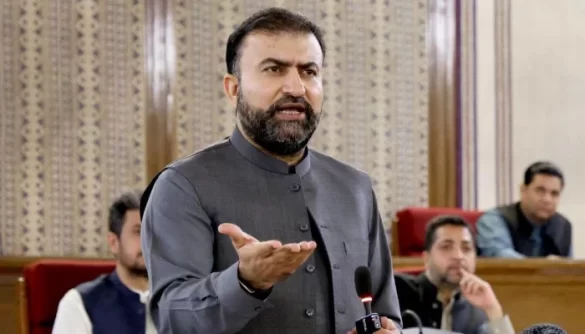
Khyber Pakhtunkhwa (KP) Chief Minister Sohail Afridi openly challenged Pakistan’s federal government, declaring he is not afraid of any attempt to impose Governor’s Rule in the province. His statements reflect rising tensions between Islamabad and the PTI-led KP administration over governance, security, and constitutional authority.
Speaking to journalists, Afridi said the province already follows the vision of former Prime Minister Imran Khan. He added it has no need for any other rule. His remarks underscore the ongoing friction between provincial autonomy and federal influence.
Afridi Issues Bold Warning
Afridi directly confronted speculation that Islamabad might intervene in KP’s governance. He said the federal government should go ahead and impose Governor’s Rule if it has the courage.
He emphasized that his administration operates without fear. Afridi also said the provincial government represents the people’s mandate, which the federal government cannot override.
Afridi criticized what he described as closed-door policymaking on security matters. He warned that officials attempting to dictate security measures from outside KP fail to understand the province’s realities, particularly its proximity to Afghanistan and exposure to complex security challenges.
Governor’s Rule: Constitutional Context
Governor’s Rule in Pakistan allows the federal government to take control of a province under exceptional circumstances. Article 234 of the Constitution permits it only when a provincial government fails to operate constitutionally.
Historically, authorities invoked Governor’s Rule in rare cases:
-
Balochistan in 2013 due to rising violence
-
Sindh in 1951 and during periods of martial law
Today, federal authorities would need to prove KP’s elected institutions had completely failed, a claim PTI leaders strongly reject.
PTI Leaders Dismiss Governor’s Rule
PTI leadership has openly rejected the idea of imposing Governor’s Rule in KP.
Barrister Gohar: No Legal Grounds Exist
PTI Chairman Barrister Gohar Ali Khan said he sees no possibility of Governor’s Rule. He stressed that the federal government cannot justify such action under the Constitution.
Salman Akram Raja: Only Possible if Government Collapses
Senior PTI lawyer Salman Akram Raja explained that Governor’s Rule applies only when a government collapses completely. He noted that KP currently has:
-
A Chief Minister elected with a strong majority
-
A functioning provincial cabinet
-
Active lawmakers managing legislative duties
Raja concluded that the federal government has no reason to override the province’s elected institutions.
Ongoing Political Tensions
Relations between KP and the federal government have remained tense since the disputed 2024 general elections. Key issues include:
-
Security operations in tribal districts
-
Distribution of federal funds
-
Administrative appointments
-
Countering militant threats
KP officials accuse Islamabad of undermining the province’s autonomy. Conversely, the federal government claims it seeks stability and security.
Analysts note that such disputes between the center and opposition-led provinces are common in Pakistan. These tensions often escalate when a strong provincial mandate conflicts with federal priorities.
Afridi’s Mandate and Political Strategy
Sohail Afridi won the Chief Minister position with a substantial majority, giving him confidence to take a firm stance. He insists that attempts to pressure or replace his government will fail.
Afridi’s statements also aim to reassure PTI supporters, who see KP as the party’s strongest base after Imran Khan’s removal in 2022.
Looking Ahead
Although Afridi’s rhetoric escalates the political drama, most constitutional experts believe Governor’s Rule remains unlikely. Implementing it would trigger legal challenges and provoke nationwide political consequences.
Still, Afridi’s public defiance signals that tensions between KP and Islamabad may intensify in the coming weeks. Observers will closely watch how both sides handle disputes over governance, security, and provincial autonomy.