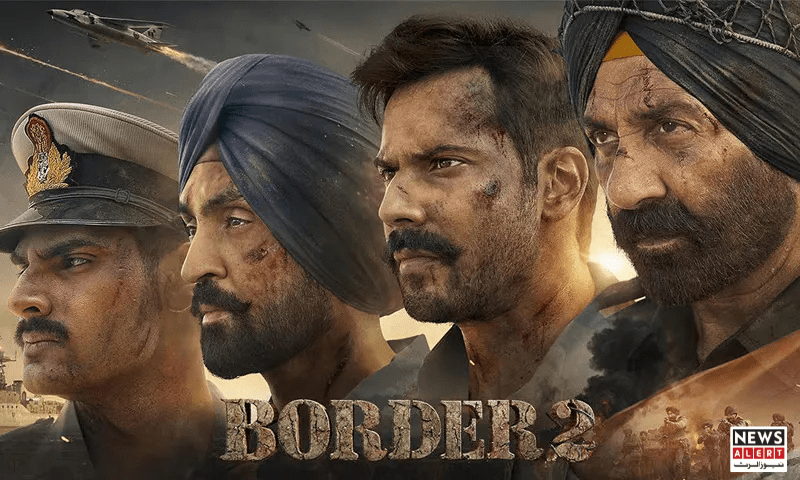
The trailer for a new Indian war film, Border 2, has ignited heated discussions across social media and film circles. The movie, which depicts the 1971 India-Pakistan war, has been criticized for its overtly nationalistic and provocative tone, raising concerns about the portrayal of sensitive historical events.
Also Read: Controversial Bollywood Trailer Dhurandhar Sparks Backlash on Social Media
A Provocative Sequel
Border 2 is being marketed as a sequel to the 1997 film Border, which itself faced criticism for presenting a one-sided, nationalist narrative. The new film stars Bollywood actors Sunny Deol, Varun Dhawan, Diljit Dosanjh, and Ahan Shetty in leading roles. The filmmakers have announced that Border 2 is set for release in cinemas on January 23, 2026.
In the recently released trailer, Sunny Deol is shown delivering passionate war cries and inflammatory dialogues. In one scene, he asks, How far should our voice reach? A soldier responds with a loud chant, Up to Lahore! The moment is framed as a display of patriotism for Indian audiences. However, many Pakistani viewers and analysts interpret it as a clear reflection of an anti-Pakistan stance and a deliberately provocative narrative, a pattern seen in multiple previous Bollywood war films.
Social Media Backlash
The trailer has faced immediate scrutiny online, not just for its political message but also for its technical execution. Social media users, both in India and internationally, criticized the film’s visual effects. Many argued that the depictions of battle scenes appeared unrealistic and poorly executed, undermining the seriousness and potential impact of the story.
Film critics suggest that presenting war and historical conflicts in such a sensationalized manner can trivialize complex events. One reviewer noted that using flashy visuals without attention to authenticity risks turning serious topics into mere entertainment.
Regional Implications
South Asia is already grappling with political and diplomatic tensions between India and Pakistan. Analysts warn that films like Border 2, which amplify nationalist narratives, may inflame public sentiment and exacerbate mistrust between the two countries.
Experts emphasize that filmmakers have a responsibility when dealing with historical or war-related content. If the goal is to explore history, it must be done with balance, factual accuracy, and sensitivity, one regional analyst told Reuters. Promoting a narrative that glorifies conflict or fosters hatred is irresponsible.
The Debate Over Patriotism and Cinema
The release of Border 2 raises broader questions about the role of cinema in South Asia. Should entertainment be purely for thrills and box office success, or does the industry have a moral obligation to consider its impact on regional peace and public perceptions? Critics argue that while films can inspire national pride, they should not do so at the cost of perpetuating stereotypes or deepening geopolitical divides.
Past examples show that Bollywood war films often walk a fine line between patriotism and propaganda. Movies like Border (1997) and LOC Kargil (2003) sparked similar debates, with some praising their technical achievements but others criticizing their skewed portrayals of Pakistan and historical events.
Looking Ahead
With Border 2 set to premiere in early 2026, discussions around the film are expected to intensify. Observers are watching closely to see whether the film will offer a nuanced take on history or reinforce polarizing narratives. For international audiences, the controversy highlights the broader challenge of creating war films that balance storytelling with historical accuracy and regional sensitivities.
As the trailer continues circulating online, it serves as a reminder of how cinema in South Asia does not exist in isolation. In a region where history and politics are deeply intertwined, even entertainment films can influence perceptions, shape narratives, and stir public debate.