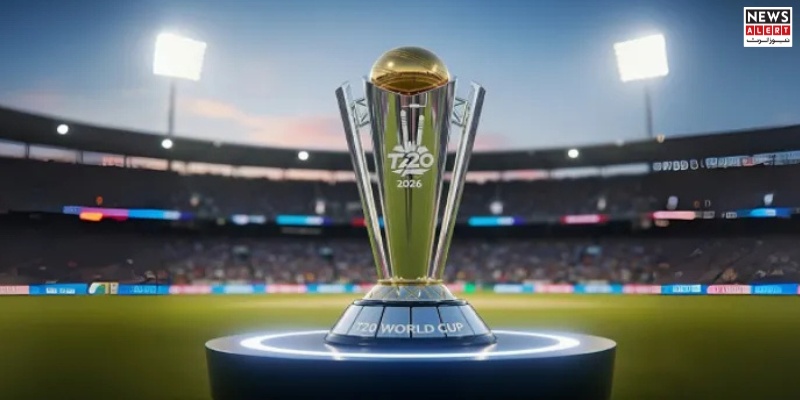
The Board of Control for Cricket in India (BCCI) has announced India’s squad for the ICC Men’s T20 World Cup 2026, scheduled to begin early next year. The decision has sparked intense debate among fans and experts, mainly because several prominent players did not make the final list.
Also Read: ICC T20 World Cup 2026: Groups, Pakistan-India Clash, and Venue Details Revealed
India and Sri Lanka will jointly host the tournament, which begins on 7 February 2026. As one of the strongest teams in world cricket, India enters the competition with high expectations and heavy scrutiny over every selection choice.
Suryakumar Yadav Takes Charge as Captain
The BCCI has appointed Suryakumar Yadav as India’s captain for the T20 World Cup. Over recent years, Yadav has emerged as one of the most impactful batters in the shortest format. His fearless approach and ability to score quickly across the ground have transformed India’s middle order.
Team officials believe Yadav brings the right mindset for T20 cricket. They expect his leadership style to encourage aggressive play while maintaining tactical discipline. The selectors have shaped the squad to reflect this philosophy, aiming to dominate matches rather than react to opponents.
Top Order and Middle Order Combination
The batting unit features a blend of young talent and proven match-winners. Abhishek Sharma and Sanju Samson will open the innings. Both players prefer attacking cricket, which aligns with India’s intent to maximize powerplay scoring.
In the middle order, Tilak Varma, Hardik Pandya, and Shivam Dube carry major responsibility. Hardik Pandya remains central to India’s plans due to his all-round skills. He offers balance with his fast bowling and provides finishing strength with the bat.
Rinku Singh also finds a place in the squad. He has built a reputation for handling pressure situations and closing out tight matches. His inclusion adds depth to India’s batting line-up, especially in high-stakes encounters.
Bowling Unit Reflects Strength and Variety
India continues to rely on a strong and diverse bowling attack. Jasprit Bumrah leads the pace department. His accuracy, pace variation, and experience make him one of the most valuable bowlers in T20 cricket. Harshit Rana and Arshdeep Singh support him, offering early breakthroughs and control in death overs.
The spin department adds further strength. Kuldeep Yadav brings wrist-spin variety, while Varun Chakravarthy offers mystery and deception. Washington Sundar provides control and contributes with the bat when required. Axar Patel strengthens the side with his consistent left-arm spin and reliable lower-order runs.
Shubman Gill’s Exclusion Sparks Debate
The biggest talking point remains the omission of Shubman Gill, who previously served as India’s T20 vice-captain. Many fans expected him to feature in the World Cup squad, given his strong performances across formats. However, the selectors opted for a different team balance and placed greater emphasis on recent T20-specific roles.
In a notable leadership shift, the selectors named Axar Patel as vice-captain. His calm presence, consistency, and tactical awareness earned him the role. Ishan Kishan also secured a spot as the primary wicketkeeper-batter, adding flexibility to the batting order.
Pressure and Promise Ahead of Home Tournament
India enters the T20 World Cup with enormous pressure, especially while playing at home. The team last lifted the T20 World Cup trophy in 2007, and each edition since then has increased expectations. Fans now hope this refreshed squad can finally end the long wait.
The selectors have taken a clear and confident approach. They have prioritized form, versatility, and intent. As the tournament approaches, attention will shift from selection debates to performance on the field. The coming months will reveal whether these bold decisions can deliver world championship success.