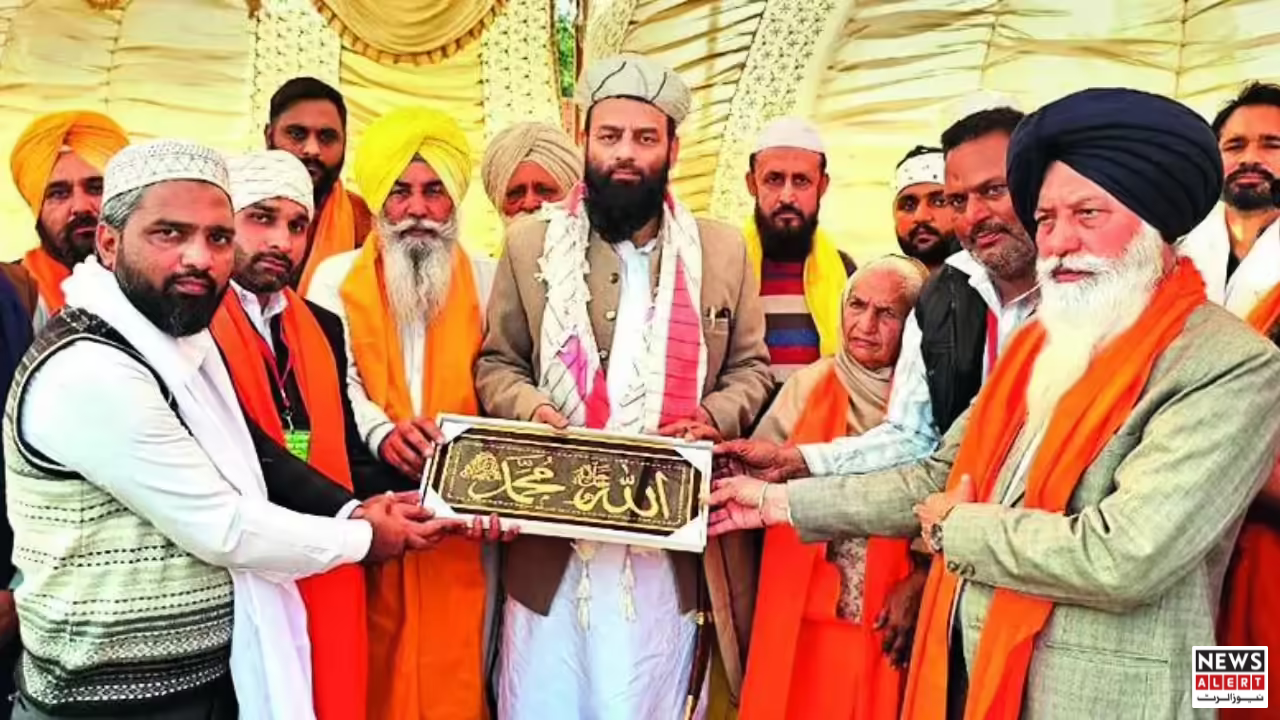
In a powerful example of communal harmony, a Sikh woman in India’s northern state of Punjab has donated her personal land to build a mosque for her Muslim neighbours. The gesture has drawn attention for its simplicity, sincerity, and strong message of coexistence at a time when religious divisions often dominate headlines.
The incident took place in Jakhwali village, located in Fatehgarh Sahib district, a region known for its deep Sikh religious heritage and mixed population. While the village already hosts a gurdwara and a Hindu temple, it lacked a mosque. As a result, Muslim residents had to travel to nearby villages to perform daily prayers.
A Village Shaped by Shared Living
Jakhwali is a small rural settlement where Sikh, Hindu, and Muslim families have lived together for decades. According to local residents, the community has long cooperated and respected each other’s traditions. Families regularly support one another during religious festivals, weddings, and times of hardship.
Despite this history of harmony, the absence of a mosque created practical challenges for the Muslim community. Elderly worshippers and children found it difficult to travel outside the village multiple times a day. The issue had surfaced in informal discussions for years but remained unresolved because of land constraints.
A Personal Decision Rooted in Empathy
The turning point came when 75-year-old Bibi Rajinder Kaur, a Sikh resident, decided to donate a portion of her privately owned land for the mosque. She agreed to give around five marlas of land, equivalent to roughly 1,360 square feet, specifically for religious use.
Speaking to locals, Rajinder Kaur said she wanted to ease the difficulties faced by her Muslim neighbours. She emphasized that faith should never prevent people from meeting basic needs. Her family supported her decision fully.
Her grandson, Satnam Singh, said the village has always valued unity. He added that helping neighbours, regardless of religion, forms part of their upbringing and cultural values.
Legal Process and Administrative Steps
Since Indian government rules do not allow public land for religious construction, Rajinder Kaur’s private donation became crucial.
Mono Singh, a village panchayat member and family relative, confirmed that Rajinder Kaur transferred the land legally to the local Muslim committee through proper documentation. Village elders and legal authorities supervised the process.
Community leaders stressed that the move solved a long-standing issue practically and strengthened trust between communities.
Mosque Construction and Community Support
The mosque committee president, Kala Khan, publicly thanked Rajinder Kaur and her family. He praised the gesture as historic for the village and a reminder of Punjab’s shared cultural traditions.
The mosque construction is already underway, and workers expect to complete it by February. People from all faiths contributed financially to the project. Sikhs, Hindus, and Muslims have all donated money and volunteered labour.
So far, the committee has collected approximately 350,000 Indian rupees. Volunteers from different communities also help with planning and manual work whenever possible.
A Broader Context of Punjab’s Diversity
Punjab has a population of nearly 30 million. Sikhs form the majority, around 58 percent, followed by Hindus at about 38 percent, and Muslims roughly 2 percent. Despite their small numbers, Muslims remain an integral part of many rural communities.
Acts like this land donation stand out because they reflect everyday coexistence rather than political narratives. Local residents hope the story inspires similar efforts in other villages.
For Jakhwali, the mosque represents more than a place of worship. It symbolizes shared space, mutual care, and the belief that peaceful living begins at the local level.