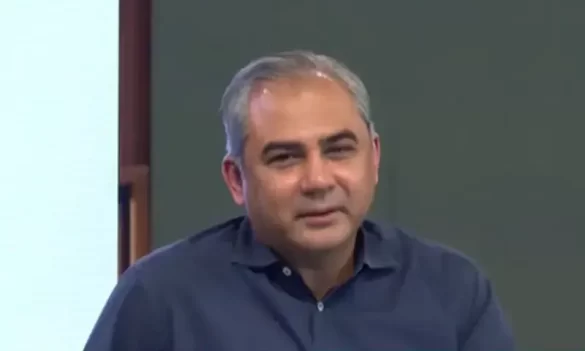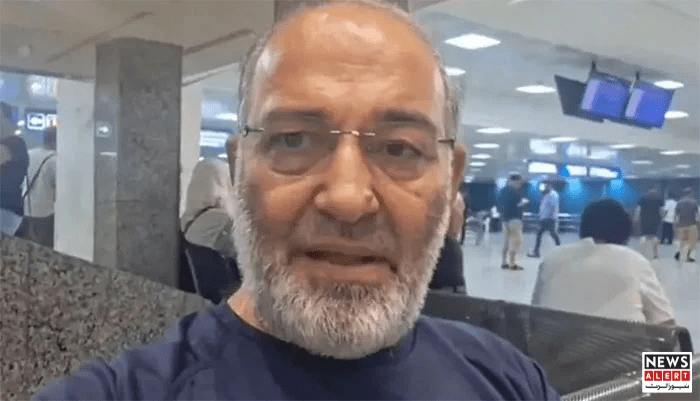
Former Pakistani senator Mushtaq Ahmed Khan has announced the launch of a new political party, the Pakistan Rights Movement, marking what he described as the beginning of a fresh political journey in the country.
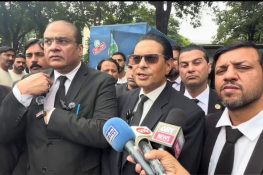
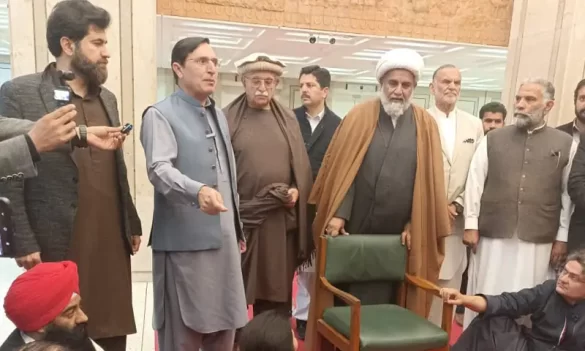
The announcement was made at a formal ceremony held at a private hotel in Islamabad. The event was attended by senior party figures, workers, and individuals from various professional backgrounds. The gathering reflected an early effort to position the party as a broad-based political platform.
Commitment to the 1973 Constitution
Addressing the audience, Mushtaq Ahmed Khan said that the Pakistan Rights Movement would conduct politics in line with the spirit of the 1973 Constitution. He stressed that ensuring the supremacy of the Constitution would remain the party’s central objective.
He argued that ordinary citizens have gradually been deprived of their fundamental rights under the existing political and governance system. As a result, he said, there was a growing need for a political force that could genuinely represent the people rather than powerful interest groups.
Pakistan’s 1973 Constitution guarantees civil liberties, parliamentary democracy, and a federal structure. However, critics across the political spectrum have often argued that constitutional principles are inconsistently applied. Mushtaq Ahmed Khan placed his new party firmly within this long-running national debate.
Emphasis on Islamic Principles and Equality
The former senator noted that the Constitution recognizes the sovereignty of Almighty Allah and promises governance based on Islamic principles. Yet, he said, these values have not been fully implemented in practice.
According to him, the Pakistan Rights Movement aims to end the dominance of a few elite groups. Instead, it seeks to promote equality, social balance, and economic justice. He framed the party’s mission as one that bridges constitutional commitments with ethical governance.
At the same time, he emphasized that the party would pursue its goals through democratic and constitutional means, rather than confrontation or exclusion.
Key Policy Priorities
Mushtaq Ahmed Khan outlined a wide-ranging agenda for the new party. He said its priorities would include swift and affordable justice, protection of freedom of expression, and access to quality education and healthcare for all citizens.
He also pledged strong action against poverty and corruption, which remain persistent challenges in Pakistan. According to international assessments, millions of Pakistanis face economic insecurity, while corruption continues to undermine public trust in institutions.
In addition, he condemned extrajudicial killings and called for an end to what he described as unnecessary military operations. He argued that lasting stability can only come through justice, dialogue, and respect for human rights.
Concerns Over Governance and Media Freedom
Turning to the broader political environment, Mushtaq Ahmed Khan criticized the current parliamentary system, calling it ineffective. He claimed that the system has failed to address public grievances and has distanced citizens from decision-making.
He also raised concerns about what he described as undeclared restrictions on journalism and free speech. Media freedom in Pakistan has been a sensitive issue for years, with journalists’ organizations frequently highlighting pressure on reporters and outlets.
According to him, open debate and independent journalism are essential for any democratic society to function properly.
Addressing National Crises
The former senator listed several issues that he said had turned into serious national crises. These included unemployment, inflation, food insecurity, drug abuse, environmental pollution, and corruption.
Pakistan has faced rising living costs and job losses in recent years, intensifying public frustration. Mushtaq Ahmed Khan argued that these problems cannot be solved through traditional power politics. Instead, he called for what he described as principled, people-centred politics.
A Call for Rights-Based Politics
Concluding his speech, Mushtaq Ahmed Khan said that the Pakistan Rights Movement would continue its political struggle to protect fundamental rights. He said the ultimate goal was to transform Pakistan into a just, dignified, and rights-respecting state.
Whether the new party can translate its ambitious vision into electoral influence remains to be seen. However, its launch adds another voice to Pakistan’s complex and evolving political landscape.