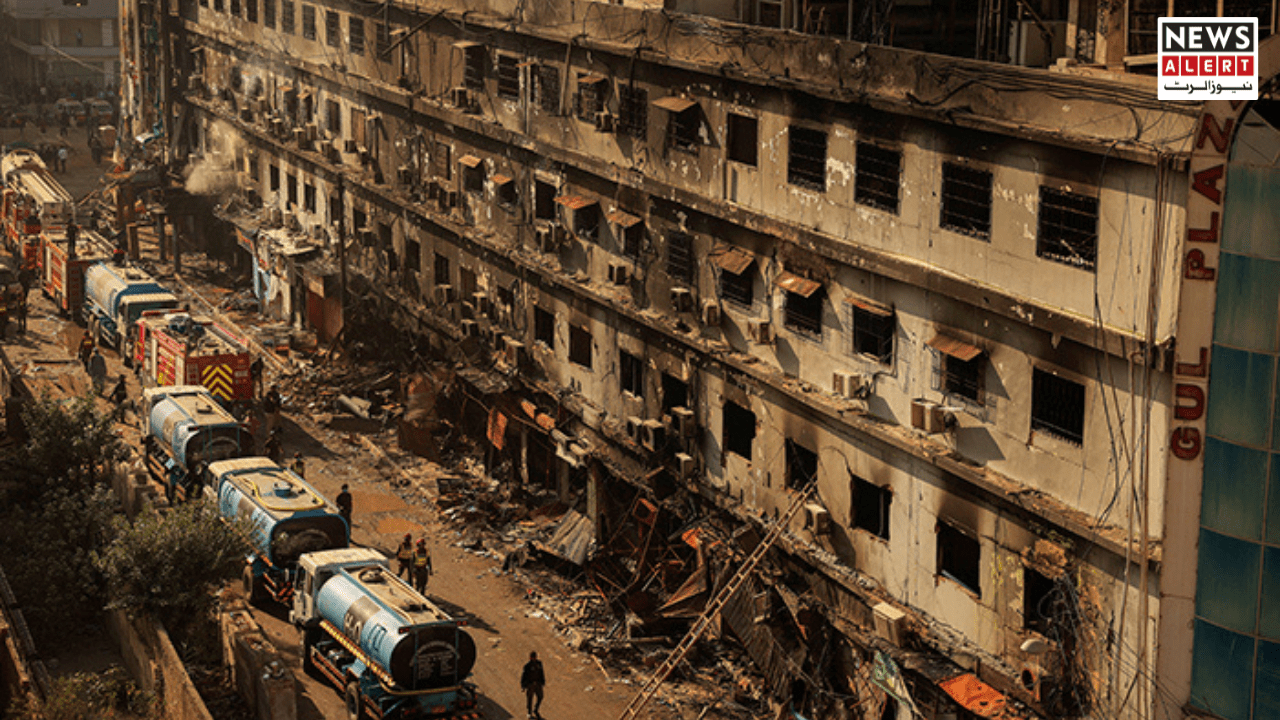
The tragic fire at Gul Plaza in Karachi has taken a grim turn, as rescuers are now recovering only human remains instead of intact bodies, according to the police surgeon at Civil Hospital Karachi. The development highlights both the scale of the disaster and the growing challenge of identifying victims for grieving families.
The blaze, which tore through the commercial building earlier this week, has already claimed at least 61 lives. However, authorities warn that the final death toll may still rise as search operations continue in the charred ruins.
Also Read: Another Section of Karachi’s Gul Plaza Collapses Amid Devastating Fire
Now We Are Finding Remains, Not Bodies
Police Surgeon Dr. Samia, speaking to reporters at Civil Hospital Karachi, said that rescue teams are now bringing in fragmented human remains rather than complete bodies.
So far, we have received 21 sets of remains from just two shops, she explained. At this stage, we cannot confirm whether these belong to 21 individuals or fewer people whose remains are scattered.
Since the morning, she added, only remains – not intact bodies – have been transported to the hospital.
According to Dr. Samia, the condition of these remains is extremely poor. Broken human bones and shattered teeth are among what has been recovered so far. Because the bones are badly damaged, even DNA samples cannot be reliably collected in many cases.
This has created a serious obstacle in identifying victims and handing remains over to their families.
Without DNA testing, returning these remains to relatives becomes extremely difficult, she said.
Identification Becomes a Major Challenge
In large-scale disasters, DNA testing is usually the most reliable method of identifying victims. However, intense heat from fires can destroy genetic material, making such tests ineffective.
Medical experts say that once bones and teeth are severely burned or fractured, identification must rely on secondary methods. These include dental records, personal belongings, or matching missing persons reports.
So far, only three more victims have been identified, while 17 bodies remain unrecognizable, hospital officials confirmed.
For families waiting outside the hospital, the uncertainty has been agonizing. Many have been searching for loved ones for days, clinging to any piece of information that might bring closure.
Search Operation Continues at Gul Plaza
The fire-damaged Gul Plaza remains the focus of an intensive search operation. Authorities say that 30 more bodies were recovered from the mezzanine floor alone, pushing the total number of confirmed deaths to 61.
Deputy Inspector General (DIG) South Asad Raza said shopkeepers had earlier warned authorities that people might still be trapped on the mezzanine level.
All 30 bodies were found inside a single crockery shop, he said.
The scale of casualties in one shop suggests that many people had sought refuge there during the fire, possibly believing it to be a safer place.
Debris Removal Halted to Recover Victims First
DIG Asad Raza added that debris removal has been temporarily suspended.
Our priority is to retrieve bodies first, he said. Only after that will we resume clearing the rubble.
This approach reflects standard disaster response protocols, where recovering victims takes precedence over structural cleanup, especially when people are believed to be trapped underneath.
People Locked Themselves Inside to Escape Flames
Investigators believe that many victims locked themselves inside shops in a desperate attempt to escape the flames and smoke.
After the fire broke out, several mobile phone signals were last detected from inside the same areas where bodies were later found, officials said. This supports the theory that people tried to shelter in place rather than flee through smoke-filled corridors.
Fire safety experts note that in commercial buildings with limited exits, panic and lack of clear evacuation routes can be deadly. In Pakistan, where many older buildings lack modern fire safety systems, such tragedies are not uncommon.
Shop Owner Recounts Harrowing Details
Salman, the owner of the crockery shop where many bodies were found, described the heartbreaking scene.
We ourselves recovered the remains of 14 people from our shop, he said. Our shop is on the mezzanine floor. At the time of the incident, my cousins and employees were present there.
He added that a large number of women and other visitors were also inside the shop when the fire erupted.
His account underscores how quickly a routine shopping day turned into a deadly nightmare.
A Broader Pattern of Fire Safety Failures
Pakistan has witnessed several deadly building fires in recent years, often linked to poor safety standards, blocked exits, and lack of fire alarms. In 2012, a factory fire in Karachi killed more than 250 workers, prompting calls for reforms that many say were never fully implemented.
According to local safety experts, commercial buildings frequently operate without proper fire audits or emergency preparedness plans. Gul Plaza now joins a long list of tragedies that highlight the urgent need for stricter enforcement of safety regulations.
Families Await Answers
As the search continues, dozens of families remain camped outside Civil Hospital and the fire site, hoping to identify their loved ones.
For many, the shift from recovering bodies to finding only remains has deepened the emotional toll of the disaster. While authorities promise a thorough investigation, families are demanding accountability and long-term changes to prevent similar tragedies.
For now, Karachi mourns – not just the loss of lives, but also the painful uncertainty left behind in the ashes of Gul Plaza.