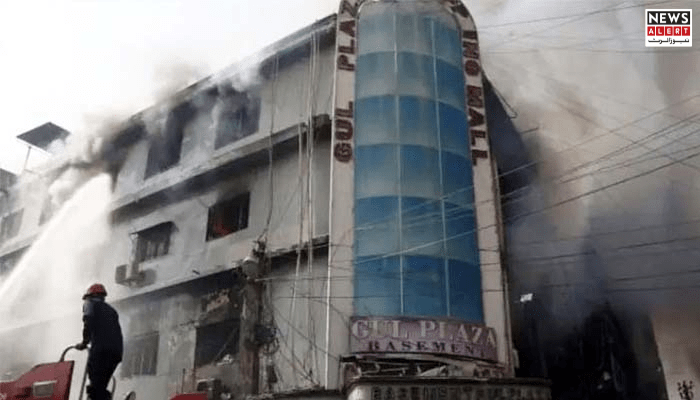
Rising Death Toll Shocks Karachi
Karachi is reeling from the devastating collapse of Gul Plaza, a commercial building in the city’s busy South district, as the number of confirmed deaths has risen to 30, while 86 people remain missing, according to rescue officials.
The tragedy has sent shockwaves across Pakistan’s largest city, where building safety has long been a matter of concern. Families are still waiting anxiously outside the debris, hoping for news of loved ones.
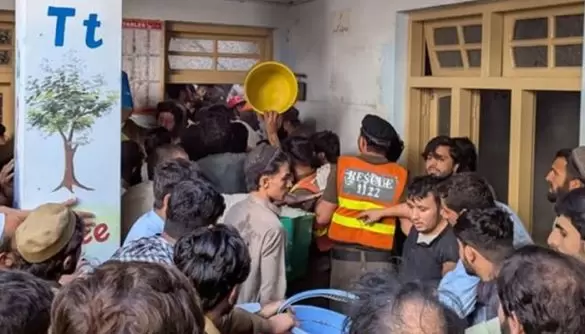
Rescue workers continue to clear rubble from the site. On Wednesday, officials recovered parts of two more bodies, which were immediately transported to Civil Hospital Karachi for forensic examination and identification.
Authorities say the death toll may still rise, as the search operation is ongoing and several victims are believed to be trapped deep beneath the collapsed structure.
Also Read: Tragedy in Karachi: Death Toll from Gul Plaza Fire Rises to 61
Rescue Efforts Continue Under Difficult Conditions
Rescue officials said the operation is proving extremely challenging due to the unstable nature of the remaining structure. Heavy machinery is being used cautiously to avoid further collapses.
Moreover, emergency teams from multiple agencies are working around the clock. These include Rescue 1122, the Pakistan Army, and local disaster management authorities.
According to officials, the narrow streets surrounding the plaza and nearby buildings have complicated access for cranes and ambulances. Nevertheless, rescue workers remain determined to locate every missing person.
In recent years, Pakistan has witnessed several deadly building collapses, particularly in major cities like Karachi and Lahore. Poor construction standards and weak enforcement of building codes are often cited as major causes.
86 People Still Unaccounted For
Government officials confirmed that 86 people are still listed as missing, based on reports filed by families.
Most recently, another family approached the Deputy Commissioner’s office to report a missing relative believed to have been inside Gul Plaza at the time of the collapse.
Authorities are cross-checking these reports with hospital records, national identity data, and mobile phone locations where possible. However, officials admit the process is slow and emotionally draining for families.
For many relatives, the uncertainty is worse than receiving bad news. Outside the site, scenes of grief, prayers, and desperate waiting continue daily.
Commissioner: Investigation Is Highly Complex
Speaking to the media, Karachi Commissioner described the investigation as highly complex, noting that responsibility cannot be pinned on a single institution.
There are several angles to this incident, he said. It is not possible to blame only one department.
The commissioner added that the inquiry would not only determine responsibility but also offer recommendations to the government. These, he said, would aim to prevent similar tragedies in the future.
This suggests that regulatory failures, construction approvals, and monitoring practices may all be under scrutiny.
Building Demolition Delayed Until All Missing Found
Deputy Commissioner South, Javed Nabi Khoso, stated clearly that the building cannot be demolished while even one person remains missing.
We will only demolish the entire structure once the rescue operation is complete, he said.
This decision reflects both humanitarian concerns and legal obligations, as premature demolition could destroy evidence or entomb victims permanently.
In the meantime, authorities are carefully removing debris while stabilizing nearby structures.
Adjacent Rampa Plaza Temporarily Closed
Due to safety fears, officials have temporarily sealed Rampa Plaza, a building located next to Gul Plaza.
Deputy Commissioner Khoso confirmed that authorities have requested maps, designs, and approvals of Rampa Plaza from the Sindh Building Control Authority (SBCA).
Engineers are now reviewing whether Rampa Plaza meets safety standards or poses a risk to the public.
Such closures, although disruptive for businesses, are seen as necessary precautions to prevent further tragedies.
A Broader Crisis of Urban Safety
Karachi, a city of over 20 million people, has long struggled with illegal constructions and weak regulatory oversight.
According to local urban planners, hundreds of buildings operate without full approval or proper inspections. In many cases, additional floors are added illegally, increasing structural risk.
Between 2015 and 2022 alone, over 150 people died in building collapse incidents across Pakistan, according to disaster management data.
Therefore, the Gul Plaza tragedy is not an isolated event but part of a wider pattern that continues to claim lives.
Calls for Accountability and Reform
Civil society groups and urban activists are now calling for transparent investigations and strict punishment for those found responsible.
They argue that without systemic reforms, such disasters will continue to repeat.
For now, however, Karachi remains focused on the grim task of recovering victims and supporting grieving families.
As rescue workers dig through the rubble, the city watches in sorrow — and with growing demands that this tragedy finally leads to meaningful change.