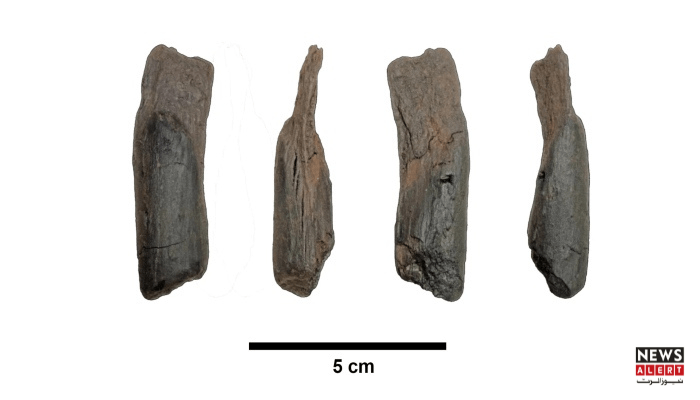
Archaeologists in Greece have uncovered what are believed to be the world’s oldest known wooden tools, offering a rare and fascinating insight into how early humans may have lived and worked hundreds of thousands of years ago.
The tools, discovered in the Megalopolis Basin in southern Greece, are estimated to be up to 430,000 years old. If confirmed, this would place them among the earliest surviving examples of wooden technology ever found.
The discovery has been described by researchers as remarkable, not only because of the tools’ age, but also because wooden artifacts almost never survive for such long periods.
A Rare Survival from Prehistory
According to archaeologists, early humans commonly used tools made from stone, bone, and wood. However, while stone and bone can survive for millions of years, wood usually decays quickly when exposed to air, moisture, and bacteria.
As a result, physical evidence of prehistoric wooden tools is extremely rare. Most wooden artifacts only survive in exceptional environments, such as frozen landscapes, deep caves, or underwater settings.
That is what makes the Greek discovery so important. The two wooden tools were preserved because they were likely buried in sediment and remained in a damp, oxygen-poor environment, which slowed their decay over thousands of centuries.
The Tools: Simple Yet Sophisticated
One of the tools is a slender wooden rod approximately 80 centimeters long. Researchers believe it may have been used for digging in soft ground or mud, perhaps to extract edible roots, tubers, or other plant materials.
The second object is smaller and more mysterious. Scientists suggest it may have served as a sharpening aid for stone tools, helping early humans refine their cutting implements.
Although both tools appear simple, they reveal a surprising level of practical thinking. They suggest that early humans were not relying on stone alone, but were combining materials to create more effective toolkits.
Published in a Leading Scientific Journal
The findings were published in the prestigious journal Proceedings of the National Academy of Sciences (PNAS), highlighting the global scientific importance of the discovery.
Researchers involved in the study emphasised that such finds are extremely rare and valuable. They provide a direct link to behaviours that normally leave little trace in the archaeological record.
As one scientist noted, archaeologists are always excited to physically touch objects made and used by humans so long ago, because it creates a tangible connection to our distant past.
Why Wooden Tools Matter
Wooden tools were likely far more common in prehistory than stone tools. Yet, because they decay so easily, they are often missing from archaeological evidence.
This creates an incomplete picture of early human technology. Discoveries like this one help fill in those gaps, showing that early humans were more inventive and adaptable than stone tools alone might suggest.
For comparison, some of the previously oldest known wooden spears, found in Schöningen, Germany, date to about 300,000 years ago. The Greek tools may be even older, pushing back the timeline of wooden technology by more than 100,000 years.
The Megalopolis Basin: A Rich Archaeological Site
The Megalopolis Basin is already known as a treasure trove of prehistoric remains. In earlier excavations, researchers found numerous stone tools and animal bones, including those of ancient elephants, bearing clear cut marks.
These marks suggest that early humans butchered large animals at the site, pointing to organised hunting or scavenging behaviour.
The wooden tools now add another layer to this picture, indicating that humans in the region had developed a complex toolkit for survival.
Who Used These Tools?
So far, no human remains have been discovered at the site. This means scientists cannot say for certain who made or used the tools.
They may have been used by Neanderthals or by even earlier human ancestors, such as Homo heidelbergensis, a species believed to have lived in Europe around that time.
Until human fossils are found nearby, the identity of the tool users remains one of the most intriguing unanswered questions.
More Discoveries Likely to Come
Researchers believe the Megalopolis Basin could hold many more undiscovered artifacts. Ongoing excavations may reveal further wooden tools, stone implements, or even human remains.
Each new find has the potential to reshape our understanding of early human life in Europe.
For now, the ancient wooden tools from Greece stand as a rare and precious window into a world that existed nearly half a million years ago — reminding us that even the simplest objects can carry extraordinary stories from humanity’s deep past.