Modern Control Room, Stark Reality
Karachi’s emergency response landscape presents a striking contrast. While Rescue 1122, operating under the Sindh government, has been transformed into a modern, internationally styled institution, the city’s traditional fire brigade remains in a state of severe neglect.
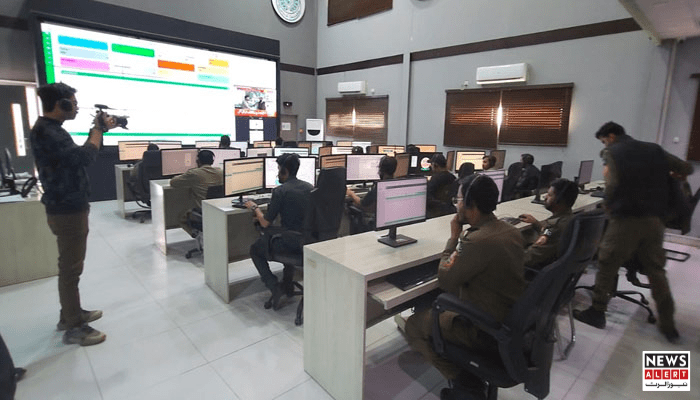
At Rescue 1122’s headquarters in Gulshan-e-Iqbal, the control room is equipped with advanced technology. During a single shift, 36 operators monitor and manage emergency calls from across the province.
Spokesperson Hassan Al-Haseeb explained that all incoming calls are logged in real time. Once a call is received, it is immediately forwarded to the nearest available team via our dispatch system, ensuring rapid deployment, he said during a guided tour of the facility.
Staffing Numbers: Rescues vs. Firefighters
In Karachi alone, Rescue 1122 has hired a total of 1,500 employees, including 224 trained firefighters. However, the city’s traditional fire brigade faces a severe shortage of personnel across its 28 fire stations.
“The tragedy for Rescue 1122 is that while we have trained staff and the necessary initial resources, we are critically short of fire tenders,” Al-Haseeb noted. “Based on Karachi’s population, we should have around 200 fire tenders. Currently, we only have three large and seven small fire trucks—a figure that is woefully inadequate.”
This shortfall leaves Rescue 1122 teams operating in a highly improvised manner. Unlike the fire brigade, which has established stations, Rescue 1122 personnel often perform their duties from sidewalks, relying on mobile units rather than permanent infrastructure.
Limited Fire Stations and Equipment
To mitigate the shortage, Rescue 1122 has set up four temporary fire stations. The headquarters remains in Gulshan-e-Iqbal, while additional facilities operate on Rashid Minhas Road, in Defence, and Gulshan-e-Mimar. Despite these efforts, essential firefighting equipment such as snorcles—used for ladder and high-rise rescues—are largely unavailable.
Interestingly, the same control room also handles calls for fires and medical emergencies. However, ambulances are dispatched by a separate agency, not Rescue 1122, highlighting a fragmented emergency response system.
Public Perception and Government Strategy
Residents have voiced frustration at the Sindh government’s uneven approach. Using a local metaphor, some citizens said the government offers no sustenance in old shops and bland meals in fancy shops, pointing to a misalignment between resources and public need.
Essentially, the strategy has left citizens skeptical. While Rescue 1122 represents a model institution in terms of training and technology, the city’s conventional fire services lag far behind, unable to meet basic operational requirements.
The Bigger Picture
Karachi is one of the world’s largest cities, with an estimated population exceeding 20 million. Rapid urban growth, high-rise construction, and congested neighborhoods make effective fire and rescue services critical. Experts warn that without significant investment in fire tenders, equipment, and permanent stations, the city remains vulnerable to large-scale fires and disasters.
In contrast, Rescue 1122’s success shows that modern emergency management is possible with political will and funding. Yet, the gap between this model and the under-resourced traditional fire brigade highlights deep systemic issues in urban governance and public safety in Karachi.
Conclusion
Karachi’s emergency services reveal a city divided between progress and neglect. Rescue 1122 shines as a modern, well-staffed service, but the city’s fire brigade struggles with inadequate vehicles, insufficient personnel, and limited infrastructure. Without a coordinated strategy and investment, residents remain at risk despite technological advancements.