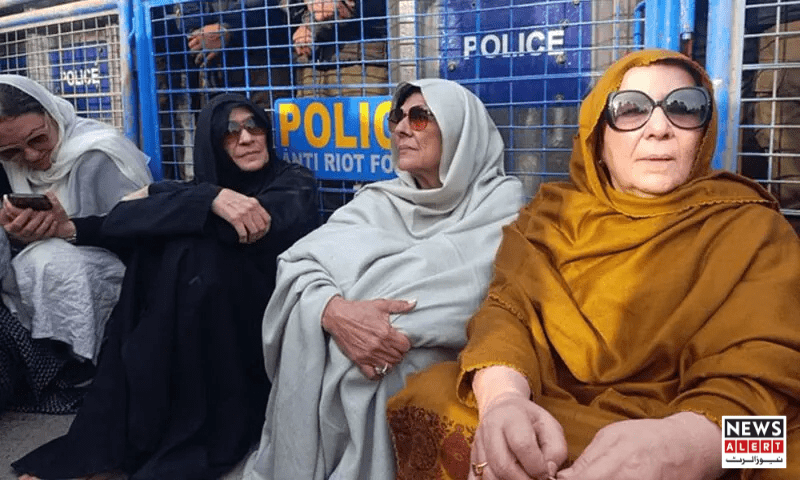
Police have launched a major crackdown following protests outside Adiala Jail in Rawalpindi. They registered a case against 400 people, including political activist Aleema Khan, under Pakistan’s strict anti-terrorism laws. The case has stirred debate in political and legal circles due to the severity of the charges.
Protests Trigger Police Action
Aleema Khan led the demonstration outside Adiala Jail. Police reported that protesters ignored their orders and breached security protocols. The protesters gathered after being denied a meeting with former Prime Minister Imran Khan.
Other prominent figures named in the case include Noreen Niazi, Qasim Khan, Salman Akram Raja, and Alia Hamza. Police also listed Naeem Panjotha, Tabish Farooq, Taiba Raja, Nadia Khatak, Haroon, Raja Asad Abbas, Zafar Gondal, and Shafqat Abbas. Additionally, Allama Raja Nasir Abbas, a senior leader of Majlis Wahdat-e-Muslimeen, is among the accused.
Also Read: Police Break Up Sit-in by Imran Khan’s Sisters and PTI Supporters Outside Adiala Jail
Charges Under Anti-Terrorism Law
The FIR lists multiple serious allegations. Police claim the protesters violated Section 144 of the Code of Criminal Procedure, which prohibits gatherings in sensitive areas to maintain public order. The FIR also cites assaulting police officers, interfering in official matters, and inciting public unrest.
Authorities added Section 120-B of the Pakistan Penal Code, which addresses criminal conspiracy against the state. Legal experts say this is a severe charge, reflecting the authorities’ view of the protest as a serious threat to law and order.
Arrests and Court Proceedings
Police arrested 14 individuals during the protest when tensions escalated. They presented the suspects in an anti-terrorism court. Authorities are seeking their physical remand to continue investigations.
During the protest, demonstrators reportedly chanted slogans and blocked roads. Police said these actions threatened public safety and required immediate legal intervention.
Political and Public Reactions
The case has triggered debate across Pakistan. Critics argue that using anti-terrorism laws for a protest could set a concerning precedent. Supporters say police acted to maintain peace after the disruption.
Legal analysts note that cases under the Anti-Terrorism Act proceed quickly and carry harsher punishments. With 400 individuals named, authorities must balance legal proceedings with public sentiment.
The Adiala Jail protests are among the most high-profile crackdowns on political demonstrations in recent months. They highlight ongoing tension between state authorities and opposition activists.