Azerbaijan has defended its new school uniform regulations following protests over restrictions affecting students who wear Islamic headscarves, with the ruling party warning neighbouring Turkey against interfering in its domestic affairs.
The governing Yeni Azerbaijan Party (YAP) criticised comments by an adviser to Turkish President Recep Tayyip Erdogan and lawmakers from Turkey’s ruling Justice and Development Party (AK Party), arguing that Azerbaijan’s education policies should be respected.
The dispute has emerged despite the close political relationship between the two countries, which often describe their partnership using the phrase “one nation, two states.”
School Uniform Rules Spark Protests
Azerbaijan introduced new school uniform rules last month prohibiting students from wearing clothing that deviates from the official uniform or conflicts with the secular character of state education.
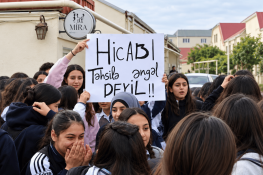
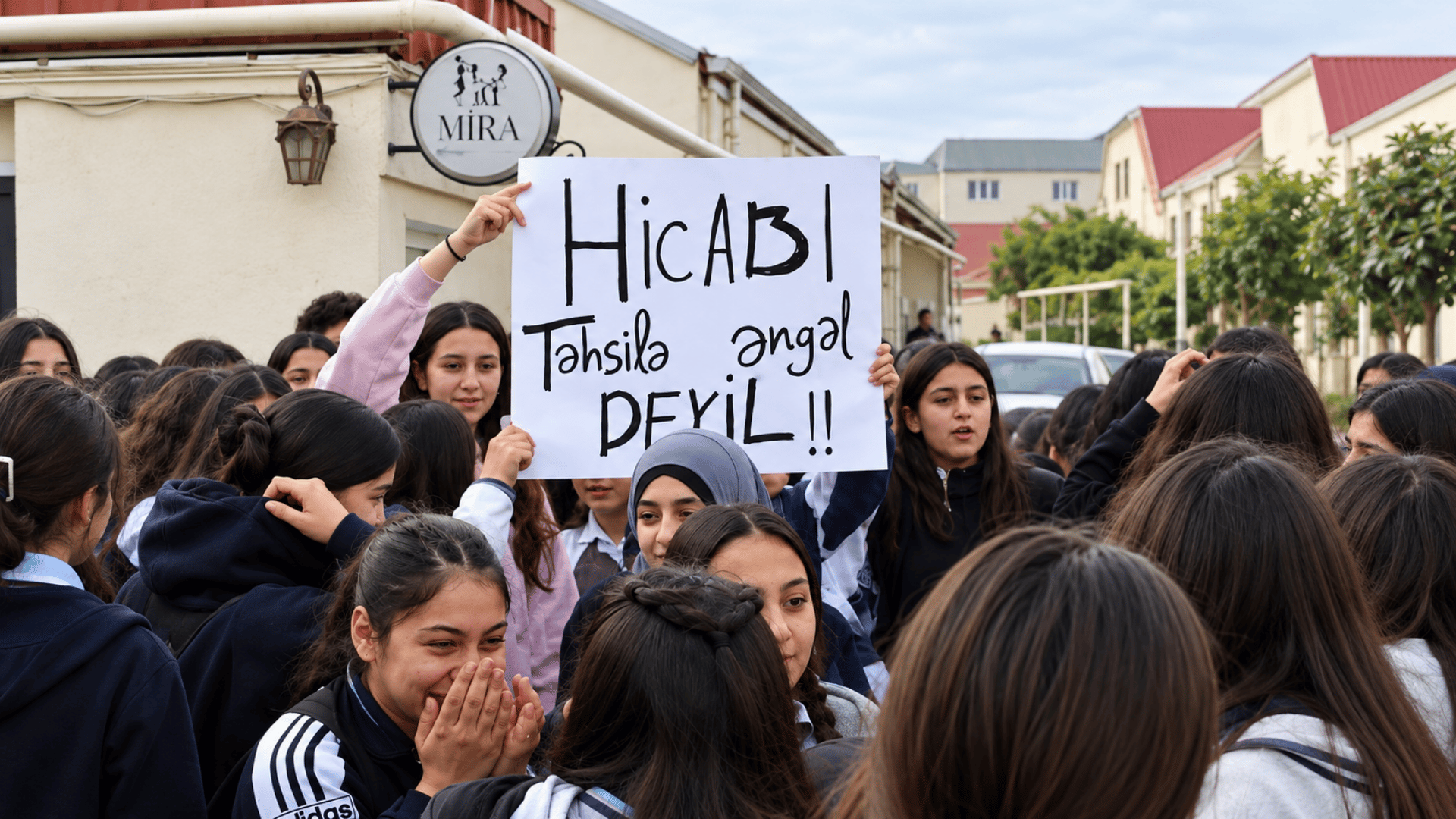
Although the regulations do not explicitly mention the hijab, protests broke out this week following reports that some students and teachers wearing Islamic headscarves had been denied entry to schools.
Azerbaijan is a predominantly Muslim country whose constitution separates religion from the state and guarantees freedom of religion.
The government has defended the regulations as part of its approach to maintaining secular education and consistent standards in public schools.
On Monday, Azerbaijan’s Interior Ministry said 37 people had been detained for allegedly disrupting public order while opposing the enforcement of the rules.
Indonesia’s Top Islamic Council Warns Men Against Wearing Dresses at Independence Events
Turkish President’s Adviser Criticises Restrictions
Oktay Saral, an adviser to Turkish President Recep Tayyip Erdogan, publicly criticised the restrictions on Monday.
Saral described denying education to Azerbaijani students who wear headscarves as “unacceptable” and urged the authorities to reverse the decision.
“A headscarf is not an obstacle; it is a requirement of religious belief,” he said.
“We expect Azerbaijan to reverse this mistake as soon as possible.”
His remarks added a diplomatic dimension to the controversy, prompting a strong response from Azerbaijan’s ruling party.
Azerbaycan’da başörtülü öğrencilerin eğitim hakkının engellenmesi kabul edilemez!
İnancı gereği başını örten bir öğrenciyi okul kapısında bırakmak, hangi vicdana, hangi adalete sığar? Başörtüsü engel değil, inancın gereğidir! Eğitim hakkı hiçbir ideolojik dayatmaya kurban edilemez!
Azerbaycan’ın bu yanlıştan bir an önce dönmesini bekliyoruz. Gençlerin geleceğine engel koymak değil, önlerini açmak gerekir.
Bu çağda böylesi bir anlayışa asla geçit verilmemelidir!
— Oktay SARAL (@oktay_saral) October 12, 2026
Azerbaijan’s Ruling Party Warns Turkey Against Interference
In a statement, YAP described Saral’s comments as “populist and irresponsible,” arguing that they risked damaging relations between the two allied countries.
The party maintained that Azerbaijan’s school uniform regulations were based on equality, secularism and the rule of law.
It also pointed out that Turkey’s constitution defines the country as a secular state, arguing that Ankara should respect Azerbaijan’s domestic policies rather than use education issues for political purposes.
YAP said the close relationship between the two countries did not give either side the right to interfere in the other’s internal affairs or impose its political and ideological positions.
The statement underscored the ruling party’s position that decisions concerning Azerbaijan’s education system should be made by its own authorities.
Wednesday morning headlines from #Azerbaijan, 14 October
● Turkish President Recep Tayyip Erdoğan’s chief adviser, Oktay Saral, criticised the new requirements for school uniforms and teachers’ clothing in Azerbaijan, which have effectively banned the wearing of hijabs in schools. Saral said that female students who cover their heads for religious reasons should not be denied the opportunity to study. “The right to education must not become a victim of any ideological agenda! We expect Azerbaijan to abandon this misguided practice as soon as possible,” Saral wrote on X.
● Azerbaijan’s ruling New Azerbaijan Party (YAP) issued a response, accusing representatives of Turkey’s ruling party and some Turkish media outlets of conducting a systematic campaign against Baku, spreading false and defamatory material, and interfering in the country’s internal affairs. The party described Saral’s remarks as irresponsible and populist, stressing that Azerbaijan is a secular state and that its education rules are based on the Constitution and the principle of equality.
Context: Protests are continuing outside some schools in Azerbaijan, with demonstrators demanding the reversal of the effective ban on female students and teachers wearing hijabs. Read more here https://t.co/sYdtv2apRB
● YAP’s statement also rejected recent criticism from Turkey on another issue. Social media users and some Turkish media outlets had expressed widespread outrage over the fact that Azerbaijan’s delegation did not leave the UN General Assembly hall during Israeli Prime Minister Benjamin Netanyahu’s speech, unlike delegations from many other countries protesting Israel’s military operations in Palestine. YAP rejected attempts to portray Baku’s relations with Israel as exceptional and use them as grounds for political accusations. The statement stressed that Azerbaijan consistently and openly supports the rights of the Palestinian people, advocates the establishment of a Palestinian state with East Jerusalem as its capital, and provides financial and humanitarian assistance to Palestine.
● YAP’s statement also stressed that the principle of “one nation, two states” does not give Turkey the right to interfere in Azerbaijan’s affairs or dictate its political course.
● The Milli Majlis working group on interparliamentary relations with Turkey also condemned Saral’s remarks. Its statement stressed that Azerbaijan independently determines its domestic and foreign policies, while its secular system and education rules are guaranteed by the Constitution. The working group also expressed outrage over the “use of insulting and defamatory language against President Ilham Aliyev” and the lack of a response from the Turkish authorities. It called on Turkey to respect Azerbaijan’s sovereignty and prevent a deterioration in bilateral relations.
● Almost all pro-government media outlets in Azerbaijan published strongly worded criticism of remarks by Saral and similar statements by Leyla Şahin Usta, a representative of Turkey’s ruling Justice and Development Party (AK Party). “Who authorised them to pass judgement on Azerbaijan’s domestic policies?” Azerbaijani media asked.
● Azerbaijan’s State Tax Service is seeking to recover 79,089 manats (approximately $47,000) in taxes from 12 journalists detained in the Meydan TV case. The agency’s representative, Leyla Huseynova, filed a civil claim in court, saying the amount had been calculated on the basis of an audit of grant agreements. Asked by defence lawyers how much each defendant was expected to pay, she replied that it did not matter how the amount was divided among the 12 defendants; the main thing was to recover the full sum. The lawyers objected, arguing that grants are donations and are exempt from profit tax.
The journalists charged in the Meydan TV case face accusations including smuggling, illegal entrepreneurship, money laundering and tax evasion. According to investigators, they illegally brought foreign currency into Azerbaijan from abroad. The defendants deny the charges and consider their prosecution politically motivated.
● Meydan TV editor-in-chief Aynur Elgunash, who is in detention and suffers from kidney disease, is expected to be transferred to a medical facility this week. According to her relatives, a kidney stone has seriously damaged the organ, and the journalist is suffering from severe pain and high blood pressure without receiving the necessary treatment in detention. According to her family, another journalist detained in the case, Shamshad Agha, has already been transferred to a specialised medical facility. The information has not yet been officially confirmed.
● President Ilham Aliyev and Laotian President Thongloun Sisoulith, who is visiting Baku, made statements to the press. Aliyev said the two countries intended to expand cooperation in trade, investment, energy and transport, noting that current trade turnover did not reflect their potential. He also proposed restoring scholarship programmes for Laotian students in Azerbaijan. Sisoulith confirmed Laos’s interest in increasing trade and investment and expanding educational and cultural exchanges. The leaders signed a joint statement on further cooperation.
● The seventh summit of the Conference on Interaction and Confidence Building Measures in Asia (CICA) is taking place in Baku on 14–15 October. Leaders of participating countries are expected to discuss practical cooperation in transport connectivity, digitalisation, sustainable economic growth and other areas.
● The presidents of Kyrgyzstan and Uzbekistan are arriving in Baku today to attend the summit.
● Energy cooperation between Azerbaijan and the European Union was discussed during panel sessions at the 10th International Energy Forum in Zagreb, Azerbaijani Ambassador Anar Imanov said. According to him, a key focus was the growing strategic importance of the Middle Corridor in strengthening transport connectivity between Asia and Europe.
● Dutch Foreign Minister Tom Berendsen will pay an official visit to Azerbaijan on 26 October.
● Azerbaijani Economy Minister Mikayil Jabbarov said cooperation between Azerbaijan and Turkmenistan plays a key role in improving the efficiency of the Middle Corridor. He noted that Turkmen oil is already being transported through Azerbaijan to international markets, while Azerbaijan’s state oil company SOCAR is interested in participating in projects to develop Turkmenistan’s oil and gas fields.
● Turkmenistan and Azerbaijan have broad opportunities for joint projects that capitalise on the geopolitical advantages of the Caspian region, Turkmen Ambassador Gurbanguly Elyasov said at an event in Baku marking the 35th anniversary of Turkmenistan’s Independence Day. He stressed that port infrastructure in both countries already provides efficient freight routes between Asia and Europe, turning the Caspian region into a major logistics hub.
● All eight Azerbaijani citizens aboard the cargo vessel Chelsea-3, which was attacked by drones in the Black Sea off the Bulgarian coast, have been rescued, Azerbaijani Foreign Ministry spokesperson Aykhan Hajizada said. One was hospitalised in Varna, while the others are in satisfactory condition. The ministry again urged Azerbaijani citizens not to work on vessels operating in the Black and Azov seas. Bulgaria said it would seek international assistance to establish who was responsible for the drone attacks. Ukraine’s Foreign Ministry accused Russia of carrying out the attacks and called on international partners to increase pressure on Moscow.
● A delegation from the Azerbaijani Navy, led by Commander Shahin Mammadov, took part in the 15th Trans-Regional Seapower Symposium (T-RSS), organised by the Italian Navy in Venice. Discussions focused on protecting international sea routes and developing cooperation between the participating countries’ navies.
● Three Azerbaijani citizens have been convicted of participating in an illegal armed formation outside Azerbaijan and spying on officials of a foreign state. Amid Mammadov and Nurlan Safarov were each sentenced to five years in prison, while Edik Israfilov received a four-and-a-half-year sentence. The foreign state involved in the case has not been identified.
● Azerbaijan’s cybersecurity agency has identified a phishing campaign impersonating popular AI services, including ChatGPT, Gemini and Claude. Criminals are creating fake advertising portals to steal passwords and one-time verification codes, gaining access to the accounts of advertisers and advertising agency employees. The agency urged users to check website addresses carefully and never share verification codes with third parties.
🔴 Every morning, the latest news from Azerbaijan, #Armenia, and #Georgia, here https://t.co/enJ2pJFg5C
— JAMnews (@JAMnewsCaucasus) October 14, 2026
Dispute Highlights Tensions Over Religion and Secular Education
The controversy has highlighted differing views over the place of religious expression in public education.
Critics of the restrictions argue that wearing an Islamic headscarf is an expression of religious belief and should not prevent students from attending school. Supporters of the regulations, as presented by YAP, emphasise uniformity, secular education and compliance with national rules.
The dispute also raises questions about how governments balance secular education policies with constitutional guarantees of religious freedom.
While Azerbaijan’s regulations do not explicitly name the hijab, reports of students being refused entry have brought the practical effects of the rules under scrutiny.
Azerbaijan Defends Its Foreign Policy
YAP also rejected criticism of Azerbaijan’s close relations with Israel, saying those ties were based on international law and mutual interests.
The response reflected the ruling party’s broader argument that Azerbaijan should determine its own domestic and foreign policies without external pressure.
Despite the public disagreement, Azerbaijan and Turkey remain close partners with longstanding political, economic and strategic ties.
The latest dispute has nevertheless exposed tensions over how that partnership should operate when the two sides disagree on domestic policies.
For now, Azerbaijan’s ruling party has made clear that it intends to defend the school uniform regulations and resist what it considers outside interference, while criticism over the treatment of students wearing headscarves continues to fuel the debate.