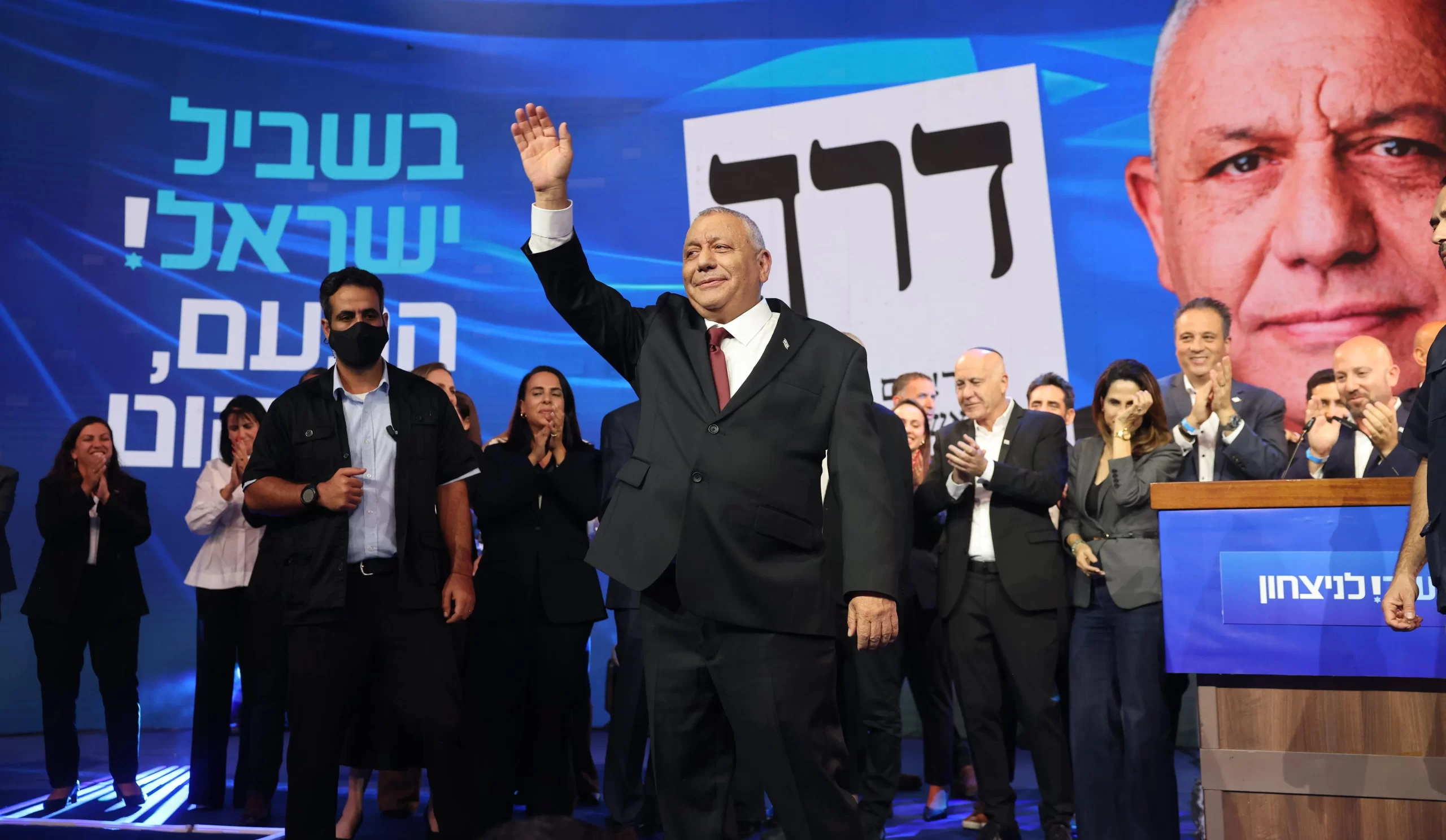
ISRAEL: Yashar party leader Gadi Eisenkot has said that Prime Minister Benjamin Netanyahu and his Likud party have failed in their alleged efforts to discredit the results of Israel’s recent parliamentary elections and push the country towards another vote.
In a post on X, Eisenkot described the campaign as “despicable and malicious,” accusing Netanyahu’s allies of attempting to undermine the public’s decision and damage confidence in state institutions.
“The despicable and malicious attempt to disown the election results, challenge the public’s will, smear an entire community and drag Israel into new elections has failed,” Eisenkot wrote.
He added that only someone who recognised that he had lost would launch such a campaign, even at the cost of further weakening public trust in state institutions.
Eisenkot Welcomes Election Chief’s Statement
Eisenkot said the results of the elections for Israel’s 26th Knesset were firm and clear. He welcomed remarks by Central Elections Committee Chairman Justice Noam Sohlberg, who reaffirmed the integrity of the voting process.
Urging political leaders to respect the outcome, Eisenkot said the public had made its decision and that Netanyahu’s government had failed to secure a parliamentary majority.
He also criticised what he described as political manoeuvres and attempts to create uncertainty around the results.
Likud Alleges Foreign Interference
Netanyahu and his Likud party have alleged that Qatar interfered in the election through funding intended to increase turnout among Arab voters and influence the outcome.
Likud claimed to possess recordings and other material documenting alleged vote-buying activities, including offers of cash and fuel vouchers in exchange for votes. The party described the alleged activity as “election theft.”
However, Likud has not publicly presented evidence establishing Qatari interference or widespread electoral fraud.
Qatar rejected the accusations on Thursday, describing them as a new disinformation campaign intended to involve the country in Israel’s internal political disputes.
United Arab List leader Mansour Abbas also denied allegations of attempts to unlawfully influence the election through foreign funding.
Netanyahu Set to Remain Caretaker Prime Minister After Inconclusive Israeli Election
Election Committee Rejects Claims of Widespread Irregularities
Earlier on Sunday, Sohlberg said the voting process had been conducted properly and that the results reflected the will of the electorate.
Israel’s Yedioth Ahronoth newspaper quoted him as rejecting claims that the available material and evidence could cast doubt on the election results as a whole.
Sohlberg said potential irregularities and suspicions were being examined. However, he stressed that even if individual violations were established, they would not undermine the overall integrity of the election or its results.
He made the remarks in the presence of Shin Bet chief David Zini and Attorney General Gali Baharav-Miara.
No Bloc Secures Parliamentary Majority
With all votes counted, Netanyahu’s bloc secured 53 seats in the 120-member Knesset, while the opposition camp led by Eisenkot won 48 seats. Arab parties secured the remaining 19 seats.
Neither of the two main political blocs reached the 61 seats required to form a government with a parliamentary majority.
Final voter turnout stood at 77.9 per cent, the highest level recorded since 1999, according to the Central Elections Committee.
The results have left Israel facing a political deadlock, with the formation of the next government dependent on negotiations and agreements between political parties. The opposition also remains divided over the possibility of relying on support from Arab parties.
The official election results are scheduled to be submitted to President Isaac Herzog on Wednesday. He will then consult parties represented in the Knesset before deciding whom to task with forming the next government.