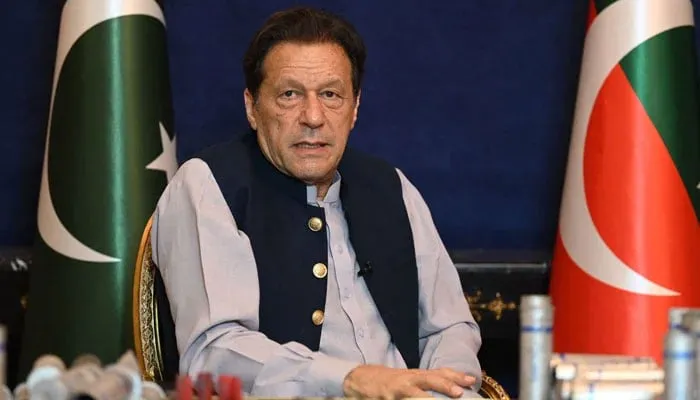
Pakistan Tehreek-e-Insaf (PTI) founder and former prime minister Imran Khan has informed that only 15% vision remains in his right eye, according to a medical report submitted to the Supreme Court.
The seven-page report was filed by PTI counsel Salman Safdar, who was appointed by the court as amicus curiae (friend of the court) and directed to meet the incarcerated leader at Adiala Jail and submit findings on February 11.
According to the report, Khan stated that a blood clot caused severe damage to his eye. Despite receiving treatment, including an injection, his eyesight could not be fully restored.
Complaints of Delayed Medical Attention
The report notes that Khan previously had normal 6/6 vision in both eyes until around October 2025. He later began experiencing persistent blurred and hazy vision and repeatedly reported the issue to jail authorities. However, he claimed no timely medical action was taken.
Subsequently, he suffered a sudden and complete loss of vision in his right eye. An ophthalmologist from the Pakistan Institute of Medical Sciences (PIMS), Dr Muhammad Arif, later diagnosed a blood clot that caused significant damage.
Safdar stated that during the meeting, Khan appeared visibly distressed over the loss of vision and the lack of specialised medical intervention. The report adds that his eyes were watery throughout the meeting, and he frequently used tissues, indicating discomfort.
Imran Khan Undergoes Eye Examination at Islamabad Hospital, Says Federal Information Minister
Khan also said that for nearly three months he was treated only with eye drops, which failed to improve his condition and ultimately resulted in major impairment.
Other Health Concerns
The former prime minister, now 73, also raised concerns about broader medical care in custody. He stated that despite needing dental consultation, no dentist had examined him in the past two years despite repeated requests.
He added that his personal physicians — Dr Faisal Sultan and Dr Asim Yusuf — had previously been allowed access, but recent requests for medical consultations were not facilitated. He also claimed that routine blood tests, necessary at his age, were not conducted.
Access to Lawyers and Family
Khan further alleged restrictions on meetings with his legal counsel and immediate family. According to details presented in court, he informed Safdar that numerous cases against him are currently at various stages — from bail to trial and appeal — but he has not been allowed to meet his legal team for the past five months.
He said this has limited his ability to receive updates on cases and provide legal instructions.
Regarding family, Khan stated that his sisters and other close relatives were not permitted to meet him despite concerns about his health. He added that only after a change in jail administration was he allowed weekly meetings with his wife, lasting about 30 minutes every Tuesday.
He also claimed that despite multiple requests and court orders, he was allowed to speak with his sons, Qasim and Suleman, who live in the United Kingdom, only twice during 2025.
Daily Routine in Jail
The report also outlined Khan’s daily routine. He typically has breakfast around 9:45am, followed by recitation of the Holy Quran for about an hour. He then performs physical exercise using limited equipment available in custody, including an exercise bike and weights.
After a shower, he is allowed to walk or sit in a designated area within the secured compound. Lunch is usually taken between 3:30pm and 4:00pm, followed by a brief evening walk. From around 5:30pm until the next morning, he remains confined to his cell.
For breakfast, Khan consumes coffee, porridge, and dates. Lunch — his main meal — is selected weekly and financed by his family, typically including chicken, meat, lentils, and snacks. He said bottled drinking water is available, while dinner usually consists of fruit, milk, and dates rather than a full meal.
Ongoing Legal and Political Context
The report highlights that despite facing multiple legal battles and advancing age, Khan had not previously raised personal health concerns publicly. However, he now believes the seriousness of his medical condition was not adequately addressed by jail authorities.
The matter has been placed before the Supreme Court, where the report is expected to inform further deliberations regarding his health, access to medical care, and custodial conditions.