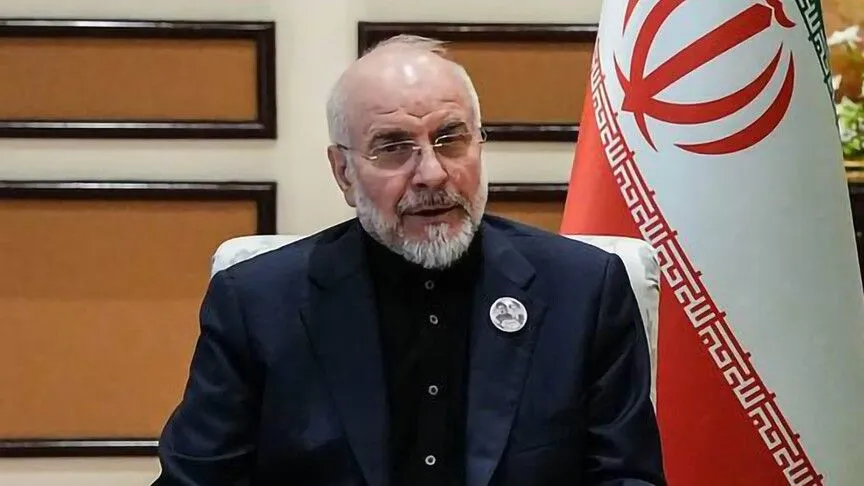
Iranian Parliament Speaker Mohammad Bagher Ghalibaf has accused the United States of seeking to keep Iran in a prolonged state of “no war, no peace”, calling for stronger national capabilities to establish lasting deterrence and prevent another military confrontation.
Speaking on Monday, Ghalibaf said the current situation could not continue indefinitely and stressed that Iran needed to strengthen itself to remove the threat of further conflict.
“Sustainable deterrence means strengthening the country,” he said in remarks carried by Iran’s semi-official Tasnim news agency.
He added that both diplomacy and military action could serve as instruments for achieving deterrence.
Ghalibaf Calls for an End to Prolonged Uncertainty
Ghalibaf said the situation between Tehran and Washington needed to be resolved, but questioned how and through what measures that objective should be achieved.
“The question now is how, by whom, and with what actions should we resolve this situation,” he said.
His remarks suggest that Iran wants to move beyond the current uncertainty through a strategy that strengthens its ability to deter potential military action.
The comments come amid continuing disagreements between the two countries over security arrangements, economic pressure and the future of the Strait of Hormuz.
US-Iran Negotiations Remain Stalled
Tensions between Iran and the United States escalated after the US and Israel launched military operations against Iran on February 28. Tehran retaliated with attacks on Israel and US military facilities across the region.
The two sides signed a framework agreement in June aimed at ending hostilities and subsequently began negotiations. However, progress stalled over disagreements concerning safe and unrestricted navigation through the Strait of Hormuz.
Although diplomatic efforts have continued, fighting has flared intermittently since July, leaving the region in an uncertain security situation.
The dispute over the strategic waterway remains a major obstacle to reaching a lasting agreement.
Attacks on Shipping Near Strait of Hormuz Reach Wartime High in October
Strait of Hormuz Remains a Major Flashpoint
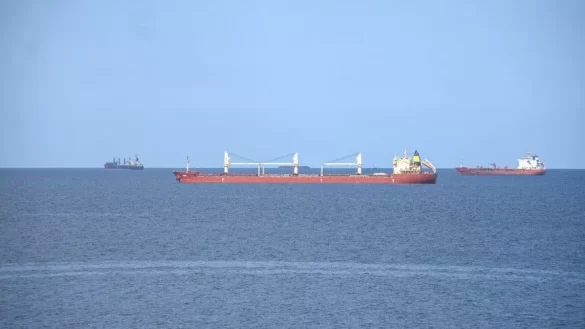
The latest remarks from Iran’s parliament speaker came as tensions surrounding maritime traffic through the Strait of Hormuz continued.
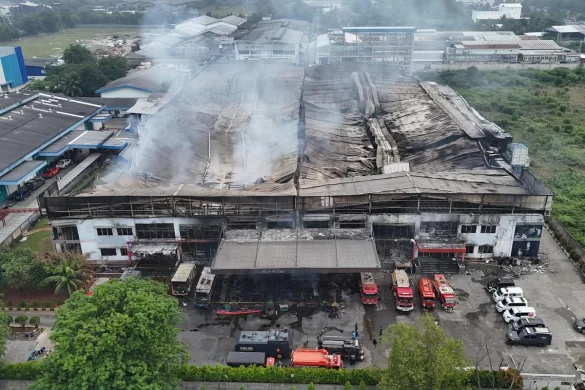
Iran’s Islamic Revolutionary Guard Corps Navy said on Monday that three oil tankers had struck naval mines in the waterway, triggering fires aboard the vessels.
According to the IRGC Navy, two of the tankers struck mines in the eastern part of the strait. It also claimed that US military air cover had failed to prevent the incidents and warned ships against using routes that Iranian authorities consider unauthorised.
The claims were made by Iran’s military authorities and were not independently verified in the report.
Iran announced the closure of the Strait of Hormuz on July 12 following renewed US military strikes and has warned vessels against passing through routes that have not been approved by its authorities.
The waterway is one of the world’s most important energy shipping routes, handling a substantial share of global oil and liquefied natural gas supplies.
The continuing confrontation over the strait, combined with stalled negotiations, has added to uncertainty surrounding regional security and international energy trade.
Source: Anadolu Agency, published by The Express Tribune; Iran’s semi-official Tasnim news agency.