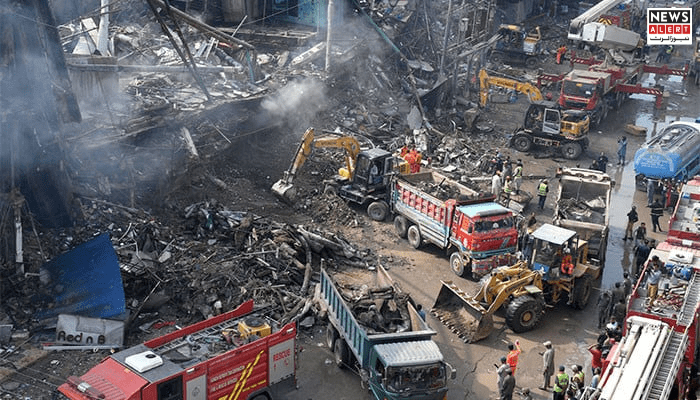
Karachi authorities have warned that more bodies may still lie inside Gul Plaza, a commercial building destroyed by a massive fire. Rescue officials now believe the ground floor may still contain victims, raising fears that the death toll could rise.
The warning came from Brigadier (Retired) Sibghatullah, Director General of Rescue 1122, who spoke to reporters as search operations entered a new phase. The fire has already claimed dozens of lives and shocked the city. Once again, it has exposed deep flaws in urban fire safety.
Dozens Missing After Deadly Blaze
DG Rescue 1122 said that 85 people were first reported missing after the fire.
So far, our teams have recovered around 64 bodies, he said.
We fear that more bodies remain on the ground floor.
This means more than 20 people remain unaccounted for. Some may have escaped before rescuers arrived. However, officials believe others may still be trapped inside the building.
The figures place the Gul Plaza fire among Karachi’s deadliest building disasters in recent years.
Search Operations Move Into New Areas
Brigadier Sibghatullah explained that rescue teams could not reach some parts of the building earlier.
About 10 to 15 percent of the structure remained beyond our reach, he said.
Today, we have started searching those sections.
Firefighters now enter these zones with special gear. They move slowly due to heat and debris. Engineers also monitor the building because some sections remain unstable.
Despite the risks, teams continue their work with determination. They aim to inspect every corner before closing the operation.
Technology Used to Detect Survivors
Rescue 1122 also used GPS radar and detection tools to look for survivors inside the building.
Our teams scanned the structure to check for any signs of life, the DG said.
The initial results show no survivors inside.
This finding confirms the tragic scale of the disaster. Even so, rescue teams continue physical searches to avoid missing anyone.
Experts say that such technology helps narrow down search areas. It also reduces risks for rescuers working in dangerous conditions.
How the Fire Spread So Quickly
Early investigations suggest that the fire spread through duct systems inside the building.
According to Brigadier Sibghatullah, flames likely traveled through ventilation or service ducts. This allowed smoke and fire to reach several floors in minutes.
This pattern often appears in commercial buildings with poor maintenance. Fire experts warn that ducts can act like chimneys during a blaze. They pull flames upward at high speed.
Without proper fire barriers, such systems turn small fires into deadly infernos.
Karachi’s Ongoing Fire Safety Crisis
The Gul Plaza tragedy has once again highlighted Karachi’s serious fire safety problems.
The city has seen many deadly fires in recent years. These have hit factories, shopping centers, and apartments alike. Official data shows that Karachi faces hundreds of fire incidents every year.
Most fires link to faulty wiring, illegal construction, and blocked exits. Many buildings ignore fire codes. Others operate without safety certificates.
Urban planners say enforcement remains weak. Inspectors often fail to check safety systems. As a result, dangerous buildings continue to operate without penalties.
Experts stress that disasters like Gul Plaza will repeat unless authorities act firmly.
Families Wait for Answers
Outside the burned building, families of the missing still wait in anguish.
Some have received the bodies of loved ones. Others still hope for news. For many, every update brings fresh pain.
Authorities have promised to use DNA tests when needed. This will help identify victims with certainty. Officials say they will hand over remains to families with full respect.
What Comes Next
Rescue 1122 says teams will continue work until they clear the entire structure.
After that, authorities plan to begin a formal investigation. They will examine the cause of the fire and any safety violations.
Legal experts say courts may hold owners and managers responsible if negligence emerges. Such cases could set important precedents for building safety in Pakistan.
For now, Karachi mourns another tragic loss. The city also faces a hard question: how many lives must be lost before safety becomes a true priority?
As the search continues, citizens hope this disaster will finally push leaders to act.