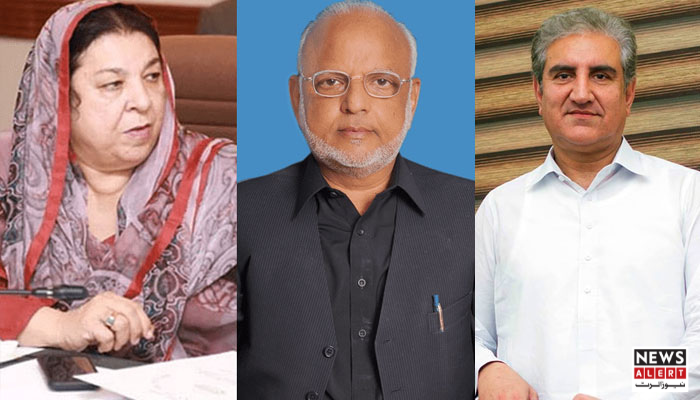
A Pakistani anti-terrorism court has delivered a significant verdict in one of the most closely watched cases linked to the violent protests of May 9. The court acquitted senior Pakistan Tehreek-e-Insaf (PTI) leader Shah Mahmood Qureshi. At the same time, it sentenced several other prominent PTI figures to 10 years in prison.
The decision marks a key moment in the legal fallout from the nationwide unrest that followed the arrest of former Prime Minister Imran Khan. Those protests triggered attacks on military, government, and public installations across Pakistan.
Court Clears Shah Mahmood Qureshi of Charges
The Anti-Terrorism Court dismissed all charges against Shah Mahmood Qureshi in the case related to an alleged attack at Club Chowk near the Governor’s House (GOR) gate on May 9.
ATC Judge Manzar Ali Gill announced the verdict during proceedings held at Kot Lakhpat Jail in Lahore. Authorities chose the jail premises due to strict security concerns surrounding the case.
During the hearing, prosecutors failed to prove Qureshi’s direct involvement in the incident. Based on the available evidence, the court concluded that the case against him did not meet the required legal standard.
As a result, the judge ordered his acquittal in this specific matter. However, Qureshi still faces other cases connected to the May 9 violence. His acquittal carries political weight, given his role as a former foreign minister and a senior PTI leader.
PTI Leaders Receive Lengthy Prison Sentences
While Qureshi walked free in this case, the court handed down strict punishments to several other PTI figures.
The court sentenced Dr Yasmin Rashid, Mian Mahmood ur Rasheed, Ejaz Chaudhry, and Umar Sarfraz Cheema to 10 years in prison each. The judge found them guilty of participating in the attack at Club Chowk during the May 9 unrest.
Also Read: Pakistani Court Sentences Senior PTI Leaders to 10 Years in Prison Over May 9 Violence
Dr Yasmin Rashid, a former Punjab health minister and a well-known PTI figure, emerged as one of the most high-profile convicts. Her conviction represents a major blow to the party’s leadership in Punjab.
The court ruled that the actions of the convicted individuals fell under anti-terrorism laws because of the scale and nature of the violence.
Key Details From the Trial
Throughout the trial, the court recorded final statements from 21 accused individuals, including Dr Yasmin Rashid. Prosecutors presented testimony from 56 witnesses to support their case.
These witnesses included police officers and other officials who described the events of May 9 and detailed the damage at the protest site. Their statements formed the backbone of the prosecution’s argument.
During the proceedings, four accused individuals failed to appear before the court. As a result, the judge declared them absconders under Pakistani law.
In total, the court acquitted 13 accused, including Shah Mahmood Qureshi. Meanwhile, eight individuals received 10-year prison sentences.
Background: What Happened on May 9
Violence erupted across Pakistan on May 9 after authorities arrested PTI founder Imran Khan in Islamabad. Protests spread rapidly, with demonstrators targeting military buildings, government offices, and public property.
Official data shows that protesters damaged dozens of sites nationwide. The government described the attacks as an unprecedented challenge to state authority and pledged strict accountability.
Security agencies arrested hundreds of PTI leaders and supporters in the aftermath. Courts charged many of them under anti-terrorism laws, while authorities referred some cases to military courts. Human rights groups raised serious concerns over these measures.
Political and Legal Impact
The verdict highlights the complex legal landscape surrounding the May 9 cases. While courts have acquitted some senior leaders, they have imposed long prison terms on others.
Legal analysts say these rulings could shape upcoming decisions in similar cases. PTI leaders continue to argue that political motives drive the prosecutions.
The party plans to challenge the convictions in higher courts. Meanwhile, government officials insist that the courts have followed due process.
As Pakistan navigates deep political divisions, the May 9 cases continue to define the country’s ongoing struggle over accountability, political power, and the rule of law.